Al Jolson
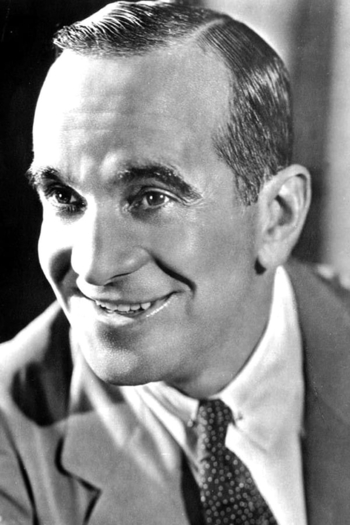
1886 - 1950Al Jolson (May 26, 1886 – October 23, 1950) was a Lithuanian singer, comedian and actor. In his heyday, he was dubbed "The World's Greatest Entertainer".He was born in the Russian Empire (the part of which is now in Lithuania) and emigrated to America at the age of five with his Jewish parents.
His performing style was brash and extroverted, and he popularized a large number of songs that benefited from his "shamelessly sentimental, melodramatic approach". Numerous well-known singers were influenced by his music, including Bing Crosby Judy Garland, rock and country entertainer Jerry Lee Lewis, and Bob Dylan, who once referred to him as "somebody whose life I can feel". Broadway critic Gilbert Seldes compared him to "the Great God Pan," claiming that Jolson represented "the concentration of our national health and gaiety."
In the 1930s, he was America's most famous and highest paid entertainer. Between 1911 and 1928, Jolson had nine sell-out Winter Garden shows in a row, more than 80 hit records, and 16 national and international tours. Although he's best remembered today as the star in the first (full length) talking movie, The Jazz Singer in 1927, he later starred in a series of successful musical films throughout the 1930s. After a period of inactivity, his stardom returned with the 1946 Oscar-winning biographical film, The Jolson Story. Larry Parks played Jolson with the songs dubbed in with Jolson’s real voice. A sequel, Jolson Sings Again, was released in 1949, and was nominated for three Oscars. After the attack on Pearl Harbor, Jolson became the first star to entertain troops overseas during World War II, and again in 1950 became the first star to perform for G.I.s in Korea, doing 42 shows in 16 days. He died just weeks after returning to the U.S., partly due to the physical exertion of performing. Defense Secretary George Marshall afterward awarded the Medal of Merit to Jolson's family.
According to the St. James Encyclopedia of Popular Culture, "Jolson was to jazz, blues, and ragtime what Elvis Presley was to rock 'n' roll". Being the first popular singer to make a spectacular "event" out of singing a song, he became a “rock star” before the dawn of rock music. His specialty was building stage runways extending out into the audience. He would run up and down the runway and across the stage, "teasing, cajoling, and thrilling the audience", often stopping to sing to individual members, all the while the "perspiration would be pouring from his face, and the entire audience would get caught up in the ecstasy of his performance". According to music historian Larry Stempel, "No one had heard anything quite like it before on Broadway." Author Stephen Banfield agrees, writing that Jolson's style was "arguably the single most important factor in defining the modern musical . . ."
He enjoyed performing in blackface makeup – a theatrical convention since the mid-19th century. With his unique and dynamic style of singing black music, like jazz and blues, he was later credited with single-handedly introducing African-American music to white audiences. As early as 1911 he became known for fighting against anti-black discrimination on Broadway. Jolson's well-known theatrics and his promotion of equality on Broadway helped pave the way for many black performers, playwrights, and songwriters, including Cab Calloway, Louis Armstrong, Duke Ellington, Fats Waller, and Ethel Waters.
Description above from the Wikipedia article Al Jolson, licensed under CC-BY-SA, full list of contributors on Wikipedia.
Showbiz Goes to War
Gayle Gibson Sedawie, Norman Sedawie
Bud Abbott, Larry Adler
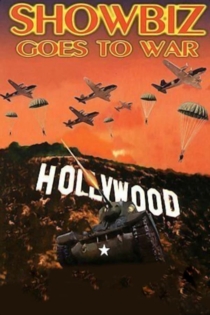
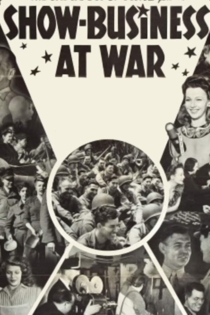
While a few Hollywood celebrities such as James Stewart and Clark Gable saw combat during World War II, the majority used their talents to rally the American public through bond sales, morale-boosting USO tours, patriotic war dramas and escapist film fare. Comedian David Steinberg plays host for this star-studded, 90-minute documentary, which looks at the way Tinseltown helped the United States' war effort.
Showbiz Goes to War
Myrna Loy: So Nice to Come Home To
Richard Schickel
Kathleen Turner, G. Larry Butler
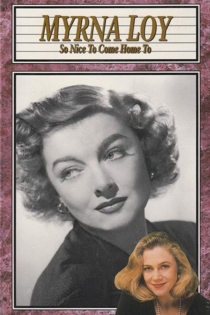
This tribute to Myrna Loy is organized chronologically with a few photographs, many film clips, a handful of personal appearances, and a detailed commentary delivered on camera by Kathleen Turner. Turner walks us through Loy's career as a dancer and an actress miscast as an exotic. She comes into her own as a grown-up women: shrewd, funny, decorous, and sexy - in "Manhattan Melodrama" and "The Thin Man." Her volunteer work during World War II, later stage work, and progressive politics come in for admiration as well. It's her style - seen best in her roles as a wife of charm and independence - that's captured and celebrated here.
Myrna Loy: So Nice to Come Home To
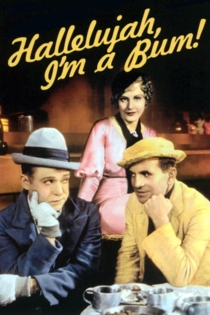
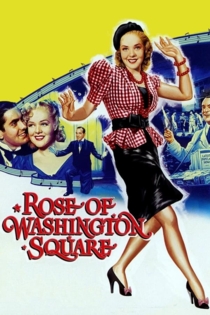
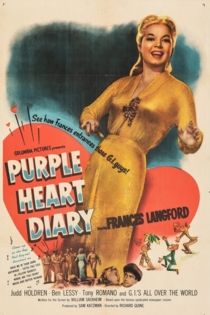
Jolson Sings Again
Henry Levin
Larry Parks, Barbara Hale
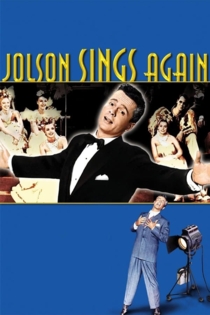
In this sequel to The Jolson Story, we pick up the singer's career just as he has returned to the stage after a premature retirement. But his wife has left him and the appeal of the spotlight isn't what it used to be. This time Jolson trades in the stage for life in the fast lane: women, horses, travel. It takes the death of Moma Yoelson and World War II to bring Jolson back to earth - and to the stage. Once again teamed with manager Steve Martin, Jolson travels the world entertaining troops everywhere from Alaska to Africa. When he finally collapses from exhaustion it takes young, pretty nurse Ellen Clark to show him there's more to life than "just rushing around".
Jolson Sings Again
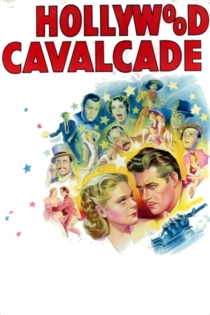
Hollywood Cavalcade
Irving Cummings
Alice Faye, Don Ameche
Starting in 1913 movie director Connors discovers singer Molly Adair. As she becomes a star she marries an actor, so Connors fires them. She asks for him as director of her next film. Many silent stars shown making the transition to sound.
Hollywood Cavalcade
The Voice That Thrilled the World
Jean Negulesco
Art Gilmore, Sheldon Jett
This short traces the history of sound in the movies, beginning with French scientist Leon Scott's experiments in 1857. Featured are snippets from early sound pictures.
The Voice That Thrilled the World
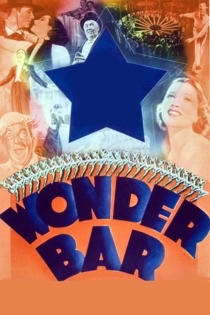
Wonder Bar
Lloyd Bacon
Al Jolson, Kay Francis
Harry and Inez are a dance team at the Wonder Bar. Inez loves Harry, but he is in love with Liane, the wife of a wealthy business man. Al Wonder and the conductor/singer Tommy are in love with Inez. When Inez finds out that Harry wants to leave Paris and is going to the USA with Liane, she kills him.
Wonder Bar
The Jazz Singer
Alan Crosland
Al Jolson, May McAvoy
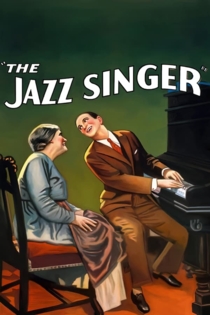
A young Jewish man is torn between tradition and individuality when his old-fashioned family objects to his career as a jazz singer. This is the first full length feature film to use synchronized sound, and is the original film musical.
The Jazz Singer
Okay for Sound
John Barrymore, James Cagney
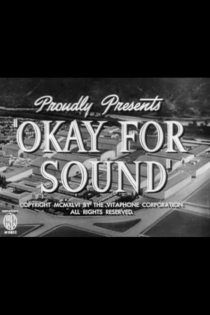
This short was released in connection with the 20th anniversary of Warner Brothers' first exhibition of the Vitaphone sound-on-film process on 6 August 1926. The film highlights Thomas A. Edison and Alexander Graham Bell's efforts that contributed to sound movies and acknowledges the work of Lee De Forest. Brief excerpts from the August 1926 exhibition follow. Clips are then shown from a number of Warner Brothers features, four from the 1920s, the remainder from 1946/47.
Okay for Sound