Mary Martin
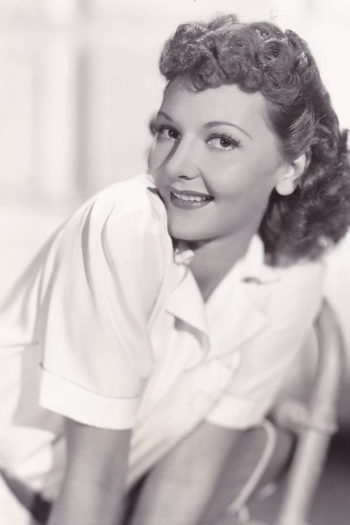
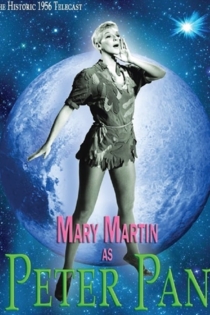
1913 - 1990Martin began her radio career in 1939 as the vocalist on a short-lived revival of The Tuesday Night Party on CBS. In 1940, she was a singer on NBC's Good News of 1940, which was renamed Maxwell House Coffee Time during that year. In 1942, she joined the cast of Kraft Music Hall on NBC, replacing Connie Boswell. She was also one of the stars of Stage Door Canteen on CBS, 1942–1945. Martin was cast in Cole Porter's Leave It to Me!, making her Broadway debut in November 1938 in that production. She became popular on Broadway and received attention in the national media singing "My Heart Belongs to Daddy". With that one song in the second act, she became a star 'overnight'. Martin reprised the song in Night and Day, a Hollywood film about Cole Porter, in which she played herself auditioning for Porter. As nurse Nellie Forbush, Martin opened on Broadway in South Pacific. Her next major success was in the role of Peter in the Broadway production of Peter Pan. Martin opened on Broadway in The Sound of Music, winning the Tony Award for Best Actress in a Musical. Although she appeared in nine films between 1938 and 1943, she was generally passed over for the filmed version of the musical plays. She herself once explained that she did not enjoy making films because she did not have the connection with an audience that she had in live performances. The closest that she ever came to preserving her stage performances was her television appearances as Peter Pan. The Broadway production from 1954 was subsequently performed on NBC television in RCA's compatible color in 1955, 1956, and 1960. Martin also preserved her 1957 stage performance as Annie Oakley in Annie Get Your Gun when NBC television broadcast the production live that year.
While Martin did not enjoy making films, she apparently did enjoy appearing on television as she did frequently. Her last feature film appearance was a cameo as herself in MGM's Main Street to Broadway in 1953. Martin made an appearance in 1980 in a Royal Variety Performance in London performing "Honeybun" from South Pacific. Martin appeared in the play Legends with Carol Channing in a one-year US national tour opening in Dallas on January 9, 1986. Martin was inducted into the American Theater Hall of Fame in 1973. She received the Kennedy Center Honors, an annual honor for career achievements, in 1989. She received the Donaldson Award in 1943 for One Touch of Venus. A special Tony was presented to her in 1948 while she appeared in the national touring company of Annie Get Your Gun for "spreading theatre to the rest of the country while the originals perform in New York." In 1955 and 1956, she received, first, a Tony Award for Peter Pan, and then an Emmy for appearing in the same role on television. She also received Tonys for South Pacific and in 1959 for The Sound of Music.
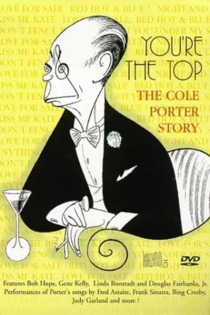
You're the Top: The Cole Porter Story
Allan Albert
Bobby Short, Richard Adler
Biographical portrait of one of Broadway's most brilliant songwriters. Told through the use of archival material and interviews with the rich and famous that knew him, this portrait concentrates on his career and his public life events.
You're the Top: The Cole Porter Story
The Ford 50th Anniversary Show
Jerome Robbins
Mary Martin, Ethel Merman
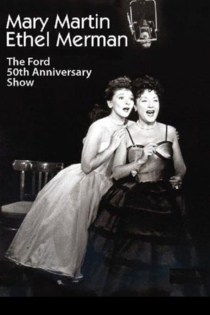
The program was the first so-called "Television Spectacular". Ford presented the show without commercial interruption. It is believed to be the first time that Edward R. Murrow appeared on NBC in a professional capacity. Also, in 1953, it was necessary for Ford to buy time on two networks to ensure maximum coverage of US TV households - at the time, neither CBS nor NBC reached 100% of them. The famed 1953 television special celebrating the Ford Motor Company's 50th anniversary brought together two of the greatest leading ladies Broadway has ever known. The highlight of the program is Merman and Martin’s 13-minute duet medley, where they sing the songs that made them famous, plus much more. On their own, Merman sings “Alexander’s Ragtime Band” and “Mademoiselle from Armetières” and Martin performs a brilliantly comic routine about changes in fashion over the first half of the 20th century.
The Ford 50th Anniversary Show
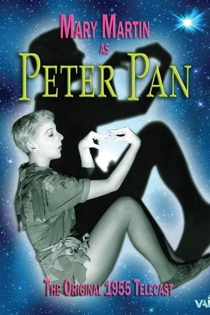
Peter Pan
Vincent J. Donehue
Mary Martin, Cyril Ritchard
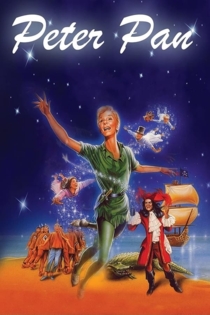
In this magical tale about the boy who refuses to grow up, Peter Pan and his mischievous fairy sidekick Tinkerbell visit the nursery of Wendy, Michael and John Darling. With a sprinkling of pixie dust, Peter and his new friends fly out the nursery window and over London to Never-Never Land. The children experience many wonderful and exciting adventures with the Lost Boys, Tiger Lily's Indian tribe, and Peter's arch enemy the dastardly pirate Captain Hook.
Peter Pan
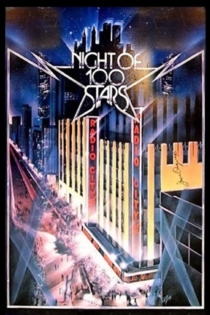
Night of 100 Stars
Clark Jones
Jane Alexander, Peter Allen
The most glittering, expensive, and exhausting videotaping session in television history took place Friday February 19, 1982 at New York's Radio City Music Hall. The event, for which ticket-buyers payed up to $1,000 a seat (tax-deductible as a contribution to the Actors' Fund) was billed as "The Night of 100 Stars" but, actually, around 230 stars took part. And most of the audience of 5,800 had no idea in advance that they were paying to see a TV taping, complete with long waits for set and costume changes, tape rewinding, and the like. Executive producer Alexander Cohen estimated that the 5,800 Radio City Music Hall seats sold out at prices ranging from $25 to $1,000. The show itself cost about $4 million to produce and was expected to yield around $2 million for the new addition to the Actors Fund retirement home in Englewood, N. J. ABC is reputed to have paid more than $5 million for the television rights.
Night of 100 Stars
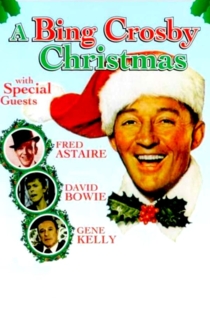
A Bing Crosby Christmas
Bing Crosby, Kathryn Grant
The program on this DVD is basically a retrospective produced in the early 1990s for public television that was originally called «A Bing Crosby Christmas: Just Like the Ones You Used to Know» that was narrated by Gene Kelly and hosted by Bing's widow, Kathryn Crosby. The program itself features clips from fifteen of Bing's classic television specials, concentrating on the period from the early 1960s onwards when he included Kathryn and their three children in the programs.
A Bing Crosby Christmas
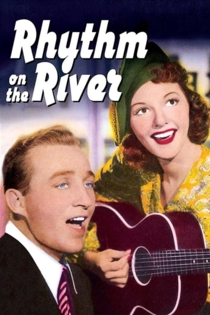
Rhythm on the River
Victor Schertzinger
Bing Crosby, Mary Martin
Popular songwriter Oliver Courtney has been getting by for years using one ghost writer for his music and another for his lyrics. When both writers meet at an inn, they fall in love and then try to sell their songs under their own name. The problem is every song publisher thinks they're copying Courtney's style.
Rhythm on the River
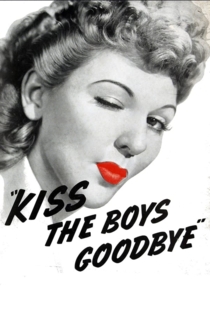
Kiss the Boys Goodbye
Victor Schertzinger
Don Ameche, Mary Martin
New York chorus girl Cindy Lou Bethany becomes frustrated when she prepares for an audition for a Broadway musical, but the auditions close and her roommate, Gwen Abbott, is hired to be secretary to Top Rumson, the show's financial backer. Gwen tells Cindy that the director, Lloyd Lloyd, and composer, Dick Rayburn, have been sent to the South on a talent search for a classic Southern belle type to star in the show, although their shows usually feature Myra Stanhope, an actress whose style is hopelessly inappropriate for this show. Desperate for work, Cindy returns to her aunt Lily Lou and uncle Jefferson Davis Bethany's home in the South and schemes to get Lloyd and Rayburn to audition her.
Kiss the Boys Goodbye
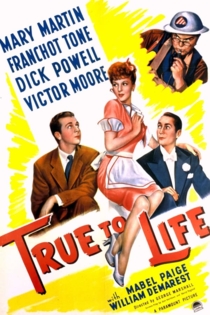
True to Life
George Marshall
Mary Martin, Franchot Tone
A writer for a radio program needs some fresh ideas to juice up his show. For inspiration, he rents a room with a typical American family and begins to secretly write about their true life antics. The show becomes a big hit, but he begins to feel guilty about his charade when he falls in love with the family's pretty older daughter.
True to Life
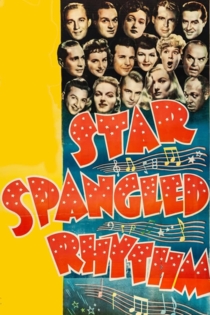
Star Spangled Rhythm
George Marshall
Bing Crosby, Bob Hope
Pop, a security guard at Paramount has told his son that he's the head of the studio. When his son arrives in Hollywood on shore leave with his buddies, Pop enlists the aid of the studio's dizzy switchboard operator in pulling off the charade. Things get more complicated when Pop agrees to put together a show for the Navy starring Paramount's top contract players.
Star Spangled Rhythm
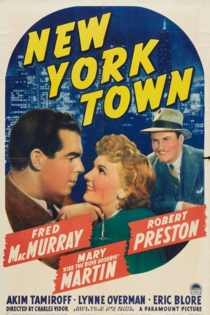
New York Town
Charles Vidor
Fred MacMurray, Mary Martin
Victor Ballard, a happy-go-lucky albeit impoverished sidewalk photographer, shares a New York City studio apartment with Polish immigrant painter Stefan Janowski. The big city doles out joy and misery indiscriminately: In the apartment below Victor and Steve, Gus Nelson learns that his wife has given birth to quintuplets, while the lonely tenant in the apartment below Gus has given up on life and committed suicide.
New York Town
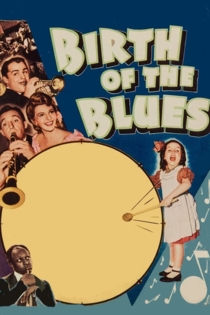
Birth of the Blues
Victor Schertzinger
Bing Crosby, Mary Martin
Jeff grows up near Basin Street in New Orleans, playing his clarinet with the dock workers. He puts together a band, the Basin Street Hot-Shots, which includes a cornet player, Memphis. They struggle to get their jazz music accepted by the cafe society of the city. Betty Lou joins their band as a singer and gets Louie to show her how to do scat singing. Memphis and Jeff both fall in love with Betty Lou.
Birth of the Blues
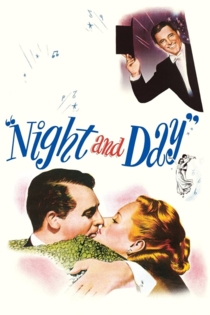
Night and Day
Michael Curtiz
Cary Grant, Alexis Smith
Swellegant and elegant. Delux and delovely. Cole Porter was the most sophisticated name in 20th-century songwriting. And to play him on screen, Hollywood chose debonair icon Cary Grant. Grant stars for the first time in color in this fanciful biopic. Alexis Smith plays Linda, whose serendipitous meetings with Porter lead to a meeting at the alter. More than 20 of his songs grace this tail of triumph and tragedy, with Grant lending is amiable voice to "You're the Top", "Night and Day" and more. Monty Woolley, a Yale contemporary of Porter, portrays himself. And Jane Wyman, Mary Martin, Eve Arden and others provide vocals and verve. Lights down. Curtain up. Showtune standards embraced by generations are yours to enjoy in "Night and Day."
Night and Day