Pedro Chaskel
1932 (93 года)An early emigrant from Germany at the age of seven, Chaskel became a Chilean national in 1952, and studied architecture at the Universidad de Chile from 1951 to 1954.
That year, he became a founding member and animator of the Cine Club Universitario de la Federación de Estudiantes de Chile (FECH). A conspirator in the exhibition of films that did not come to Chile through the regular commercial circuit, Chaskel promoted, together with a group of contemplative people, a custom that was not very common in Chile: the cinema forum, or the debate organized after the film screenings that he did at the Central House of the Universidad de Chile. It was there that classics of German expressionism, Italian neo-realism and any film they had available were shown for the first time in Chile.
In 1973, due to the military coup suffered by the government of President Salvador Allende, Chaskel is expelled from the Universidad de Chile by the military authorities, and travels abroad.
Between 1974 and 1983 he settled in Cuba, where he worked as an editor at the Cuban Institute of Art and Cinematographic Industry (ICAIC), and since 1979, as a director and filmmaker for the same institute.
In 1983, he returns to Chile. He works in film and video as an independent professional, working as an editor and director of documentaries.
From 1997 to date, he has taught film at many Chilean universities.
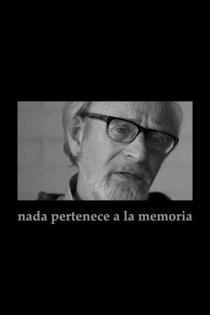
Nada pertenece a la memoria
José Luis Torres Leiva
Pedro Chaskel
Pedro Chaskel, director, editor and post-producer. Based on domestic memories, and accompanied by representative fragments,tries to reconstruct the most important works of his career and motivations.
Nada pertenece a la memoria
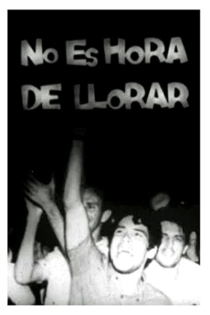
No es hora de llorar
Luiz Alberto Sanz, Pedro Chaskel
Maria Auxiliadora Lara Barcelos
Through the testimony of the victims of the Brazilian dictatorship, and the re-creation of the practices to which they were subjected, the torture suffered by the Brazilian political detainees in their country is denounced. Restored version.
It's Not Time to Cry
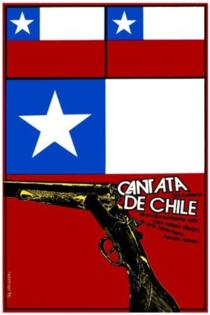
Aquí vivieron
Héctor Ríos, Pedro Chaskel
Héctor Duvauchelle
A poetic film that records the excavations carried out by Swiss ethnologist Jean Christian Spahni at the mouth of the Loa River. Through the bone remains and objects found, the testimony of the Chango indigenous people is revealed.
Aquí vivieron
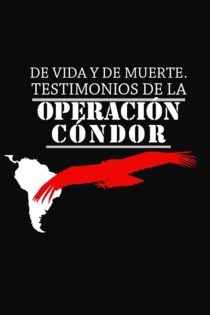
De vida y de muerte, testimonios de la Operación Cóndor
Pedro Chaskel
Augusto Pinochet
Documentary that explores the "Archives of Horror" of the General Alfredo Stroessner's dictatorship, discovered in Paraguay in 1992 and in the documentation of Operation Condor found there, which reveals who was responsible, their goals, strategies, accomplices and murders.
De vida y de muerte, testimonios de la Operación Cóndor
Los ojos como mi papá
Pedro Chaskel
Latin American children, children of exiles and political prisoners, tell of their experiences of integration in Cuba, sharing their memories from exile and ideas on politics and education. Filmed in Havana in February 1979, the International Year of the Child.
Eyes Like My Dad
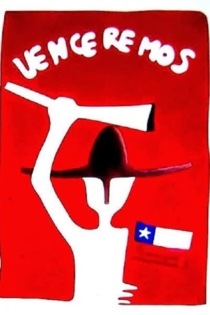
Venceremos
Héctor Ríos, Pedro Chaskel
A collage of images showing the two faces of a society. That of poverty and that of wealth. Throughout the documentary, this antagonism is shown: populations in unhealthy conditions, and on the other hand, large showcases with mannequins.
Venceremos