Woody Vasulka
1937 - 2019
The Vasulka Effect
Hrafnhildur Gunnarsdóttir
Woody Vasulka, Steina Vasulka
The opening of The Vasulka Effect couldn’t be more apt: Steina Vasulka addresses her husband Woody through various TV screens. He does the same and replies. A perfect image of the relationship between the free-spirited, groundbreaking pioneers of video art. After meeting in Prague in the early 1960s, they relocated from Czechoslovakia to New York, where they later founded The Kitchen, their legendary art and performance gallery.
The Vasulka Effect
Art of Memory
Woody Vasulka
Daniel Nagrin, Doris Cross
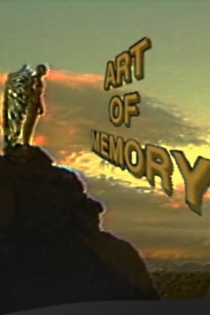
Manipulating a variety of sources, Vasulka uses creative imaging tools to situate historical images against Southwestern landscapes of incredible beauty. Contorting the images into a variety of isomorphic forms, Vasulka creates a literal shape for these memories, developing these shapes as metaphors for the processes of fragmentation, condensation, and inversion, that inevitably contort fact into memory. While much of the raw material for the tape is drawn from World War II and its rehearsals, the Spanish Civil War and the Russian Revolution, The Art of Memory is really an extended meditation seeking to reconcile the blurry, banal photographs of historic figures with the mass destruction they helped engineer.
Art of Memory
Participation
Woody Vasulka, Steina Vasulka
Jimi Hendrix, Ian Anderson
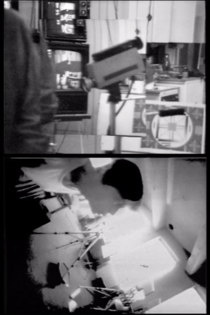
This period compilation of documentaries shot with a Portapak camera from the early era of video experimentation offers an immediate view of the independent New York art scene (concerts and theater perfomances on the streets and in the clubs of downtown). It is a sort of summary of Steina and Woody Vasulka's first creative period, a period of fascination with the more bizarre aspects of "new American decadence". Thanks to the video camera and its revolutionary implications, the creators were able to penetrate into spheres where the documentarians of more classical media were neither allowed nor interested to enter, thereby helping to expand the ideas of documentary possibilities. Steina has remarked that she learned the craft of camerawork as documentarian thanks to these celebratory, countercultural scenes of the "sexual avant-garde"-- Participation also features a pulsing light show projection at the Fillmore East, and a scene from Off-Broadway drag theater.
Participation
1-2-3-4
Woody Vasulka, Steina Vasulka
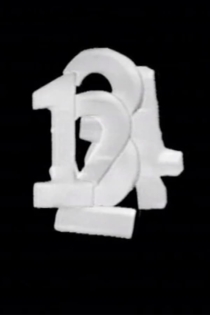
This work shows paradoxical space relations in electonic depths, where the common space coordinates no longer apply and where the images become objects in space. The numerals on the cakes were captured by four cameras and then processed with the Multikeyer.
1-2-3-4
Scan Processor Studies
Woody Vasulka, Brian O'Reilly
The SCAN PROCESSOR STUDIES are a collection of works by Woody Vasulka & Brian O'Reilly. The full work is of total approximate duration of 45 minutes, with sections of various lengths, textures, and dynamic qualities.
Scan Processor Studies
Binary Lives
Peter Kirby
Steina Vasulka, Woody Vasulka
A short documentary on the life and art of Steina and Woody Vasulka, produced in 1996. The Vasulkas speak candidly about their work and worldviews, and the piece features excerpts from their early works and a glimpse into their '90s output.
Binary Lives
In Search of the Castle
Woody Vasulka, Steina Vasulka
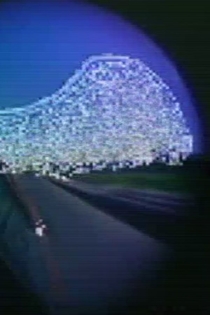
This symbolic journey evokes the personal creative wandering of the Vasulkas. The landscape, shot from a car window while driving in the Santa Fe area, is gradually transformed with more and more complicated imagery techniques.
In Search of the Castle
Thierry
Woody Vasulka, Steina Vasulka
One of the works assembled in the series Sketches. These early sketches, created not without the irony, examine ways of manipulating the video image. They indicate that the documentary trend in the Vasulkas' work was from the beginning mingled with free experimentation. These short tapes were modified from the early documentary tapes.
Thierry
The Matter
Woody Vasulka
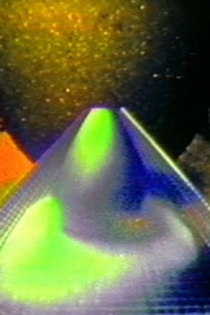
The image and sound are being simultaneously generated from a single source, which at the same time shapes the visual pattern as well as electronic sound of the resulting signal. The potential of the Scan Processor enables the modification of the shape and scale of geometrical patterns, resulting in the creation of a new kind of "image behavior".
The Matter
Orbital Obsessions
Woody Vasulka, Steina Vasulka
Steina Vasulka
Documentation and experimentation in real time, "Orbital Obsessions" is an example of early video self-portraiture, eerie and calm in its radical implications for the medium. The Vasulkas were interested in the building of control systems for the manipulation of electronic signals, resulting in their collaborations with several designers and engineers. One such example was the Multi-Level Keyer, a tool designed in 1973 by George Brown at the request of the Vasulkas, who were interested in expanding their range of source imagery. Steina’s manipulation of the image through keying, layering, and the manual control of luminance is seen here.
Orbital Obsessions