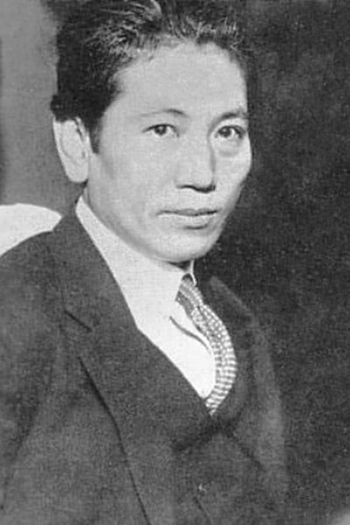
Musei Tokugawa
1894 - 1971
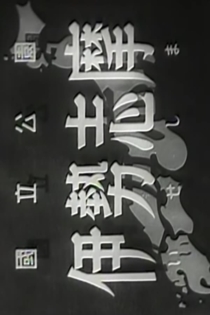
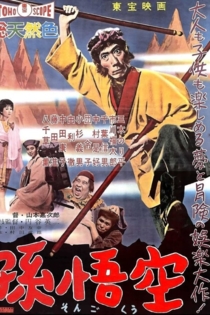
孫悟空
Kajirō Yamamoto
Norihei Miki, Reiko Dan
The mythical adventures of the legendary Chinese trickster Monkey, who must outwit a variety of wily demons who stand in the way of him and his fellow Buddhist travelers. Though portrayed as a literal, if rather anthropomorphized, monkey in the original legends, this film substitutes the spindly comic actor Norihei Miki, sans makeup.
The Adventures of Sun Wu Kung
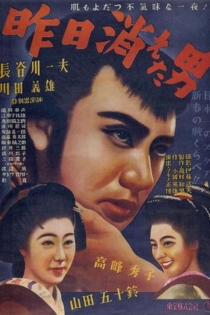
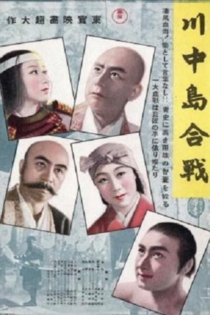
川中島合戰
Teinosuke Kinugasa
Ennosuke Ichikawa, Denjirō Ōkōchi
This epic depicts the battle between Uesugi Kenshin and Takeda Shingen. The focus of the story is the struggle by the unit leader in charge of the main supply wagons and the supply troops to transport materiel to the Uesugi army. To this are added episodes involving an itinerant woman.
The Battle of Kawanakajima
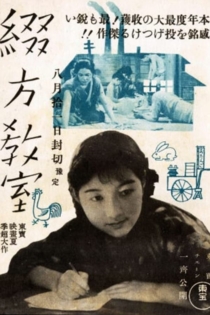
煉瓦女工
Yasuki Chiba
Ranko Akagi, Etchan
This film focuses on Koreans living in Japan. The filmmaker’s humanism comes across in the portrayal of a girl living in a shabby tenement, the warmth of a Korean girl she meets, and the friendliness of this Korean girl’s family.
The Brick Factory Girl

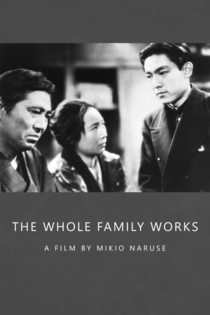
はたらく一家
Mikio Naruse
Musei Tokugawa, Noriko Honma
The Whole Family Works, Mikio Naruse's adaptation of a Sunao Tokunaga novel, feels more of a piece with the writer/director's quietly observant and psychologically charged later work. For the Naruse-familiar, it is an anomaly only in its placement within his filmography—indeed, this could be a film made by the elder, stasis-minded Naruse momentarily inhabiting, through a metaphysical twist of fate, his stylistically exuberant younger self. Set in depression-era Japan around the time of the Sino-Japanese War (which the director evokes, during a brief dream sequence, by dissolving between children's war games and actual adult warfare), The Whole Family Works gently observes a family coming apart at the seams. Ishimura (Musei Tokugawa) is the jobless father of nine children.
The Whole Family Works
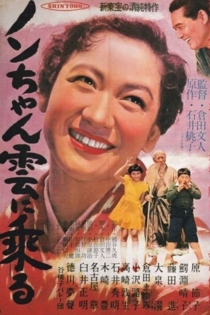
ノンちゃん雲に乗る
Fumindo Kurata
Setsuko Hara, Haruko Wanibuchi
A little girl who falls into a lake and is saved by a god who then takes her up to the clouds and shows her what the world was like before she was born and what the world would be like if she where never born. While in the clouds she meets her grandparents and a few other people she loved who have passed on.
Nobuko Rides on a Cloud
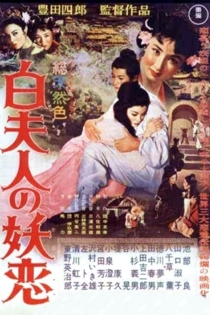
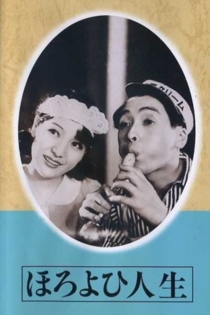
Ongaku kigeki: Horoyoi jinsei
Sotoji Kimura
Musei Tokugawa, Dekao Yokoo
The film generally regarded as Japan’s first true musical was also the first film made entirely in-house by the pioneering studio P.C.L., a company founded specifically to take advantage of emergent sound technology. P.C.L. worked in collaboration with a brewer’s firm, Dai Nihon Biru, who met the production costs of the film in full, and whose products are featured in the film in an example of the sophisticated and modern merchandising typical of the studio’s early work. The film is partially set in a beer hall, and its story concerns a beer seller at a train station and her relationship with a music student trying to create a hit song. Director Sotoji Kimura was to become a company stalwart, making such films as Ino and Mon, while actress Sachiko Chiba would emerge the studio’s first real star, appearing in such films as Wife Be Like a Rose.
Tipsy Life