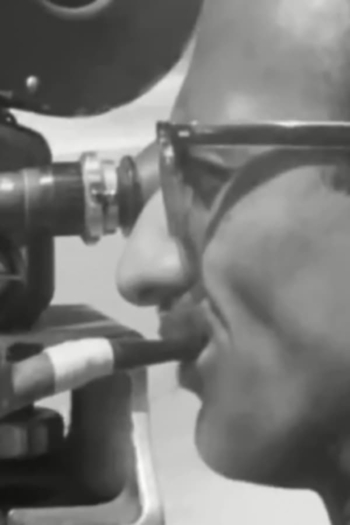
S.N.S Sastry
1930 - 1978Under FIlms Division India, S.N.S. Sastry made state-sponsored films, however, he drifted away from other government filmmakers in that he developed this nervous, explosive, humorous style of films. His films were known to catch the audience's attention by juxtaposing serious topics with nuanced, ironic, and even dark humor. Even during the period of the Emergency, when state-sponsored films were heavy-handed propaganda, Sastry used images and sounds in ways that evaded fixed meanings—including an eclectic style of montage, dissonant sound, and “remix". Titles that demonstrated these possibilities of subverting state propaganda include And I Make Short Films (1968), Our Indira (1973), and This Bit of That India (1972). In all of his films, Sastry leaves the audience breathless; his visual metaphors and exciting mixes of sound and media make it so every second of every film serves some sort of purpose; blink, and you'll miss it. The audience tirelessly attempts to catch up with his satire, as he even subverts the definitions of what a documentary is supposed to be. Titles that explicitly question what it means to make documentaries include And I Make Short Films (1968) and On the Move (1970).
The exact date of his birth is unknown, however, TMDB will not let me put "1930" by itself. Therefore, I have put 1/1/1930 as a placeholder; please note 1/1/1930 is not his real birthday.
This Bit of That India
S.N.S Sastry
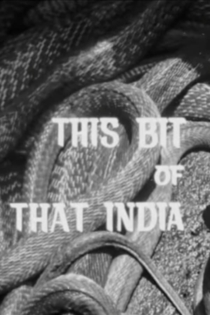
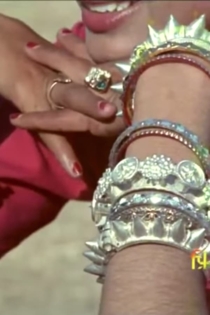
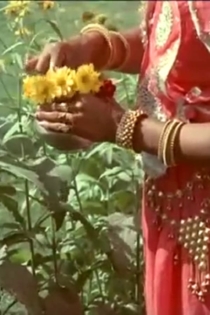
"This Bit of That India" is a layered reflection on youth culture, diversity, progress, education, technology and sexuality. The film juxtaposes documentary moments that celebrate individual freedom with a theatrical performance of Federico Garcia Lorca's "The House of Bernarda Alba", as a metaphor for repression and conformity.
This Bit of That India

Our Indira
S.N.S Sastry
This film records the late third Prime Minister of India, Indira Gandhi, taking the oath for her office and addressing the first-ever UN Conference on Human Environment at Stockholm. Here, she said, "The rich countries may look upon development as a course of environmental destruction...But to us, development is one of the primary means of improving the environment of living, of providing food, water, sanitation and shelter, of making the desert green and the mountains habitable." Directed by S.N.S Sastry
Our Indira

We Have Promises to Keep
S.N.S Sastry
On 26th of June, 1975 the state of emergency was declared by the late Prime Minister Indira Gandhi. This film collects reactions of cross-section of people about changes brought about by the Emergency for their benefit. The film also includes an interview with the Prime Minister.
We Have Promises to Keep
Flashback
S.N.S Sastry
Made a year before the Emergency, Flashback was commissioned by Films Division to commemorate its 25th anniversary. Sastry, with his ever-surprising style, turns this ‘history of’ film into a joyous mix, bringing archival film footage, documentation of Films Division’s infrastructure, and the musings of John Grierson, Ezra Mir, S Sukhdev and himself together, to tussle with the role of documentary cinema. Today, the unprecedented access to archives like that of Films Division is an open invitation to ‘flashback’ and reassemble the past.
Flashback

The Burning Sun
S.N.S Sastry
A film about the living conditions of slum dwellers in the city of Bombay. The candid interviews of slum dwellers reveal their scathing reactions to the slogan of Garibi Hatao, and the pretentions of politicians. These interviews also demonstrate in what inhuman conditions the slum dwellers lead their lives. The inter-cut interview with Mr. Kasbekar, Administrator, Housing Board, presents the official side of the problem.
The Burning Sun