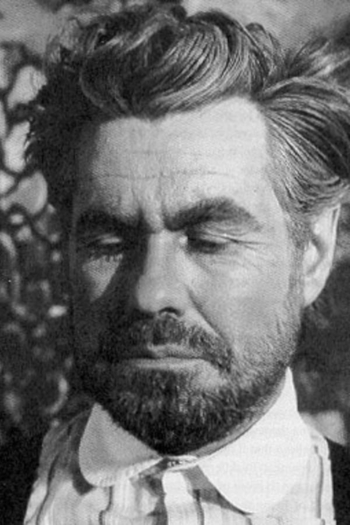
R. Bruce Elder
1947 (78 лет)Consolations (Love Is an Art of Time) Part 3: The Body and the World
R. Bruce Elder
"Elder's most philosophical film ... subtly woven connections ... proceed under a contemplative regime" that "solicits the memories of the whole cycle in more delicate ways." Bart Testa
Consolations (Love Is an Art of Time) Part 3: The Body and the World
Look! We Have Come Through!
R. Bruce Elder
Stephanie Avon
"a revelation of the editing process ... done with remarkable care and precision ... The interrelationship between moving body and moving camera is heightened to the intensity of a struggle." Joyce Nelson
Look! We Have Come Through!
Consolations (Love Is an Art of Time) Part 2: The Lighted Clearing
R. Bruce Elder
R. Bruce Elder, James D. Smith
"Elder's most philosophical film ... subtly woven connections ... proceed under a contemplative regime" that "solicits the memories of the whole cycle in more delicate ways." Bart Testa
Consolations (Love Is an Art of Time) Part 2: The Lighted Clearing
A Man Whose Life Was Full of Woe Has Been Surprised by Joy
R. Bruce Elder
R. Bruce Elder
Elder depicts forms of life that have grown increasingly out of touch with the body, and attempts to elicit and experience of the delight that results from reconnecting with our natural being
A Man Whose Life Was Full of Woe Has Been Surprised by Joy
Consolations (Love Is an Art of Time) Part 1: The Fugitive Gods
R. Bruce Elder
R. Bruce Elder, James D. Smith
"Elder's most philosophical film ... subtly woven connections ... proceed under a contemplative regime" that "solicits the memories of the whole cycle in more delicate ways." Bart Testa
Consolations (Love Is an Art of Time) Part 1: The Fugitive Gods
The Art of Worldly Wisdom
R. Bruce Elder
R. Bruce Elder
A compelling and revealing exploration of one person's psyche in crisis.... The film is a screen diary of a man in his early 30s afflicted with a life-threatening disease, a man confronting his own mortality.
The Art of Worldly Wisdom
Infunde Lumen Cordibus
R. Bruce Elder
"The film was made using principles derived from Stephen Wolfram’s work on cellular automata (A New Kind of Science) to determine the content or colour of the shots, their duration, and the time of their appearance: the palette of effects, and their rhythmical development (from the simple alternations with which the film begins to the complex dynamic structures of its later parts),is entirely the result of computational processes that model natural events. John Cage instructed us that art should imitate nature in its manner of operation; I have tried to take the lesson. The music was composed by Colin Clark, using related principles".
Infunde Lumen Cordibus
Eros and Wonder
R. Bruce Elder
A hybrid of analogue and digital techniques in which chemical transformations of the image are combined with electrical modifications to produce a fantasia of vibrantly coloured alchemical forms that suggest an erotic wonder at all the world’s surfaces.
Eros and Wonder

Lamentations: A Monument for the Dead World
R. Bruce Elder
Robert Fothergill, Kristina Jones
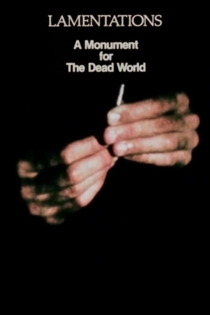
Lamentations: A Monument to the Dead World belongs to a 35-hour film cycle, The Book of All the Dead, which comprises the bulk of Toronto-based Bruce Elder’s filmmaking from 1975 to 1994. In ancient Egyptian culture, the Book of the Dead consisted of religious texts intended to help preserve the spirit of the departed in the afterlife — but in Elder’s reading, that comforting idea of continuity takes on a rather darker cast. Lamentations is comprised of a complex audio and visual patchwork: a philosophical meditation superimposed as text throughout the film; vignettes featuring a comical but disturbing Franz Liszt, a debate between Isaac Newton and George Berkeley, an angry, deranged man in an alley, and an arrogant psychiatrist; and a final search for salvation in the forests of British Columbia, the American Southwest, and Mexico’s Yucatan.
Lamentations: A Monument for the Dead World
Crack, Brutal, Grief
R. Bruce Elder
Powerful and raw, ‘Crack, Brutal, Grief’ is an impressive extension of R. Bruce Elder's obsessions with history, media culture, psychology, technology, and the cruelty found in nature. The film acts as a primal scream, literally and metaphorically. The point of departure for the film came shortly after the gruesome suicide of Elder's close friend.
Crack, Brutal, Grief