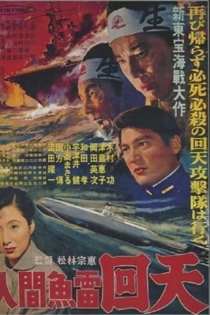
Masao Takamatsu
2021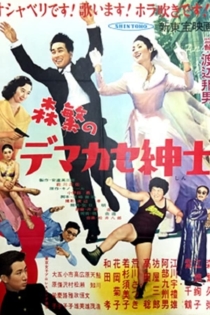
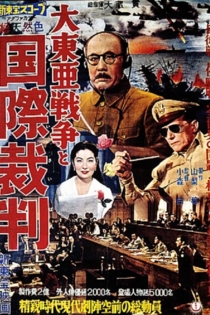
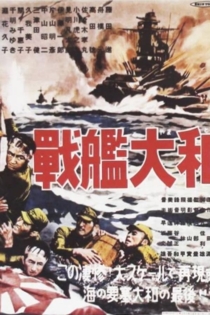
大東亜戦争と国際裁判
Kiyoshi Komori
Kanjūrō Arashi, Minoru Takada
In 1941, overpopulated Japan faces an economic boycott and its armed forces push further to the south. And despite negotiations between Japan and the U. S. A. war is declared with the attack on Pearl Harbour. Victories follow for Japan on land and sea and her forces push forward to the borders of India. But gradually the tide turns in favour of the Allies and after the atom bombings of Hiroshima and Nagasaki, Japan is compelled to accept the Potsdam Declaration and by the order of the Emperor agrees to unconditional surrender. Under the supervision of the occupation forces the International Military Tribunal opens in Tokyo to try the Japanese war leaders. Established in the cause of justice, and to prevent future aggressive wars the trials drag on for two and a half years. And on December 23, 1948, General Tojo and six other war leaders mount the thirteen steps to the gallows at Tokyo's Sugamo prison.
The Pacific War and the International Military Tribunal
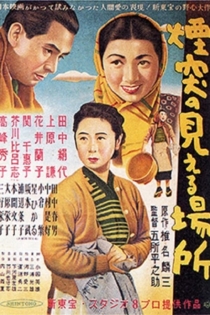
煙突の見える場所
Heinosuke Gosho
Kinuyo Tanaka, Ken Uehara
Gosho’s most celebrated film both in Japan and the West, Where Chimneys Are Seen is perhaps the most compelling example of his concern for, and insights into, the everyday lives of lower-middle-class people. Based on Rinzo Shiina’s novel of the absurd, the film depicts the lives of two couples against the backdrop of Tokyo’s growing industrialization during the 1950s.
Where Chimneys Are Seen
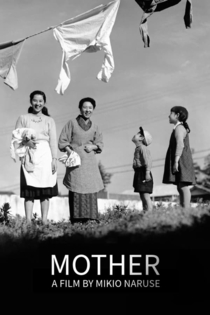
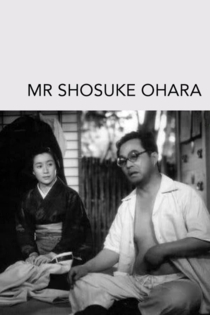
小原庄助さん
Hiroshi Shimizu
Denjirō Ōkōchi, Akiko Kazami
Saheita, the final heir of a once rich and respectable family, can't refuse the many villagers that come to him for favours and money, even though he is on the brink of bankruptcy. Around town he is better known by his nickname Mr. Shosuke Ohara.
Mr. Shosuke Ohara
貞操の嵐
Michiyoshi Doi
Tadao Takashima, Miyuki Takakura
Yuri is looking forward to marrying her fiancé Minoru. However, a few days before the wedding she falls victim to his brother Takehiko, and against her will, she becomes Takehiko's wife. The day after the wedding, Yuri begins her silent revenge by not talking to her husband. She retains her love for Minoru and never gives herself to Takehiko's embrace again. She also contributes large sums of money from Takehiko's fortune to charity.
Stormy Virtue
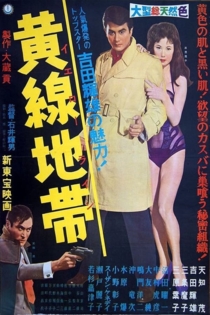
Ôsen chitai
Teruo Ishii
Shigeru Amachi, Yōko Mihara
From the king of Japanese exploitation films comes a criminal drama told in a semi-documentary fashion. The murder of the chief official of Kobe city's Customs triggers an investigation of a prostitution ring called the 'Yellow Line' that sells Japanese women. A hired assasin is betrayed by his organization, and kidnaps a woman who happens to be the girlfriend of a newspaper reporter.
Yellow Line
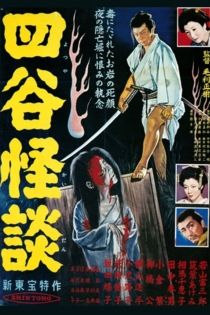
Yotsuya Kaidan
Masaki Mōri
Tomisaburō Wakayama, Akemi Tsukushi
Oiwa has been searching for the one who killed her father for a long time. She comes to Yedo and sees a man named Naosuke. The film is based on the kabuki classic: Toukaidou Yotsuya Kaidan (1826) written by Tsuruya Nanboku and is one of the most famous ghost stories throughout Japan.
The Ghosts of Yotsuya
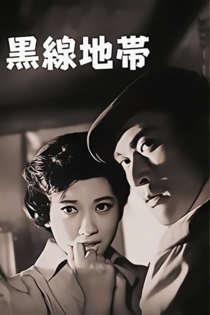
Black Line
Teruo Ishii
Shigeru Amachi, Utako Mitsuya
Freelance reporter “Scoop” Machida is hot on the trail of a prostitution ring called the Black Line, when he is framed for the murder of a young woman. Forced to clear his own name, the handsome journalist sinks deeper into the Black Line’s rotten swamp of drugs, prostitution, and murder and finds unexpected help in Maya, a steamy female gambler familiar with the neon-lit streets, shadowy alleyways, and seedy nightclubs he must navigate. The closest film in the Line series to classic American film noir, Ishii’s Black Line is a pulpy assortment of crime film conventions including the starkly expressionistic black and white cinematography by Jûgyô Yoshida, a jazzy music score by Michiaki Watanabe, and a sleazy screenplay by Ishii and Ichirô Miyagawa.
Black Line
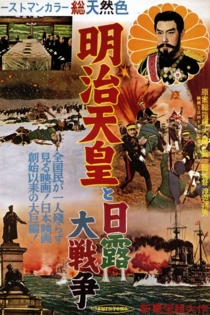
明治天皇と日露大戦争
Kunio Watanabe
Kanjūrō Arashi, Kusuo Abe
Meiji Tenno portrays the buildup to the Russo-Japan War. In addition to showing the political events that led to war, it also shows the era from the story of a farm family in rural Japan that sends their son off to war. As such, it could be considered an anti-war movie, showing how, while war is devised by governments, the people do not really understand what war is, and its combatants often do not know what they are fighting for.
Emperor Meiji and the Great Russo-Japanese War
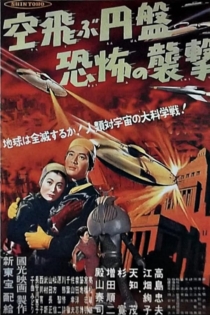
空飛ぶ円盤恐怖の襲撃
Shinichi Sekizawa
Tadao Takashima, Junko Ebata
A 1956 alien invasion tokusatsu film directed by Shinichi Sekizawa, the screenwriter noted for his immense contributions to Toho's Godzilla series by providing the screenplays/stories for the majority of the original Showa films.
Fearful Attack of the Flying Saucers