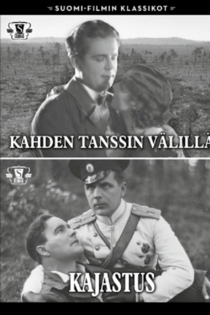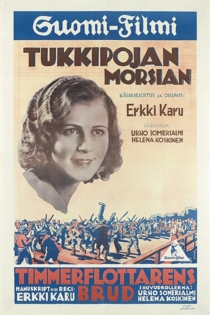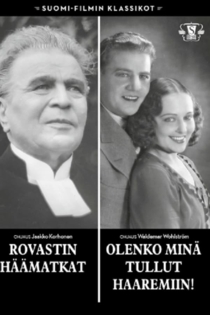
Waldemar Wohlström
1879 - 1964Vem dömer
Victor Sjöström
Jenny Hasselqvist, Ivan Hedqvist
At the end of the middle ages, Ursula is accused of having poisoned her own husband. She claims she is innocent, but to prove it, she must submit to a ritual: trial by fire, walking on fire along a path leading directly to a crucifix. A film that has been much commended for the visual creativity shown by the director in successive blending in of images involving Ursula, her husband, the Virgin Mary, and Jesus Christ. Much applauded, also: the performance of Jenny Hasselqvist, thus described by French director René Clair: “We shall never forget her flaming eyes, the severity of her spirit, her abrupt and alarmed expressions, like an animal under threat.”
Love's Crucible

Hjärtats triumf
Gustaf Molander
Carl Brisson, Lissy Arna
In a small mine town north of the circle, Torsten lives, working with his sister Eva and comrade Lars, who is engaged to Eva. The town's bat-owner has a daughter, Märta, who, after trying out the big city life, has returned to the village for a while, and begins to flirt openly with Torsten, but also with Lars. Märta hears of an old gold treasure that will be hidden somewhere in the mountains, trying to seduce both of them and seek both friends to find out the treasure. Neither Lars nor Torsten knows the plans or swarms of others, but Eva notices how Märta attracts Lars away from her.
Triumph of the Heart

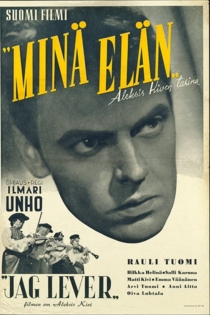
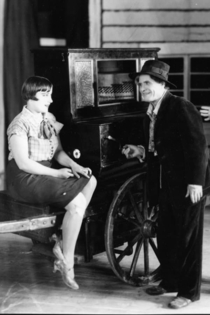
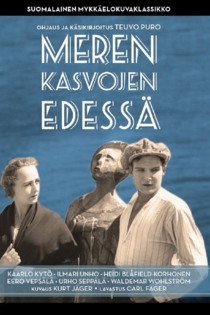

Murtovarkaus
Harry Roeck Hansen
Joel Rinne, Emil Lindh
The Burglary (1926), a drama film directed by Harry Roeck Hansen, is based on a play by Minna Canth. Niilo (portrayed by actor Joel Rinne), a son of a rich estate owner, is in love with a poor crofter’s adopted daughter Heleena (Kaisa Leppänen). However, on his father’s (Emil Lindh) orders, Niilo instead becomes engaged to Loviisa (Ester Roeck Hansen), a daughter of a wealthy landowner. When Niilo wants to call off the engagement, his proud and rejected bride begins to interfere with the lovers’ relationship with the help of Penttula (Yrjö Somersalmi), who is said to be able to perform miracles.
The Burglary
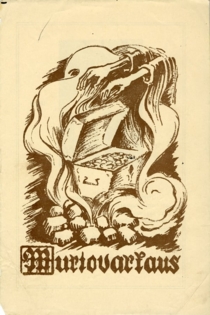
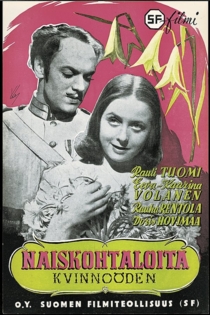


Meidän poikamme
Erkki Karu
Axel Slangus, Waldemar Wohlström
Silent military propaganda film by Erkki Karu, later followed by the musical revue film Meidän poikamme merellä ("Our Boys at Sea", 1933) and Meidän poikamme ilmassa – me maassa ("Our Boys in the Air – and We on Land", 1934), both of them also directed by Karu. The film comes with a orchestral accompaniment arranged by Raine Ampuja in 2005, based on the original score by Lauri Näre and Emil Kauppi, which in turn was based on traditional Finnish military tunes.
Meidän poikamme