Joost Rekveld
2021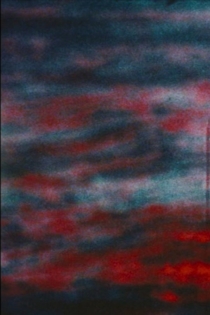
#7
Joost Rekveld
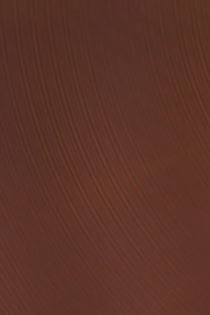
Essentially a slow evolution from black to white, this film is an articulation of the old idea of Aristotle's that colours arise from the clash between light and dark. The colours of #7 are based on the opposition of pigment and light, and are all produced by stamping paint directly onto the negative.
#7
#5
Joost Rekveld
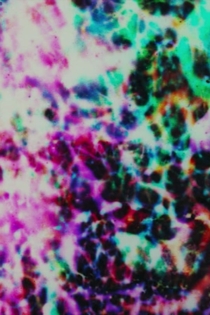
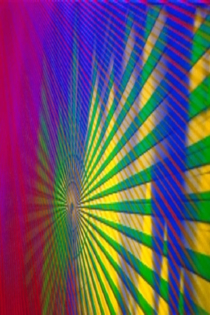
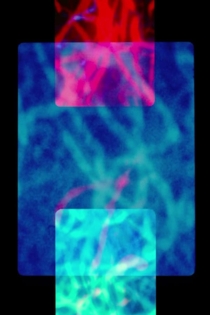
Continuously modulating between animations with long exposures and snapshots enlarged across many film frames, #5 explores the relationship between image and time on the film strip. The images were made using very non-virtual, simple reflecting materials and can be regarded as action painting with light.
#5
#3
Joost Rekveld
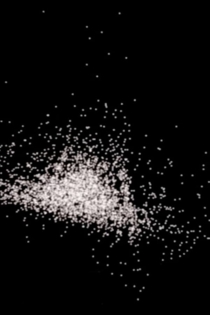
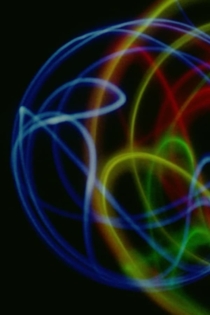
The first film Rekveld composed according to methods he still uses to structure films. Featuring images created by recording the movements of a tiny light source with extremely long exposure times, so it draws traces on the photographic emulsion. The light is part of a simple mechanical system that exhibits chaotic behaviour.
#3
#57
Joost Rekveld
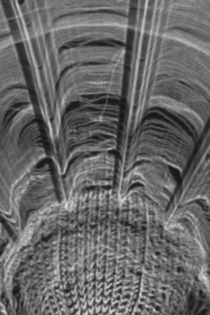
A categorical accumulation of abstract patterns. Lines, colours and sounds obey an impenetrable logic. A quiet film that dares to be resolutely experimental. Chaotic equations by the Chinese mathematician Wang Lin are tackled by an analogue computer, a small battery of surplus high-frequency oscillators and Joost Rekveld.
#57
#43.4
Joost Rekveld
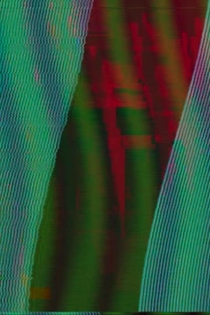
Short piece commissioned for the ‘Modern Times’ project by Stichting Cinema Zuid in collaboration with the One Minutes. Part of a long-running exploration of algorithms that are based on a combination of propagation and local interactions. Originally triggered by an encounter with simulations of how nerve impulses organise themselves into oscillations in tissues like heart muscle, the project has since expanded to include an interest in the more general emergence of patterns in time and space out of homogeneous starting conditions.
#43.4
VRFLM
Joost Rekveld
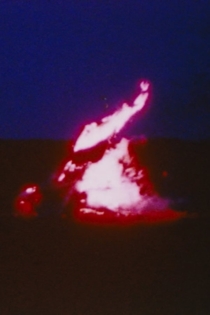
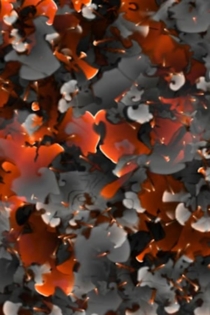
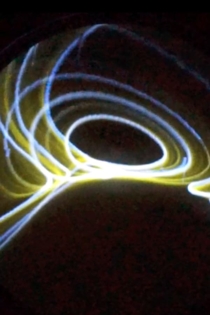
A short study for the optical printer, based on found footage of fire, on coloured light from the printer and chemical manipulations of the film emulsion. The film, consisting of 11 sections, changes from a traditionally centered image towards images that cover lengths of the filmstrip and originate from the material itself.
VRFLM