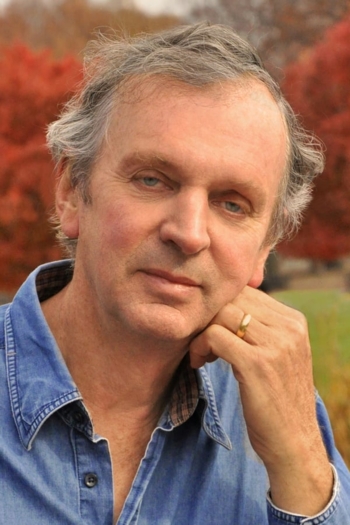
Rupert Sheldrake
1942 (83 года)Een schitterend ongeluk
Max Kisman, Rob Schröder
Daniel C. Dennett, Freeman Dyson
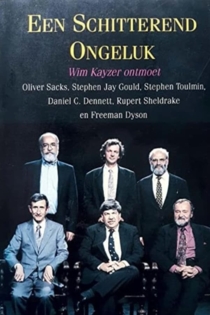
One of the most interesting shows ever aired on public television was Wim Kayzer's interviews with six leading intellectuals who represented both the mainstream academic (Stephen J. Gould, Freeman Dyson and Stephen Toulmin) and more or less, as it were, "eccentric" outside the box groundbreaking intellectuals (Oliver Sacks and Rupert Sheldrake). Kayzer interviews each of them (and philosopher Daniel Dennett) individually and then has the entire group sit in a kind of round-table seminar that he moderates and lets the ideas fly.
A Glorious Accident
The Way of Miracles
Christina Vircillo Bresson
Dr. Mark Mincolla, Dr. Deepak Chopra
The Way of Miracles is a groundbreaking film that takes us on a journey of human healing and personal empowerment. Miracle recoveries and their underlying science are explored and uncovered in this thought-provoking documentary.
The Way of Miracles

The Way of the Psychonaut
Susan Hess, Susan Hess
Stanislav Grof, Susan Hess
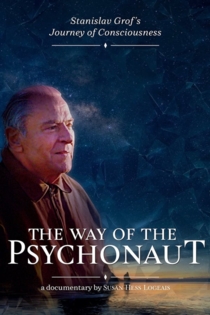
The Way of the Psychonaut explores the life and work of Stanislav Grof, Czech-born psychiatrist and psychedelic psychotherapy pioneer. Stan’s quest for knowledge and insights into the healing power of non-ordinary states of consciousness, influenced the discipline of psychology and profoundly changed many individual lives. One of those transformed by Stan is filmmaker Susan Hess Logeais. The documentary utilizes Susan’s personal existential crisis as a gateway to Grof’s impact, from the micro to the macro.
The Way of the Psychonaut
Time Is Art: Synchronicity and the Collective Dream
Maia Monasterios, Joel Mejia
Gary S. Bobroff, East Forest
"Time is Art" is ultimately the story of an artist's search for inspiration in a money-driven society that shuns creativity, and of the human search for meaning in a seemingly meaningless world.
Time Is Art: Synchronicity and the Collective Dream

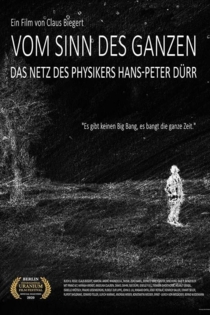
Vom Sinn des Ganzen
Claus Biegert
Claus Biegert, John D. Liu
The physicist Hans-Peter Dürr (1929 - 2014), successor to Werner Heisenberg at the Max Planck Institute in Munich, in the field of tension between the physicists Edward Teller and Josef Rotblat. Teller and Rotblat belonged to the "Manhattan Project" in Los Alamos, where the bombs with which the USA destroyed Hiroshima and Nagasaki in 1945 were constructed under the direction of Robert Oppenheimer. Both went in opposite directions: Teller became known as the "father of the hydrogen bomb", Rotblat received the Nobel Peace Prize for founding the "Pugwash movement". In between is Dürr: as a doctoral student at Teller, without knowing his background, later an ardent admirer of Rotblat and supporter of Pugwash. Appointed as successor by Werner Heisenberg, he heads the Max Planck Institute for Astrophysics and at the same time participates in the peace movement. He makes enemies - and many new friends.
Vom Sinn des Ganzen