Roee Rosen
2021Arutz HaAvak
Roee Rosen
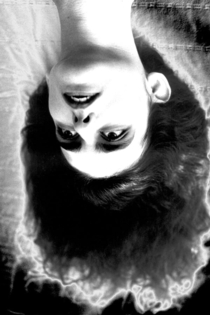
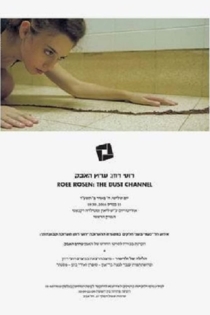
The Dust Channel is a cultural exquisite corpse: an operetta with a libretto in Russian about a British home appliance, a Dyson DC07 Vacuum Cleaner, set in an Israeli reality of private perversion and socio-political phobias. While each of these layers offers its own resonances and substrata, they share communal and individual forms of xenophobia from within the private sphere of leisure and pleasure, abundance and perversions.
The Dust Channel
Explaining the Law to Kwame
Roee Rosen
Hani Furstenberg
In this monologue a legal theorist sets out to tackle the ways in which the Israeli military law in the occupied territories tackles the problems of circumscribing, defining, judging and punishing Palestinian children. The approach she tries is to imagine a listener removed in time and space. Her speech, however, lapses into musings on aging, illness and sexuality. A different cut of the monologue will be a part of a longer film entitled Kafka for Kids, but it can be experienced as an autonomous work.
Explaining the Law to Kwame
Hilarious
Roee Rosen
Hani Furstenberg
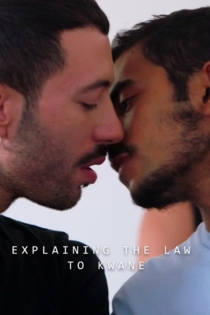
Hilarious is set to examine the possibility of dysfunctional humor and laughter stirred when there is no reason to laugh. Hilarious presents a stand up monologue of a female comedian performing live in front of a studio audience. If humor is a mechanism set to cope in particular ways with disturbing, sometimes forbidden topics, this performance not only offsets these structures through their failure, but also offers a different manifestation of these topics, left exposed without the guise of laughter.
Hilarious
Tse
Roee Rosen
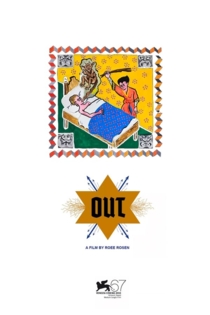
Out presents a domination/ submission scene set in a mundane living room. The increasing pain prompts the sub to spew out not only cries of pleasure and pain, but also sentences. The scene thus connotes both confessions under torture, and rituals of exorcism. The utterances of the demon who speaks through the sub are all quotes of Avigdor Lieberman, one of the most extreme right wing politicians in Israel. The ritual is framed by two scenes. A preceding interview with the two participants seems at the beginning to be a straightforward documentary, but transforms into an exposition of the narrative premise by which one is possessed, the other an exorcist. The final musical scene is a song set to the words of the Russian poet Esenin’s Letter to Mother. Executed as a one-shot, the song is a direct, if twisted, homage to the final scene of another film that deals with radical sexuality and politics: Dusan Makavejev’s WR, The Mystery of the Organism.
Out
Shtei Nashim Ve'Gever
Roee Rosen
Justine Frank was a Jewish Belgian painter and writer close to the Surrealists — an artist the world truly needed. Roee Rosen found her. He was also, via the mysterious Johanna Führer-Ha’sfari, involved with the translation of Frank’s magnum opus, Sueur douce (Sweet Sweat).
Two Women and a Man