Harry Smith
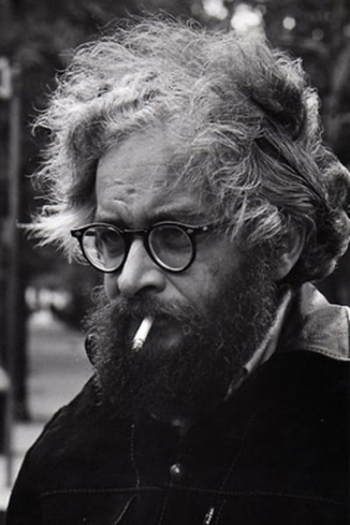
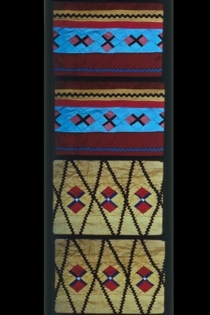
1923 - 1991Throughout his life Smith was an inveterate collector. In addition to records, artifacts he collected included string figures,[1] paper airplanes, Seminole textiles, and Ukrainian Easter eggs.
Description above from the Wikipedia article Harry Everett Smith, licensed under CC-BY-SA, full list of contributors on Wikipedia.
No. 18: Mahagonny
Harry Smith
Patti Smith, Allen Ginsberg
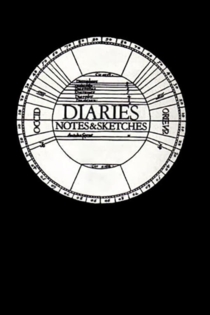
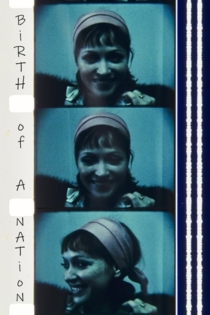
Harry Smith’s final film; an epic four-screen projection. Smith worked on this cinematic transformation of Kurt Weill and Bertolt Brecht’s opera Rise and Fall of the City of Mahagonny (1929) for over ten years and considered it his magnum opus. The film was shot from 1970 to 1972 and edited for the next eight years. The “program” of the film is meticulous, with a complex structure and order. The Weill opera is transformed into a numerological and symbolic system. Images in the film are divided into categories— portraits, animation, symbols and nature— to form the palindrome P.A.S.A.N.A.S.A.P. The film contains invaluable cameos of important avant-garde figures such as Allen Ginsberg, Patti Smith, and Jonas Mekas, intercut with installation pieces from Robert Mapplethorpe’s studio, New York City landmarks of the era, and Smith’s visionary animation.
No. 18: Mahagonny

Early Abstractions
Harry Smith
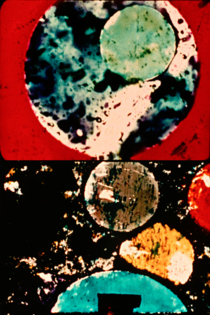
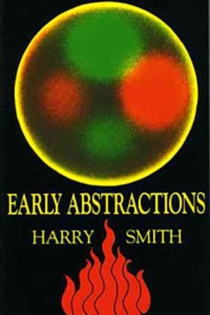
Early Abstractions is a collection of seven short animated films created by Harry Everett Smith between 1939 and 1956. Each film is between two and six minutes long, and is named according to the chronological order in which it was made. The collection includes Numbers 1–5, 7, and 10, while the missing Numbers 6, 8, and 9 are presumed to have been lost.
Early Abstractions
No. 3: Interwoven
Harry Smith
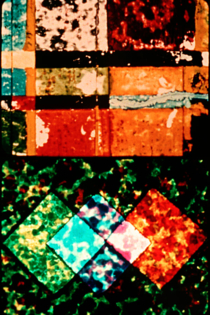
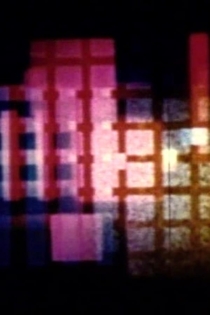
Hand-painted 35 mm stock photographed in 16 mm, color, 3:20 or 10 min. Reportedly cut down from about 30 min. Initially intended to be screened with and synchronized to Dizzy Gillespie's Guarachi Guaro or Manteca. "Batiked animation made of dead squares...".
No. 3: Interwoven
No. 16: Oz: The Tin Woodman's Dream
Harry Smith
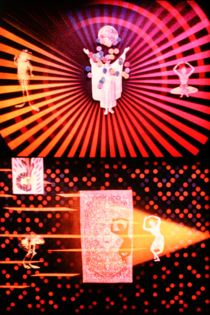
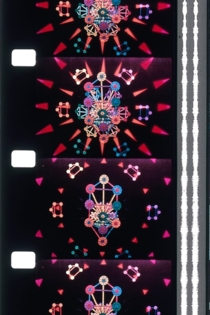
The Tin Woodman, framed by light bulbs, does a little dance, leaps and retrieves his axe from outside the frame, chops down a tree that turns into various objects, grabs a heart emblem from the corner, and goes to the Emerald City at night with Toto. He goes to the edge of a cliff, where he meats an Asian spirit who gives him a heart shape that becomes a kite that hooks to him with a cane. This is followed by approximately ten minutes of kaleidoscopic images, including a man's hands, a dancing girl, and a cutout of Krishna. - IMDb
No. 16: Oz: The Tin Woodman's Dream
No. 1: A Strange Dream
Harry Smith
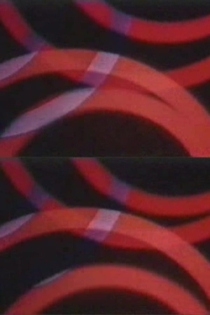
Hand-painted 35 mm stock photographed in 16 mm, color, silent, 2:20 or 5 min. Initially intended to be screened with and synchronized to Dizzy Gillespie's Manteca or Guarachi Guaro. "...the history of the geologic period reduced to orgasm length."
No. 1: A Strange Dream
No. 2: Message From the Sun
Harry Smith
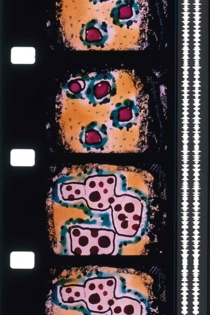
Hand-painted 35 mm stock photographed in 16 mm, color, 2:15 or 10 min. Initially intended to be screened with and synchronized to Dizzy Gillespie's Algo Bueno. This film "takes place either inside the sun or in... Switzerland" according to Smith. To produce this film he used a technique that involved cutting stickers of the type used to reinforce the holes in 3-ring binder paper. These were applied to 16 mm movie film and used like a stencil. Layers of vaseline and paint were used to color each frame in this manner. The effect is hypnotic, psychedelic and is something like a visual music.
No. 2: Message From the Sun