Richard Kerr
1952 (74 года)Universe of Broken Parts
Richard Kerr
Inspired by Beat Poet Ed Dorn's assertion that a poem is a 'document,' "Universe of Broken Parts" reflects Richard Kerr's interest in the poetics of image and sound. Transitioning from a balletic dance of shadows playing basketball, to pure abstraction of shape and colour, and cresting with images of police in riot gear, UNIVERSE amalgamates Kerr's painterly and documentarian impulses into a contrapuntal, yet fluid whole.
Universe of Broken Parts
the willing voyeur...
Richard Kerr
Hadley Obodiac, Diana Pavlovská
A photograph. Two blondes with a past on a train from Washington DC. Their destination is an abandoned train station, with body bags and kids running for their lives. At the station dead bodies are pulled from the basement and piled in the foyer for disposal. Mr. One, the consummate loner, waits. He feels bad about past deeds. He will even the score his way... At the station everyone is obsessed with a photograph titled "Gun Control" that defines the collective consciousness of the times. If everything is a clue, what's the mystery? When the two blondes arrive at the station questions will be asked. They may even get some answers. Certainly things will change.
the willing voyeur...
Cruel Rhythm
Richard Kerr
Shot during the opening stages of the First Gulf War, Kerr's "Cruel Rhythm" revisits the American desert for a cinematic tone poem in the vein of 'The Last Days of Contrition' A canopy of sound bites of media coverage on the build-up toward the war is juxtaposed with the alienness of windmills in the desert, and a startling sequence of drifting faces of a crowd coming towards the camera in slow motion. A thought-provoking piece on media's construction of societal paranoia "Cruel Rhythm" is an attempt to make a public, shared feeling intimate, or conversely, to make a subjective feeling of floating anxiety and dread into a shared representation." Unsettlingly, its ambiance is as poignant today as ever.
Cruel Rhythm
The Machine in the Garden
Richard Kerr
Shot in Hi8 video using a high-speed shutter and a spinning turret camera mount, "Machine in the Garden" is inspired by, and an homage to, apparatus-oriented work such as D. Vertov's "Man With a Movie Camera" and Michael Snow's "La Region Centrale."
The Machine in the Garden
The Last Days of Contrition
Richard Kerr
“The Last Days of Contrition (35 minutes black and white 1988) is an exploration of the Canadian and American landscapes, and the relationship between the two. The narrative deals with a journey through timeless, vacant American landscapes (baseball stadiums, Venice Beach, Mojave Desert, and a US Missile Base). The photographic strategy is influenced by a consciousness of light, a quintessential characteristic of American photography. I documented the American landscape in the tradition of the early formalist photographers (Walker Evans, Paul Strand, etc.) allowing there to be content in form. The Last Days of Contrition straddles two cultural forces while developing an understanding about our Canadian origins and muses. (RK)
The Last Days of Contrition
On Land Over Water (Six Stories)
Richard Kerr
"In cinema one extracts the thought from the image; in literature the image from the thought" (Levinson). This reflection was the catalyst for the photographic and narrative strategies of "On Land Over Water." "On Land Over Water..." was born out of an image-notion of a skid mark on a highway, photographed in close-up, revealing texture and form. The image would be positioned with a voice-over narration, telling the story of a young boy witnessing a fatal auto accident and its ensuing aftermath. Over the following winter months I meditated on the cinematic potentials of that notion, "On Land Over Water..." is the product of working out variations of that meditation. In story discourse, "On Land..."experiments with the possibilities of adopting the characteristics of the short story to the forms of cinema. (RK)
On Land Over Water (Six Stories)
Collage d’Hollywood
Richard Kerr
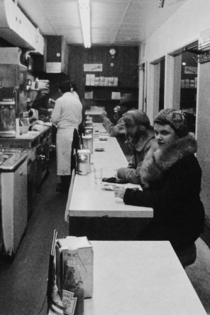
An eight-minute work filmed on 35mm film, Collage d’Hollywood explores the materiality of the film medium in a literal way. Collage is assembled from movie trailers found at a deserted drive-in cinema, and explores onscreen sex and violence
Collage d’Hollywood
never confuse movement with action
Richard Kerr
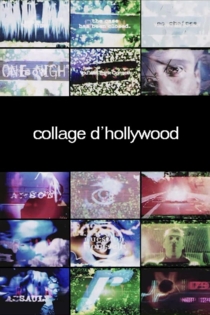
In September 1998, Kerr released "never confuse movement with action," a post-modern biography of Patrick Hemingway (a grandson of Ernest Hemingway). July 1999 was the centenary of Ernest Hemingway. There would be the publication of yet another posthumous novel. The Hemingway family hired a merchandising agent - Ernest Hemingway was now a brand name. The trust fund was secured for future generations.1999 was Ernest Hemingway's year. But when Patrick Hemingway saw "never confuse movement with action," he was less than pleased. Worried about his father's reaction, a lawyer was hired and injunction threatened against the work. In negotiations with the Hemingway lawyer, director Richard Kerr agreed to produce an alternative version, with no promises to cut the objectionable material.
never confuse movement with action
McLuhan
Richard Kerr
In "McLuhan", Kerr recontextualizes a "question and answer period" for design students delivered by media theorist Marshall McLuhan at Sherdian College in 1975. Operating from McLuhan's own aphorism "the medium is the message," Kerr combines footage of the address with two scrolling texts in the borders, in one showing an asynchronous transcript that weaves around McLuhan's dialogue, and in another, reinforcing McLuhan's talking points like a ticker on cable news. It has the effect of sharply reconceptualizing the semantic and rhetorical values of the lecture in particular, yet also provides a fascinating perspective on McLuhan's own ideas and intellectual form of address.
McLuhan
Action: Study
Richard Kerr
Shot in 1987 in high contrast 16mm, action : study marks the genesis of Kerr’s forays into a process he now refers to as ‘digital sketching’. Action: Study depicts Kerr’s daughter playing on the shores of Georgian Bay, but could easily be mistaken as a work of abstract animation. Kerr combines innovative hand-held techniques with the ultra-sensitivity of the film stock to create a startling wash of jagged, erratic, and constantly dynamic compositions of black and white. Indeed, at times reality seems to melt in front of us.
Action: Study
i was a strong man until i left home
Richard Kerr
A travelogue as catharsis, "i was a strong man until i left home" blends footage from several trips across North America, by plane, train and car. Informed by principles of Imagist Poetry, Kerr turns his camera on familiar imagery of the American travel experience, yet renders the quotidian as abstract, the continuity of perception as fragments. Employing a method he refers to as 'Digital Sketching,' "i was a strong man until i left home" possesses the intimacy of a flip through an artist's sketchbook.
i was a strong man until i left home