
David MacDougall
2021The New Boys
David MacDougall
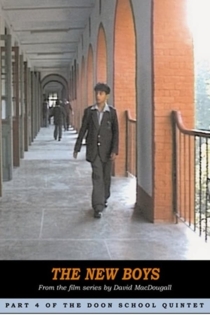
The social dynamics of the group is the focus of this study of life in Foot House, one of Doon School’s dormitories for new boys. It begins a few days before the boys appear and shows them arriving, struggling with their trunks and suitcases. It then follows them for the next two months of their lives in the house. The film provides a comparison to the group viewed in With Morning Hearts, for these boys appear more divided and class-conscious. Within the group there is a range of personalities and backgrounds—some are natural leaders, some subject to teasing and bullying, some argumentative, some peace-makers. An important feature of the film is the inclusion of conversations among the boys about the causes of aggression and warfare, homesickness, restaurant food, and how to speak to a ghost.
The New Boys
Gandhi's Children
David MacDougall
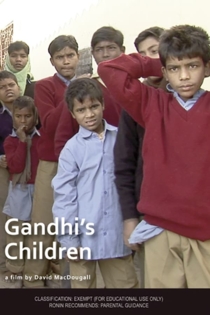
A shelter for children on the outskirts of Delhi provides food and accommodation for 350 boys. Some are orphans, others have been abandoned, still others have run away from home. About half are held under a court order, having been picked up from the streets for petty crimes. Living at the institution for several months, the filmmaker explores its routines and the varied experiences of several boys. Despite the harshness of their lives, many show remarkable strength of character, knowledge, and resilience. One day 181 child labourers arrived, placing additional strain on the building's deteriorating facilities. The institution does what it can, but is it enough?
Gandhi's Children
Tempus de baristas
David MacDougall
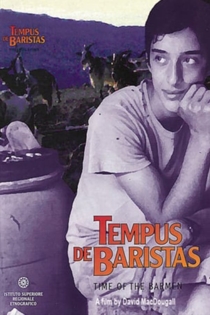
This documentary focuses on the vanishing lifestyle of a family of rural residents of the island of Sardinia. For many generations, they have been goatherds in the mountains, and it was a respected and acceptable occupation. Now tourism and the lure of other occupations deeply affects the younger generation, and soon there may be no goatherds left.
Tempus de baristas
The Wedding Camels
David MacDougall, Judith MacDougall
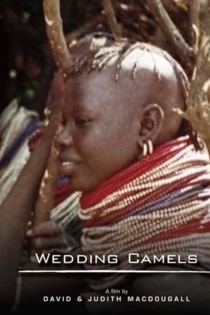
In this, the second film in renowned ethnographic filmmakers David and Judith MacDougall's classic Turkana Conversations Trilogy, one of Lorang's daughters, Akai, is going to marry one of his friends and age-mates, Kongu. Because of the close ties between the two men everything should go smoothly, but the pressures within the two families are such that the wedding negotiations over the bridewealth become increasingly tense. Arranging the number and type of animals to be given as bridewealth demands an intricate balance between psychology and economics: Kongu must offer enough animals to please Lorang and his relatives, but not so many that he appears weak or foolish, or depletes his own family's herds. Negotiations drag on for several days, then threaten to break down altogether. The outcome depends not only on traditional patterns of behavior, but also on the influence exerted by Lorang's wives and the manner in which Lorang chooses to resolve the dilemma that confronts him.
The Wedding Camels
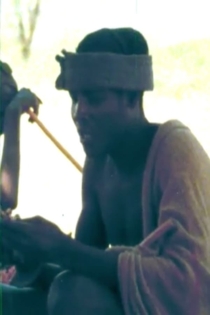
A Wife Among Wives
David MacDougall, Judith MacDougall
David and Judith MacDougall are exploring the marriage rituals and roles of Turkana women in this ethnographic documentary. The film's biggest part is taken up by talks between the Turkana people. As one of the first ethnographic documentaries "A Wife Among Wives" subtitles these talks so that the viewer can get a better and probably more personal understanding of the life of the Turkana.
A Wife Among Wives
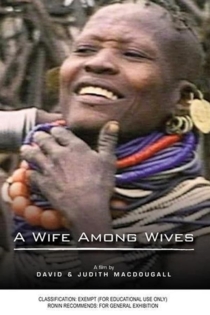
With Morning Hearts
David MacDougall
This film continues MacDougall's long-term study of an elite boys' boarding school in northern India. It focuses on a group of twelve-year-olds during their first year in one of the 'houses' for new boys. The film concerns their attachment to the house, but, more importantly, their attachment to one another in a communal life. It follows, in particular, the experiences of one boy and several of his close associates, from their initial homesickness, to their life as member of the group, to their separation from the house at the end of the year.
With Morning Hearts
Familiar Places
David MacDougall
Narrated by the linguist and anthropologist Peter Sutton, this documentary observes his work with a family in far north Queensland, outside Aurukun, to map their hereditary "clan country". The aim of the older members of the family is partly to protect their land and prove their attachment to it, for purposes of dealing with the government and industry, and also to demarcate the country from claims by other Aboriginal groups.
Familiar Places
Stockman's Strategy
David MacDougall, Judith MacDougall
Constructed as a series of vignettes of station life, the film focuses particularly on the relationship between Sunny Bancroft, the station manager, and a 16-year-old trainee, Shane Gordon. The episodes are linked by Sunny's reflections on learning the hard way from experience, and from the lessons taught him by his father.
Stockman's Strategy
Nawi
David MacDougall
This classic ethnographic documentary, by the renowned filmmaking team of David and Judith MacDougall, explores the nomadic life of the Jie of Uganda. During the dry season the Jie leave their homesteads in large numbers and take their cattle to temporary camps (nawi) in western Karamoja District, where water and grass are more abundant.
Nawi
Takeover
David MacDougall, Judith MacDougall
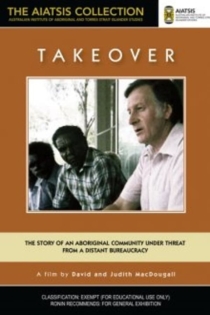
About Aborigines and Australian politics. On 13 March 1978 the Queensland Government announced its intention to take over management of the Aurukun Aboriginal Reserve from the Uniting Church. The people of Aurukun complained bitterly, believing that the Church was more sympathetic to their aims and fearing that the State was merely seeking easier access to the rich bauxite deposits on their Reserve. When the Federal Government took the side of the Aborigines the stage was set for national confrontation. Shows the situation at Aurukun during those crucial three weeks.
Takeover
Age of Reason
David MacDougall
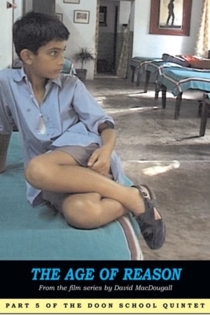
In this fifth and final film in the Doon School quintet, MacDougall focuses on the life of one student whom he discovers at the school. The film was made in parallel with 'The New Boys' and intersects with it at several points. However, instead of looking at the group, it explores the thoughts and feelings of Abhishek, a 12-year-old from Nepal, during his first days and weeks as a Doon student. This is at once the story of the encounter between a filmmaker and his subject and a glimpse of the mind of a child at “the age of reason”. This is the most intimate and interactive film of the series.
The Age of Reason
To Get That Country
David MacDougall
Without narration, and without identification of individual speakers, the film provides an invaluable record of two events which occurred in the final week of January 1977, and which marked "a turning point in legal recognition of Aboriginal rights to land".
To Get That Country
Collum Calling Canberra
David MacDougall, Judith MacDougall
Gordon Smith, head of the Collum Collum Aboriginal Co-operative which operates a cattle station in northern New South Wales, and Sunny Bancroft, the station manager, are negotiating with the Aboriginal Development Corporation in Canberra for a loan. Finance is needed to stock the property with breeding cattle so that the station can become financially independent.
Collum Calling Canberra