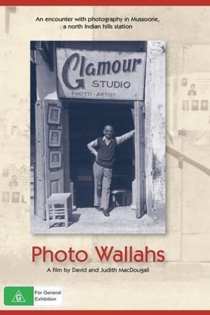
Judith MacDougall
2021The Wedding Camels
David MacDougall, Judith MacDougall
In this, the second film in renowned ethnographic filmmakers David and Judith MacDougall's classic Turkana Conversations Trilogy, one of Lorang's daughters, Akai, is going to marry one of his friends and age-mates, Kongu. Because of the close ties between the two men everything should go smoothly, but the pressures within the two families are such that the wedding negotiations over the bridewealth become increasingly tense. Arranging the number and type of animals to be given as bridewealth demands an intricate balance between psychology and economics: Kongu must offer enough animals to please Lorang and his relatives, but not so many that he appears weak or foolish, or depletes his own family's herds. Negotiations drag on for several days, then threaten to break down altogether. The outcome depends not only on traditional patterns of behavior, but also on the influence exerted by Lorang's wives and the manner in which Lorang chooses to resolve the dilemma that confronts him.
The Wedding Camels
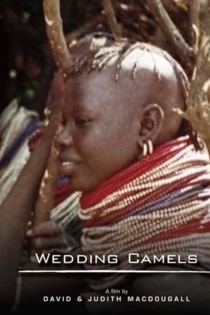
A Wife Among Wives
David MacDougall, Judith MacDougall
David and Judith MacDougall are exploring the marriage rituals and roles of Turkana women in this ethnographic documentary. The film's biggest part is taken up by talks between the Turkana people. As one of the first ethnographic documentaries "A Wife Among Wives" subtitles these talks so that the viewer can get a better and probably more personal understanding of the life of the Turkana.
A Wife Among Wives
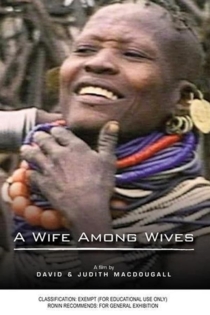
Stockman's Strategy
David MacDougall, Judith MacDougall
Constructed as a series of vignettes of station life, the film focuses particularly on the relationship between Sunny Bancroft, the station manager, and a 16-year-old trainee, Shane Gordon. The episodes are linked by Sunny's reflections on learning the hard way from experience, and from the lessons taught him by his father.
Stockman's Strategy
Takeover
David MacDougall, Judith MacDougall
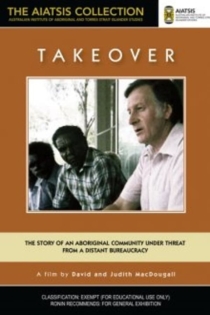
About Aborigines and Australian politics. On 13 March 1978 the Queensland Government announced its intention to take over management of the Aurukun Aboriginal Reserve from the Uniting Church. The people of Aurukun complained bitterly, believing that the Church was more sympathetic to their aims and fearing that the State was merely seeking easier access to the rich bauxite deposits on their Reserve. When the Federal Government took the side of the Aborigines the stage was set for national confrontation. Shows the situation at Aurukun during those crucial three weeks.
Takeover
To Live With Herds
David MacDougall, Judith MacDougall
TO LIVE WITH HERDS is a film about the Jie, a predominantly pastoral people of northeastern Uganda. Following a period of relative isolation under the British Protectorate government, the Jie are now under increasing pressure to exchange their traditional culture and subsistence economy for a cash economy and participation in a modern nation-state. The film examines this predicament in the light of Jie values. The question is not whether change is avoidable, but whether forms of change can be found that extend rather than attack the foundations of Jie life. Winner of the Grand Prix 'Venezia Genti' at the 1972 Venice Film Festival. Note: the subtitles are in English, the spoken language is Karamojong.
To Live With Herds
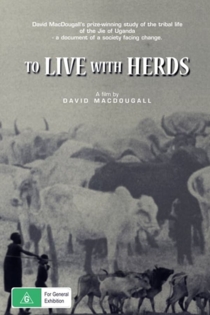
Photo Wallahs
David MacDougall, Judith MacDougall
Renowned ethnographic filmmakers David and Judith MacDougall explore the many meanings of photography in this profound and penetrating documentary. The film focuses on the photographers of Mussoorie, a hill station in the Himalayan foothills of northern India whose fame has attracted tourists since the 19th century. Through a rich mixture of scenes that includes the photographers at work, their clients, and both old and new photographs, this extraordinary film examines photography as art and as social artifact — a medium of reality, fantasy, memory, and desire.
Photo Wallahs