Bruce Posner
1953 (72 года)Sappho and Jerry (Parts I - III)
Bruce Posner
“The three parts developed over a year period of intense study during the mid-1970s. It sort of began and ended my dependency on “high-tech” equipment to make films and led me through the equally intensive parameters of what motion picture film could reproduce on a visceral, detail oriented level. In contrast to the high end 2K digital technology used to restore ‘Manhatta’ and 'Ballet Mechanique', I learned filmmaking decades earlier on a 35mm Oxberry beam-splitter, multi-head, aerial-image bi-pac optical printer. A dinosaur by today’s standards and all hand operated prior to the advent of computer-assists, this machine was precise and exact to the frame. ’S&J: Pt. 3' took 26 hours to shoot straight thru without one mistake.” —Bruce Posner
Sappho and Jerry (Parts I - III)
Orgasamatic
Bruce Posner
Original 4 projector piece with colored filters transcribed to 35mm film by Pat O’Neill and transferred to 1080 HD digital. "The middle film in a trilogy, ‘ORGASAMATIC’ [the ‘a’ placed intentional between the ’s’ & ‘m’] picks up where ‘Sappho and Jerry’ ended in 1978, and ‘Mona Lisa Smiles (Again and Again)’ concludes in 2015. Moving away from the high-tech optical printing of ‘Sappho and Jerry’ led to the hand-printing and self-processing of films that were then screened on multiple projectors onto multiple screens. ‘ORGASAMATIC’ is the most extreme of these hand-made films in that the imagery is comprised from 35mm still picture negatives that depict persons on fire, children and men I knew that burned repeated times in real life and on film.” - Bruce Posner
Orgasamatic
AO804.1
Bruce Posner
Summer of 1976 (as opposed to the summer of love) just drifting around Miami. Before the Cubans were thrown out of Cuba, so town still cracker white for the most part. And the UM campus art buildings play some role. Also Miami Beach, Coral Gables, South Miami, Homestead, and the Everglades too. The inspiration was seeing the incredible Super8mm 8-screen diary cinema made by German-American photographer Will McBride, who several years earlier had visited the Wilson Hicks Communications Conference at UM. He somehow got Leica to donate the cameras and projectors and filmed everything at his hippie-artists-commune in Italy. Music track by a variety of persons; last performed and edited by Joel Haertling of Architect’s Office from several live performances in Boulder. He worked on most of Brakhage’s later sound films in the 80s-90s period.
AO804.1
Mona Lisa Smiles (Again and Again)
Bruce Posner
" From my first scraps of professional film animation to the latest wonders of digital editing, this raucous bit of 3-screen mayhem encompasses most, if not all, of my filmmaking career and adult life. The lynchpin sits upon the looped, repeating images that reverberate next to a Hollywood studio Will Rogers’ biopic, ’The Story of Will Rogers’ (1952), that stutters away in tune to hand-painted graphics and 35mm movie and still shots flashing by of family and friends. This includes loops of the birth of my daughter Clara Estelle paired with snaps of Hong Kong actress Maggie Cheung. Everyone is smiling in this mini-epic that is corralled in further concentric circles by an home-made audio collage of two riffs lifted from the Talking Heads and Sex Pistols." -Bruce Posner
Mona Lisa Smiles (Again and Again)
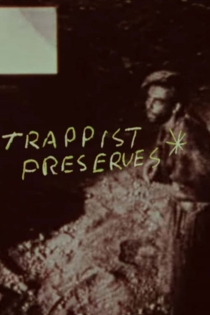
Trappist Preserves
Bruce Posner
"The film acts as an epithet for what everyone knows about our meager place in the universe. Succinctly stated in Jack Arnold’s "The Incredible Shrinking Man" (1957) and loosely ad-libbed by me in an inspired Cageian manner via a pompous (but difficult to produce) single-frame optical pan traversing the lofty soliloquy. The toilet paper in the bare autumn tree was encountered early one morning outside the school of the Art Institute of Chicago on Columbus Drive. With eclair and 12-120 zoom in hand, it was a no brainer. The combinations illustrate a mocking attitude that is much in line with most Hollywood expressionism, lofty ideals via a crass medium."
Trappist Preserves
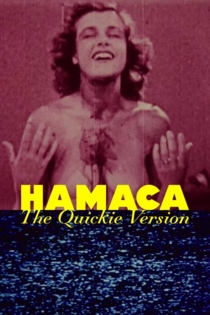
Hamaca: The Quickie Version
Bruce Posner
The film grew out of the home movies made by my father and then by me. Led to one of the first optical printer films produced at The Florida Optical House, Miami, and shot by Albie Krieger. Combines Reg 8mm, 16mm and 35mm with most derived from 16mm. the sources and content are obvious, with the overall experience somewhat unresolved. tho the ending is explicit and direct. hence "the quickie version" title for a film that has been reworked in differing versions and number of projectors and screens. (Bruce Posner)
Hamaca: The Quickie Version