Karø Goldt
2021She has presented her works in numerous shows, exhibitions and festivals.
Silence
Karø Goldt
"Two Jesuit priests travel to seventeenth century Japan under the Shogunate regime (which has isolated itself from all foreign contact) to see how the evangelical mission is going. There they witness the persecution of Japanese Christians at the hands of their own government, which wishes to purge Japan of all western influence. Eventually the priests separate and Rodrigues travels the countryside, wondering why God remains silent while His children suffer.“ I love this movie since i found this text! And i wanted to translate this story to an abstract short avantgarde film. I was inspired by the paintings of Sanchez Cotan, who lived in this time the story is located. I want to show the develpoment of the emotions of the two priests. The drama is, that everything can be excused in the catholoic church. Except the Apostasia - the doubt to the faith in God. You can steel, murder or lie. You go to confession and everything is forgotten. But doubting is unforgivable.
Silence

Portrait einer jungen Frau
Karø Goldt
A second frame is added to the picture of portrait of a young woman in such a way that the vertical colored patterns can move in a tight formation, precisely and synchronously, there is no space between them. What is then consummated in harmony with an acoustic guitar is a kind of Doctrine of Affects for the female body, conveyed by means of colors and their vitally switching values to create an organic form. At some point red suddenly breaks out of the grid, threatening to overpower everything else. Remaining the same and changing at the same time. (Marc Ries)
Portrait of a Young Woman

Tulipa
Karø Goldt
Karø Goldt’s video tulipa, like the previous films in her abstract plant-film series, concentrates on the formal interplay of color and sound. For this, Goldt once again uses a digital flower picture as the starting point for her cinematic conversation. The picture is disaggregated into its color components and then transferred to an abstract stripe pattern. Thus, in tulipa, too, not much remains of the romantic genre of the flower picture other than the title and the electronically scanned color values of the original picture. Instead, the color dynamics of the picture are released from the flower motif and gain powerful intrinsic value through the consistent process of abstraction. The dynamic interplay of the color values and the spatial potential of the colors are thus revealed increasingly over the course of the color changes in the film.
Tulipa

Roi d'Olivier
Karø Goldt
"An olive-shaped peephole, softly pulsing at the edges, focuses the spectator’s gaze out from a black screen. We see an abstract, opalescent vertical shape emerging to the sound of singing birds and chirping crickets. Over the abstract photos of plants, the organic and cinematic worlds feed back on each other. A kingdom for the olive." - Sebastian Höglinger
Roi d'Olivier


Ilox
Karø Goldt
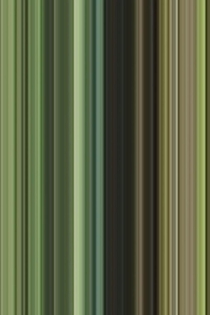
Compared to analogue b/w-photography and my experimental work in the colorlab, I tried to find out, what digital photography and computer processing is able to do, what the other techniques can't. We asked ourselves how does abstract film begin, what's its progress, how does it create suspense and how does it end? My model was the division of acts in greek tragedy. The length, the division of the different parts and the different cuts. The first abstract film made from pictures of plants was a purely abstract exercise, without any symbolic meaning nor background. The name stems from a misspelling of my Turkish flowersalesman, which I copied by accident. It is an abstraction of an Ilex twig. Another difference to all the other “flower pieces“ is that the film was made with a graphic-programme, that means each picture was constructed seperately, 25 pictures per second. That makes 4500 pictures which I worked on. Technically it is an animation film.
Ilox
Lilium
Karø Goldt
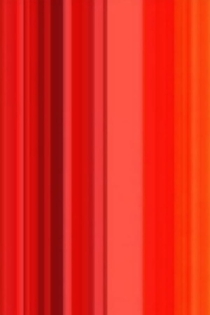
LILIUM is the second in a series of films featuring vertical strips of color made from digital images of plants. The motif is removed from the viewer's gaze, having appeared only once and then become more indistinct. As a result, the audience is able to distinguish solely the colors of a lily.
Lilium

Falcon
Karø Goldt
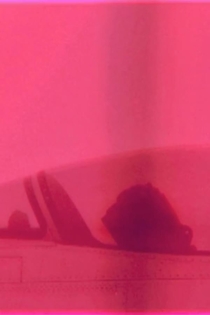
An orangeish-red field of colour with a graphic which is not immediately recognizable, accompanied by the soundtrack's electronic fields: falcon begins with a static and visually arresting image which is soon transformed. The colour turns to white and then pink, yellowish green changes to orange and red. This takes place parallel to the vibrating soundtrack. Parts of images are affected by these colour modulations, resulting in various degrees of intensity. Only gradually does it become obvious that the strange symbol is the abstracted picture of a jet's cockpit: Falcon is both a bird of prey and the name of the F-16, a jet fighter. - Claudia Slanar
Falcon
Slant
Karø Goldt
Both fundamental values of the source image in SLANT, two red stripes and a bright white foundation which supports them, expose only themselves for some time, accompanied by impassioned polyphonic singing. The steles change slowly, the field opens up, the planes of color shift imperceptibly and re-divide, forming different combinations that then, without interruptions or cuts, break up and enter into new figurations. The title does not refer to an appearance, it seems as if the "slope" or "bias" were only a self-reference. (Marc Ries)
Slant

Air Force
Karø Goldt
The color field painting which the artist serves as a reference for her work, goes down to the organization of the filmic surface; the photographic remainders appear as shadowy motives driven to the limits of extinction; the representational element works itself under great efforts through colour layers and colour modulations into the foreground. This continuous reorganization and restructuring is a crucial part of the image universe presented by Karø Goldt. - Reinhard Braun
Air Force