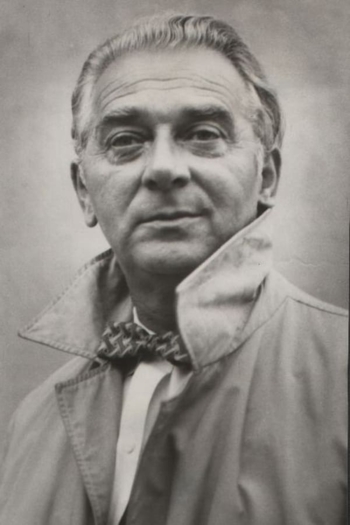
Józef Pieracki
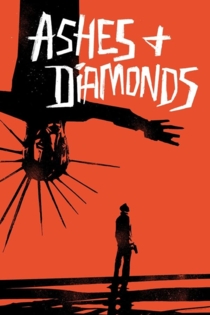
1909 - 1988Ashes and Diamonds
Andrzej Wajda
Zbigniew Cybulski, Ewa Krzyżewska
A young academy soldier, Maciek Chelmicki, is ordered to shoot the secretary of the KW PPR. A coincidence causes him to kill someone else. Meeting face to face with his victim, he gets a shock. He faces the necessity of repeating the assassination. He meets Krystyna, a girl working as a barmaid in the restaurant of the "Monopol" hotel. His affection for her makes him even more aware of the senselessness of killing at the end of the war. Loyalty to the oath he took, and thus the obligation to obey the order, tips the scales.
Ashes and Diamonds
Pożegnania
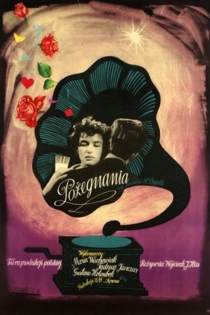
Wojciech Has
Maria Wachowiak, Tadeusz Janczar
The story takes place before World War II and centers on Pawel, a member of a conservative, middle-class family, and his love for Lidka, a taxi dancer. Social conventions and the lovers' inability to defy those forces Pawel and Lidka benefit. Times change, war breaks out, leading to Pawel sent to Auschwitz while Lidka marry his cousin. Their love has survived and conventions are no longer the issue.
Farewells
Ósmy dzień tygodnia
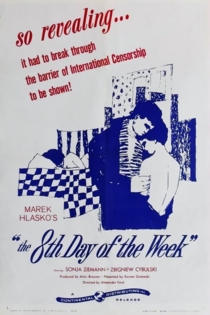
Aleksander Ford
Sonja Ziemann, Zbigniew Cybulski
Zbigniew Cybulski and Sonja Ziemann play lovers struggling to find happiness and privacy in overcrowded Warsaw. The movie shows an honest picture of life in a war-damaged city, contrasting the characters' difficulties with their dreams of a better life. It was banned in Poland in 1958 and would not been seen anywhere until its European release one year later.
The Eighth Day of the Week
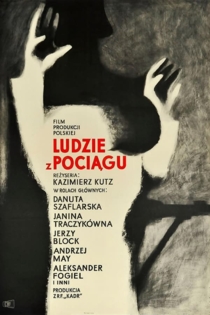
The People from the Train
Kazimierz Kutz
Janina Traczykówna, Andrzej May
A group of people find themselves stuck in remote train station in German-occupied Poland. A drunk German station guard there gets paranoid and sees partisans all around him, phones headquarters, and when the German soldiers arrive and search the station they find a gun. They then threaten to execute every fifth person unless someone claims it.
The People from the Train
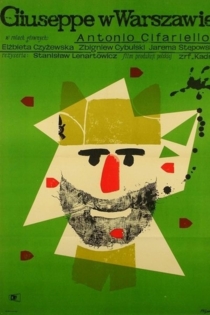
Giuseppe in Warsaw
Stanisław Lenartowicz
Elżbieta Czyżewska, Antonio Cifariello
The Italian soldier Giuseppe Santucci, on his way home from the Russian front, during World War II (in 1943), has his machine gun stolen in Warsaw. Afraid of consequences, he stays in Warsaw and occupies a flat of the Polish girl Maria, whom he suspects of stealing weapon. Maria indeed is an active member of the Polish resistance, contrary to her brother, Staszek, a painter, who only wants a calm living. In a course of funny events, Giuseppe falls in love, and, along with Staszek, becomes a hero of the Polish resistance.
Giuseppe in Warsaw
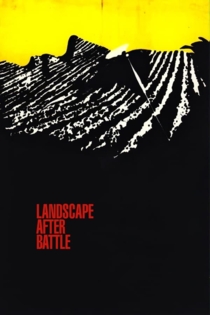
Krajobraz po bitwie
Andrzej Wajda
Daniel Olbrychski, Stanisława Celińska
Film opens with the mad rush of haphazard freedom as the concentration camps are liberated. Men are trying to grab food, change clothes, bury their tormentors they find alive. Then they are herded into other camps as the Allies try to devise policy to control the situation. A young poet who cannot quite find himself in this new situation, meets a headstrong Jewish young girl who wants him to run off with her, to the West. He cannot cope with her growing demands for affection, while still harboring the hatred for the Germans and disdain for his fellow men who quickly revert to petty enmities.
Landscape After Battle
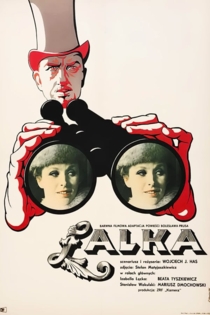
Lalka
Wojciech Has
Beata Tyszkiewicz, Mariusz Dmochowski
Set in the 19th century Warsaw. The indolence of aristocrats who, secure with their pensions, are too lazy to undertake new business risks, frustrates Wokulski. His ability to make money is respected but his lack of family and social rank is condescended to. Because of his "help" (in secret) to "the doll's" impecunious but influential father, the girl becomes aware of his affection.
The Doll
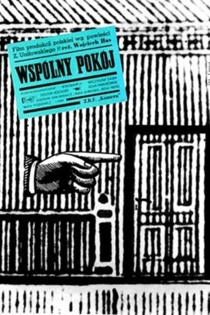
One Room Tenants
Wojciech Has
Beata Tyszkiewicz, Zdzisław Maklakiewicz
A subjective adaptation of a well-known autobiographical novel by Zbigniew Unilowski (screenplay by Wojciech Jerzy Has with dialogues by Stanislaw Dygat). The adventures of the tenants of a sublet room in a Warsaw townhouse inhabited mostly by students and novice writers, presented against the social context of the 1930s.
One Room Tenants
Zofia
Ryszard Czekala
Andrzej Balcerzak, Antonina Barczewska
Zofia is an elderly woman living in an retirement home. Separate from the rest, she talks seldom and then only about visiting her daughter's family for Christmas. When she comes to her daughter's home unannounced, her stay is spoiled by the damage to her son-in-law doctorate bookmarks which she removed unknowingly during dusting. She then spends Christmas in an empty restaurant, surrounded by waiters and musicians waiting to be tipped.
Zofia

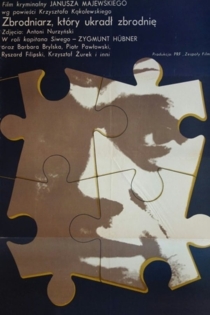
Zbrodniarz, który ukradł zbrodnię
Janusz Majewski
Zygmunt Hübner, Barbara Brylska
A retired police captain, Siwy, tells a reporter about his latest action, carrying on his own investigation into the mysterious death of a Eve Salm, a.k.a. Princess. She was a witness in a case where the defendant pled guilty and was sentenced to eight years in prison. Siwy doubts the defendant's guilt and risks his life to apprehend the real killer.
The Criminal Who Stole a Crime
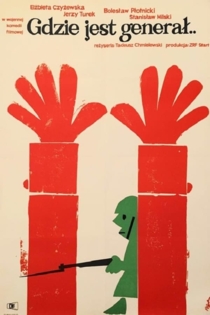
Gdzie jest generał...
Tadeusz Chmielewski
Elżbieta Czyżewska, Jerzy Turek
Waclaw Orzeszko is unlucky soldier. Nobody from the platoon likes him. One day he decided to go away from platoon. At the castle he meet Russian soldier Marusia. At this time German forces came at the castle. They must hide. But there is also second problem. Waclaw's platoon had to find deserter. Polish Soldier close to the castle.
Where is the General?
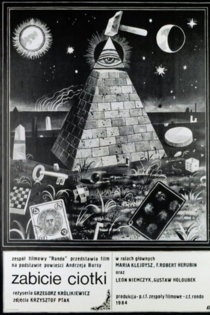
Zabicie ciotki
Grzegorz Królikiewicz
F. Robert Herubin, Gustaw Holoubek
A grotesque fairy tale of fantasies in a 21-year old's mind. First he confesses to a priest about killing his aunt. Then he is sending parcels from the post office. Just when it appears that he is going to be arrested, the aunt appears alive and well from her trip. This time though, he decides to go for it...
Killing Auntie