Andres Sööt
2021Unenägu
Andres Sööt
Anton Mutt
In the spring and summer of 1977, the musical television film "Miracle Story" was filmed on Toomemäe in Tartu. Despite the fact that all the shots in the film are documentary, you may not see a documentary in "Dream". It is not a reportage about making a film, but rather a vision, an echo that has disappeared but has been.
Dream
Hobuse aasta
Andres Sööt
Film-reportage describes the most vital moments in Estonian struggle for independence in 1990, also some typical episodes of everyday life of Estonian people, that altogether should give a concertrated picture about Estonia this year. The documentary is a continuation for the director's former film chronicle "Year of Dragon" (1988).
Year of the Horse
511 paremat fotot Marsist
Andres Sööt
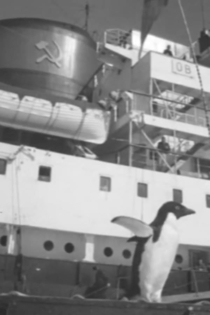
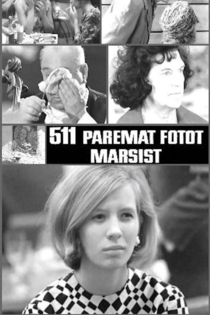
The film introduces a selection of various guest types in cafes and night clubs in late 1960s when old ladies still had some bourgeois manners from the first republic of Estonia and the youngsters of the Soviet regime were not served in a restaurant if they had no proper clothing. The guests of Tallinn's legendary cafes "Pearl" and "Moscow" were filmed in their own time. The uniqueness of the film is expressed through a strangely independent soundtrack that observes everyday bustle from the heights of melancholy poetry and remote uranography. Artur Alliksaar's poetry is read by Aarne Üksküla.
511 Best Photographs of Mars
Laika tilti
Kristine Briede, Audrius Stonys
Herz Frank, Uldis Brauns
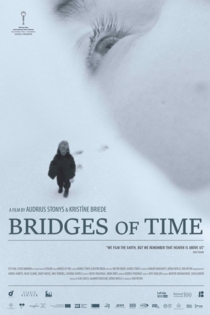
At the beginning of the 1960s, when the French pioneers of cinéma vérité set out to achieve a new realism, and when direct cinema in Québec began to vie for notice, the Baltics wit-nessed the birth of a generation of documentarists who favored a more romantic view of the world around them. This meditative documentary essay – from a Latvian writer and Lithuanian director whose composed touch has long dovetailed with the stylistically diverse works of the Baltic New Wave – pushes adroitly past the limits of the common his-toriographic investigation to create a portrait of less-clearly remembered filmmakers. The result is a consummate poetic treatment of the ontology of documentary creation. Also a cinematic poem about cinema poets.
Bridges of Time
Jaanipäev
Andres Sööt
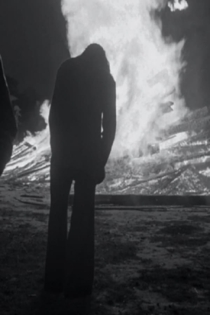
Documentary about the St. John's Day festival in Tallinn. Recorded with a hidden camera, the film is full of contrasts and expressively depicts the changes in the traditions of Midsummer's Eve and the emotional impoverishment of city dwellers, showing their behaviour at the bonfires - their loneliness as well as their alcohol-induced exuberant state in big crowds.
St. John's Day
Draakoni aasta
Andres Sööt
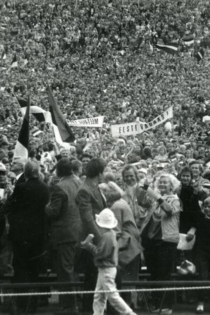
The year of 1988 in Estonia was exceptional - it came as a surprise for everyone that all of a sudden national symbols were allowed; expressions of no confidence were addressed towards the leaders of Communist Party and Estonian government; the Popular Front of Estonia and Estonian Green Movement but also the Intermovement (the Workers International Movement of the Estonian Soviet Socialist Republic) were founded. Estonian Heritage Society restored the monuments of the War of independence; the facts about war crimes during the Stalinist regime were disclosed and - imagine that! - the representatives of Estonian Republic went against the central authorities in Moscow. Events in Estonia draw international attention. Is all this possible in a totalitarian state? This documentary chronicle gives a plausibe interpretation of the events that took place in Estonia in 1988, of the changes in people's lives and the awakening after a 48-year-long period of darkness.
Year of the Dragon
Elasime Eestile
Andres Sööt
Alfred Käärmann
During June 1941, Nazi forces occupied Estonia. By 1944, when the Soviet-Nazi frontline was drawing towards the Estonian border from the East, Alfred Käärmann was conscripted into the German military. By September 1944 the Red Army had again occupied Estonia. Alfred was forced to make a decision: whether to stay in Estonia or retreat with the Germans. He chose the former, However he risked arrest and deportation by the Soviets.
We Lived for Estonia
Möödunud sajandi Eestist
Andres Sööt
Documentary by Andres Sööt about the years of 1996 and 1997. The film chronicle covering two years can be viewed as a continuation to Sööt's earlier films "Year of the Dragon" and "Year of the Horse". All three documentaries are the portraits of years, modelled by the director himself. There is neither a systematic nor exhaustive approach towards the selected times in history - what has been followed is the chronological order of events. Andres Sööt documents and comments both from a neutral as well as his personal point of view.
Pictures from the XXth Century Estonia