Myron Ort
2021He's Here Now
Myron Ort
Through the veils of multiple exposure at an "Acid Test" party in San Francisco (toward the end of "He's Here Now" ) one might catch a brief glimpse of Ken Kelsey and Neal Cassidy. During those years, when picking up processed film at Multi-Chrome labs in San Francisco, I would sometimes run into and chat with another hero, the great filmmaker Bruce Baillie, one of the original founders of Canyon Cinema.
He's Here Now
Ommo
Myron Ort
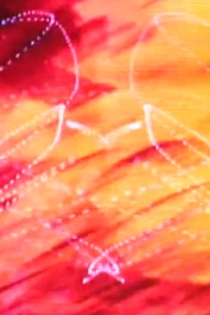
Originally an 8mm film with hand-painting which was blown up to 16mm and hand-painted again before multiple printings with several optical manipulations. A mandala of ever changing configurations, both angelic and demonic, to be seen as an evanescent phenomenon.
Ommo
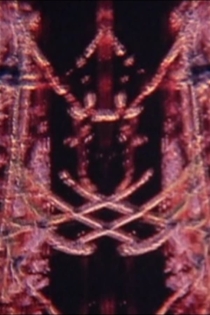
Love Must Love
Myron Ort
Donna Germain, Myron Ort
Flower-generation celebration of love. "Filmed in San Francisco and Berkeley California in collaboration with my girlfriend at the time, the actress Donna Germain [...] When Stan Brakhage came to the SF Bay Area around 1968 and saw my 8mm film he wanted a print and we traded by footage count and that is why eventually ended up with a whole collection of his 8mm Songs. I believe Stan was influenced by this film in regards to in-camera superimposition [...] he used the technique in his very next films at the time." -MO
Love Must Love

Old Redwood Series
Myron Ort
During the ensuing years of developing the land, remodeling the house, the studios, and various outbuildings, as well as various projects and excursions with my partner and friends, I carried around the smallest and humblest of unobtrusive regular 8mm movie cameras with which I could both record interesting moments and also weave a cinematic fabric equivalent to the gestural style and compositional concerns of Abstract Expressionism, a style of painting I had studied, practiced, and related to since the late 1950s. In other words, these film interludes are Abstract Expressionist home movies.
Old Redwood Series
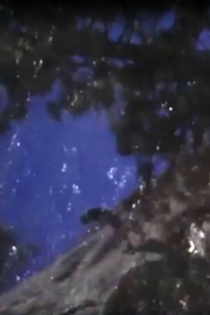
1968 Artifact
Myron Ort
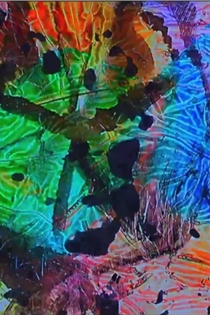
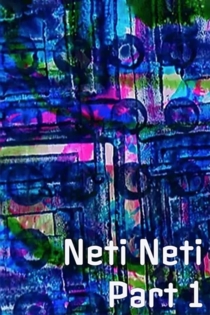
Even by the late 1960s, to my knowledge, there had been no “Abstract Expressionist” non-referential, extended painting applied directly to motion picture film. All previous examples of “direct animation” were more or less figurative, although some by Len Lye involved stenciling and dancing geometric shapes, all previous examples adhered mostly to some kind of a figure based continuity between individual frames.
1968 Artifact

Okeanos
Myron Ort
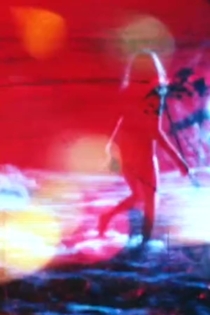
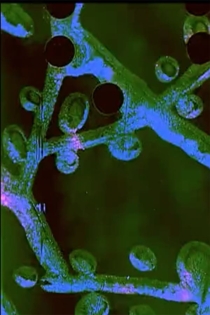
Filmed in Baja California where the desert sun meets the Pacific Ocean and the Gulf. A rusting shipwreck on the rocks outside of Cabo San Lucas in 1972 provides a central and poignant metaphor for a macro-psychedelic and micro-expressionistic exploration of tropical colors and surfy forms. At the time many innovative and experimental in-camera techniques were used to create a dazzling and mysterious vocabulary of painter’s eye multi-plane cinema. Extensive abstract expressionist hand painting can also be seen in this final version. Meanwhile the shipwreck "Inari Maru" has disintegrated and disappeared back into the sea.
Okeanos
Phantom Ore
Myron Ort
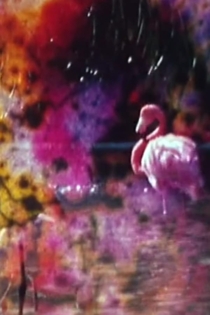
"In the 1960s I pioneered Abstract Expressionist painting directly to the film surface creating a new vocabulary of moving shape, color, and texture as well as a good measure of chance operation. In the 1970s I added multiple stages of optical printing to my hand-painted film ("Ommo"), but now have returned to a simpler and more pragmatic approach without composing added speed variations." - Ort
Phantom Ore