Tim Saunders
2021Victory and Pursuit: The Waterloo Collection - Part 4
Graeme Cooper, Mike Peters
This final part takes us through the dramatic events when Wellington’s Anglo-Dutch Army aided by Blucher’s Prussians defeat Napoleon. The French army was outfought and Napoleon was out-generaled by Wellington. At Wavre Grouchy beat the Prussian rearguard before retreating to France. Meanwhile, the Anglo-Dutch army counted the bloody cost of the previous days fighting while Wellington wrote his controversial Waterloo Dispatch and the vengeful Prussians pursued the French towards Paris, leading to Napoleon's abdication and the occupation of the city by the Allies.
Victory and Pursuit: The Waterloo Collection - Part 4
Bletchley Park and the Ultra Secret
Tim Saunders, Tom Dormer
This film tells the incredible story of Bletchley Park and the Ultra Secret. Filmed at Bletchley in collaboration with the Bletchley Trust and with interviews with Bletchley Veterans the BHTV team explain the importance of Bletchley to the Allied War effort. As Sir Harold Hinsley a Bletchley Veteran and Official Historian of British Intelligence during WW2 said, Ultra shortened the war by two to four year's and that the outcome would have been uncertain without it. The film also shows how the allies used the intelligence on land, sea and air. This film shows that the success at Bletchley was not just the result of a few brilliant men and women but the result of the efforts of thousands of unsung heroes.
Bletchley Park and the Ultra Secret
Battle of the Bulge: Saint Vith
Tom Dormer, Richard Hone
The Northern most thrust into the wintery Ardennes of General Manteuffel's Fifth Panzer Army fell on the inexperienced 106th US Infantry Division, who had not only just arrived in the Europe but had only been in the line for five days, in what was supposed to be a 'ghost front'. One of the best German infantry divisions, the 18th VG fell on the over extended 106th dug in on the Schnee Eifel, where two US regiments were surrounded and forced to surrender.Major General Jones was unable to stem what became a general retreat but, as in all retreats, both the best and the worst of human nature was on display. Small groups of officers and men fought on repeatedly, delaying the German spearheads on the road to St Vith and buying time for elements of 7th US Armd Div to arrive. After a desperate fight, Field Marshal Montgomery controversially took over the Northern shoulder of the Bulge and ordered 7th Armd Div and the remnants of the 106th to abandon St Vith.
Battle of the Bulge: Saint Vith
Battle of the Bulge: Siege of Bastogne
Andrew Duff, Steve Weiss
With the Fifth Panzer Army fighting its way towards the River Meuse, the cross roads town of Bastogne, vital for the success of Hitler's last attempt to check the Allies in the west, the Americans rushed reinforcements to hold it. 101st US Airborne Division was resting in reserve near Paris when the call for immediate deployment to the Ardennes came and reached Bastogne just before the German ring around the town closed. Wearing only normal uniforms, the 101st joined the other garrison troops in a siege where they fought not only the enemy's panzers but the freezing, snowy, cold to hold the vital road junction. Filmed on the ground we tell the story of the heroic defence of Bastogne.
Battle of the Bulge: Siege of Bastogne
Assault on Normandy: Pegasus Bridge
Tim Saunders, Mike Peters
On the 6th June 1944, Maj Howard’s Coy of the OX & Bucks LI carried out one of the greatest and most successful small unit actions in history in capturing the two Orne Bridges as a precursor to D Day. The initial part of the film traces the development of the British Airborne Forces to the stage where they can play a major part in the allied plan to storm Hitler’s Fortress Europe. The BHTV team then tell the story of this heroic action and the equally heroic follow up actions of 7 Para in holding the bridges against the might of 21st Pz Div. This action exemplified the British soldier at his best whether in The Glider Pilot Regiment, The Glider Infantry ( Ox & Bucks)or the Parachute Regiment, all showed courage skill and commitment.
Assault on Normandy: Pegasus Bridge
Battle of the Bulge: An Intelligence Failure?
Tim Saunders
On the 16th December 1944 Hitler launched Operation Wacht am Rhein against the largely unsuspecting American component of the Allied Army. Twenty Divisions consisting of 410000 men, 2600 artillery pieces nad 1400 tanks and assault guns attacked the American 1st Army on a 110 kilometre front. How had this happened ? This film examines why the Allies were not prepared.
Battle of the Bulge: An Intelligence Failure?
Néry and the Retreat from Mons
Paul Oldfield, Ed Church
Following the Battles of Mons and Le Cateau the already near exhausted British Expeditionary Force, who had been marching and fighting for six days without a break , embarked on a nine day epic march across France. They headed back to the safety of the far side River Marne south of Paris rather than to the traditional haven of British Armies – the Channel Ports.The BHTV team of historians and battlefield guides take us to the scene of some sharp rear guard actions fought during the Retreat from Mons including the great cavalry actions at Cerizy and Nery, where the mounted British soldier established domination of his German counterpart. As they travel the highways and byways of France they analyze the decisions made by the commanders in that fog of war that together spelt the end of the Schlieffen Plan and set conditions for the 'miracle of the Marne'.
Néry and the Retreat from Mons
Mons 1914
Tom Dormer, Mike Peters
On the 22nd of August 1914 the recently deployed BEF fought and delayed the German First Army of Von Kluck in around the industrial coal mining town of Mons. After 2 days of hard fighting the 3rd and 5th Division of II Corps, assisted by the Cavalry division, having borne the brunt of the battle withdrew South West in the direction of Paris. Whilst this battle was in reality a minor Corps action, when taken in the context of the Great War, it showed that the British regular soldier was more than a match for the German army when he was properly led and not vastly outnumbered by guns and men. This film shot on the battlefield tells the story of this 2 day battle bringing out the heroism and skill of the”Old Contemptible s “in delaying and escaping from Von Kluck’s attacking force of 6 Infantry and 5 Cavalry Divisions.
Mons 1914
Battle of the Bulge: Panzer Marche - The Dash for Bastogne
Steve Weiss, Tom Dormer
In this programe we examine the background to the campaign with a leading American historian before following the advance of one of Hitler's most successful panzer commanders, Hasso von Manteuffel, Fifth Panzer Army. We will travel in wintery conditions from the German border into the lightly held US front line. From the outset small groups of GIs did their best to delay the advance of the panzers, buying time for the vital crossroad town of Bastogne to be reinforced by 101st US Airborne Division. Under the cloak of bad weather, the Germans initially advanced successfully but more slowly than planned However, Germany's chronic lack of fuel hamstrung the advance. The British XXX Corps deployed to the River Meuse amidst controversy over Montgomery's role and injudicious words but the panzer spearheads were halted short of the river as the skies cleared and the feared fighter bombers returned.
Battle of the Bulge: Panzer Marche - The Dash for Bastogne
Operation Market Garden: Nijmegen
Jo Hook, John Greenacre
Following on from the story of Hell's Highway, the series reaches the battle to seize the great Bridges over two of Europe's largest water ways; the Maas and the Waal at Nijmegen. Here the 82nd US airborne were, as elsewhere, denied coup de main attacks to seize the bridges by the air commanders. While the Grave Bridge was captured, confusion in US orders meant that the barely defended bridge in Nijmegen was only attacked when the Germans had taken the opportunity to reinforce the garrison. The resulting battle to regain control of the situation is an epic of Anglo-American military history. This programme tells the story of the amazing courage of the American and British soldiers who won this battle against desperate odds.
Operation Market Garden: Nijmegen
Battles of the Marne & the Aisne
Ed Church, Mike Peters
While the Allies were nearing panic as the Germans approached Paris, Marshal Foch quickly realised the German intent and that the Schlieffen plan was unravelling. In a master piece of military diplomacy he persuaded Filed Marshal French to join the Attack on the exposed flank of the Germans as it wheeled to the east of Paris. The battle was indeed a miracle, with the British playing a key part alongside the French in halting the German advance and driving them back behind the next river – The Aisne, where the Allied attack crossed the river and up onto the open ridges of the Chemin des Dames. The Germans held firm and Field Marshal French ordered the BEF to dig-in as a temporary measure but the line moved but little here in the next four years.With neither army able to make headway against modern small arms, the machine gun and quick firing artillery in a conventional frontal battle, the armies raced to redeploy into the uncontested ground north to the sea.
Battles of the Marne & the Aisne
Assault on Normandy: Pointe du Hoc
Tom Dormer, Tim Saunders
This film tells the story of Col Rudder’s 2nd Ranger Bn and their heroic attack on the gun battery at Pointe du Hoc, which covered both Omaha and Utah beaches. Despite their thorough training scaling techniques that included sectional aluminium commando ladders, rocket grapples and ropes experienced commanders predicted a disaster. In the event bad weather, navigational errors and communications failure meant that less than 200 Rangers were delivered to the foot of the cliffs late and under enemy fire. Small groups of Rangers battled their way up ropes and ladders, with grenades bursting around them, to scale the muddy unstable cliff. A handful of men spread out and cleared the stunned defenders but, as often is the case, seizing the objective was only a part of the battle. Isolated for over 24 hours, with no relief from the near disaster at Omaha, the Rangers fought on against increasingly determined German counter-attacks.
Assault on Normandy: Pointe du Hoc
The Battle of Naseby 1645
Tom Dormer, Tim Saunders
The Battle of Naseby was a decisive engagement of the English Civil War, fought on 14 June 1645 between the main Royalist army of King Charles I and the Parliamentarian New Model Army, commanded by Sir Thomas Fairfax and Oliver Cromwell. It was fought near the village of Naseby in Northamptonshire. Fairfax was ordered to lift his siege of Oxford, the Royalist capital, and engage the King's main army. Eager to bring battle to the Royalists, Fairfax set off in pursuit of the Royalist army, which was heading to recover the north. The King, faced with retreating north with Fairfax close behind, or giving battle, decided to give battle, fearing a loss of morale if his army continued retreating. After hard fighting, the Parliamentarian army all but destroyed the Royalist force, which suffered 6,000 casualties out of 7,400 effectives. Charles had lost the bulk of his army. Within a year, Parliament had won the first civil war.
The Battle of Naseby 1645
Cavalry Charge: La Haie Sainte & Plancenoit - The French and Prussian Attacks
Graeme Cooper, Tom Dormer
Following on from Hougoumont and D'Erlon's Attack, Part III starts just as the great battle reaches its crisis point. Marshal Ney launched thousands of France's finest heavy cavalry against Wellington's thinning lines who had already taken a terrible battering on the Mont St Jean Ridge. Wave after wave of armoured horsemen broke against the steady squares of British, Dutch/Belgian and German troops. The crisis, however, took a further turn for the worse as the key bastion in Wellington's centre, the fortified farm of La Haie Sainte, fell to the French onslaught. The way to Brussels was now open and Wellington muttered, 'Give me Blucher or give me night'. With the situation looking bleaker by the second for Wellington and his troops, Napoleon fatefully hesitated to complete the coup de grace as the Prussians had closed in on his right flank at the Village of Plancenoit. Would the Young Guard be able to hold Blucher's men? There was all still to play for.
Cavalry Charge: La Haie Sainte & Plancenoit - The French and Prussian Attacks
100 Years War: Crecy 1346
Andrew Duff, Mike Peters
On 11 July 1346 Edward III's Anglo/Welsh army landed at St Vaast in the Cotentin Peninsula. Over 12 months this army won 3 major battles Caen, Blanchtaque and Crecy and captured Calais, which would remain in English hands until 1558.This campaign was the first major chapter in the story of what was later called the 100 years War.This campaign is not only notable for the military victories of Edward and his army but for the way it reshaped warfare on the continent, the English had arrived as a major military player. The use of Chevauchee employed by Edward's army whilst not new was used in an intelligent manner to bring the French to battle. Once the French were brought to battle Edward's Army, consisting mainly of yeoman archers and infantry, was able to beat and destroy the French Army consisting mainly of nobles by a combination of leadership, tactics, discipline, courage and technology (The Long Bow).
100 Years War: Crecy 1346
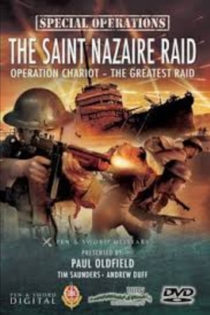
The Saint Nazaire Raid: Operation Chariot - The Greatest Raid
Paul Oldfield, Tim Saunders
Building on the success of various Commando Raids during 1941, Headquarters Combined Operations moved up the scale of size and complexity by electing to attack and deny the only dry dock that could take a German battleship for repairs, the Normandie Dock at St Nazaire on France's Atlantic coast. However the port was miles up a well defended estuary. To deliver an explosive charge big enough to demolish the massive lock gates, an old ship HMS Campbeltown was converted to look like a German destroyer, so as to bluff their way into the heart of the port where it would ram the lock gates.The Commandos were to fan out across the dock to demolish pumps and winding gear to comprehensively deny the dock to the Kriegsmarine for a significant period of time. Under cover of dark the bluff worked well, up to a point, Campbeltown rammed the gates but the Commandos found that the Germans were alert and had great difficulty in reaching their objectives.
The Saint Nazaire Raid: Operation Chariot - The Greatest Raid