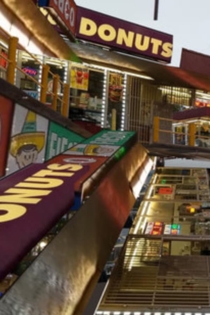
Takeshi Murata
1974 (52 года)Untitled (Pink Dot)
Takeshi Murata
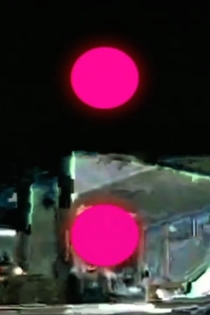
In Untitled (Pink Dot), Murata transforms footage from the Sylvester Stallone film First Blood (1982) into a morass of seething electronic abstraction. Subjected to Murata's meticulous digital reprocessing, the action scenes decompose and are subsumed into an almost palpable, cascading digital sludge, presided over by a hypnotically pulsating pink dot.
Untitled (Pink Dot)
Shiboogi
Takeshi Murata
In this animated video Shiboogi, American artist Takeshi Murata transforms TV commercials from the 1980s that he had discovered by chance in a record store in Japan. Just as commercials pop up on television screens for 30 seconds and then fade from memory, the imagery used by Murata pixelates and melts into a colorful digital sea. Takeshi Murata produces extraordinary digital works that build upon the experience of animation. His innovative practice and processes range from intricate computer-aided, hand-drawn animations to manipulating the flaws, defects and broken code in digital video technology. He alters appropriated footage from vintage horror films, commercials and movies, and creates fields of color, form and motion, redefining the boundaries between abstraction and recognition.
Shiboogi
No Match
Takeshi Murata
Rhythmically departed from Murata's usual assertive cadence, No Match employs footage from the 1980's game show, Classic Match. The seamless loop of an unyielding contestant's ineptness solidifies as an almost cruel experiment, as the stretched time limit imprisons him in a fruitless guessing game. As 1000 seconds tick off the clock, our relationship towards the disembodied head of the contender shifts from sympathetic support to uncomfortable pity. One cannot help but wonder if this humiliating effort is really worth the grand prize at stake.
No Match
Cone Eater
Takeshi Murata
With this abstract digital video, Murata presents viewers with a field of seething colors and line, within which a suggestive, Rorschach-like formation manages to retain its structure even as it is in a constant state of flux. The mesmerizing tableau that results is accompanied by a cyclical, dronelike sound track.
Cone Eater
Timewarp Experiment
Takeshi Murata
In Timewarp Experiment, Murata applies a simple temporal manipulation to a piece of found footage, to uncanny effect. Digitally slowing the opening credit sequence from the 1970s' TV sitcom Three's Company, Murata creates a strange, hypnotic flow of movements and arrested gestures that unfold in unnatural time.
Timewarp Experiment
Night Moves
Billy Grant, Takeshi Murata
In Takeshi Murata's video, in collaboration with Billy Grant, computer generated scans are utilized to recreate his every day environment in high tech 3D. The video starts in his studio, where his computer, desk and chair are “haunted” - dissolving and reforming in a myriad of mirrored shapes, going from recognizable to abstract to obliterated. The scans blend with Murata’s own computer rendered fragments, further emphasizing the high and low, real and unreal. The result can be seen as an homage to both Walt Disney’s The Sorcerer’s Apprentice and Bruce Nauman’s Mapping the Studio.
Night Moves
Silver
Takeshi Murata
In Silver, Murata subjects a snippet of footage from a vintage horror movie (Mario Bava's 1960 film 'Mask of Satan', featuring Barbara Steele) — to his exacting yet almost violent digital manipulations. The seething black and white imagery constantly decomposes and reconstitutes itself, slipping seductively between abstraction and recognition.
Silver