Oriol Sánchez
2021Artist's statement “My works, whether on film or video, are placed on the limits of representation and narrative. Starting from experimental animation, documentary and the appropriation of images, they arise from an interest in exploring the relationship between sound and image over time. They are a constant concern for rhythmic, materialistic and emotional potential of images, always close to a plastic abstraction and / or highly schematic figurative reality, where the characters, if any, beyond psychology, are treated as figures or icons, their gestures, looks or expressions are interlaced with the rhythms and textures of the image and populate a kind of interior landscape”.
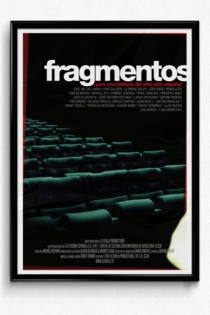
Fragmentos para una historia del otro cine español
Andrés Hispano
Frederic Amat, Adolfo Arrieta
Documentary about the history of experimental cinema in Spain. FRAGMENTS is a historical survey of “the other” Spanish Cinema — films that brazenly explored their artistic, poetic and conceptual potential. Spanish experimental cinema can be glimpsed in a series of important yet isolated events that FRAGMENTS compiles through various firsthand accounts, film excerpts and documents. For the first time in Spain, a documentary brings together the most relevant of a cinema that is slowly losing its invisibility.
Fragmentos para una historia del otro cine español
De la hospitalidad, derecho de autor
Oriol Sánchez
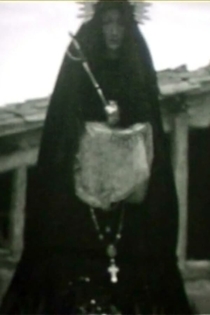
Built almost entirely with found footage, "De la hospitalidad, derecho de autor" claims, on the one hand, the appropriation of the material of one author (here the sacrosanct Rossellini, Welles, Erice and Kiarostami) by another. And, on the other, it supposes a reflection on the role of the spectator in front of the cinematograph as a medium that represents reality, constructs imaginaries and that, for the most part, demands our credulity. "De la hospitalidad ..." invites, therefore, to discover this author / spectator mediation, through three pieces or chapters of a practically autonomous nature.
De la hospitalidad, derecho de autor
Fragmentos, Primera Impresión en S8
Oriol Sánchez
It is a travel diary that covers the topography of the landscape, both in nature and in urban graphic and architectural details: commercial signs, door numbers, tiles, statues, pictograms, arabesques, emblems, allegories ...
Fragmentos, Primera Impresión en S8
Pubic Hair Ban
Oriol Sánchez
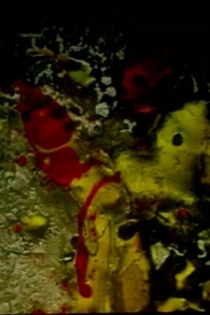
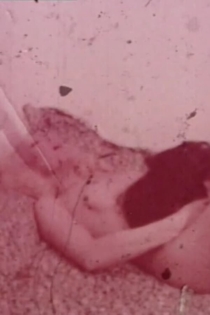
"To make Pubic hair ban, whose title refers to the Japanese censorship that in the past decade prohibited showing pubic hair in videos, Oriol Sánchez left for months a coil of super 8 gay porn exposed to the sun inside a rusty can with water and various chemicals. The degradation of celluloid randomly affected his images, which appear out of focus, veiled, hidden. The important thing about these examples is that the intervention of the artists censoring the sexual explicitness of some images from a filmic genre , the pornographic, characterized precisely by facilitating the extreme visibility of sex. "
Pubic Hair Ban
Profanaciones
Oriol Sánchez
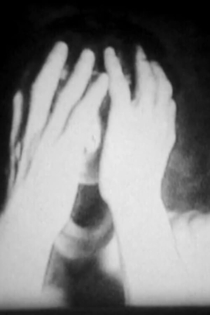
Profanaciones seems to stem from the suspicion that you can hear what you see: a piano, a foliage moved by the wind, the knocking of a door, but that, at the same time, you cannot see what you hear, that the look can hear, but the ear cannot see, something that is expressed directly in the subtitle, The ears do not have eyelids. In other words, part of the assumption that "there is no reciprocity between sight and hearing." Hence, generally, there is much more music that is created around the cinema or the image than its opposite, cinema that is generated from music.
Profanaciones
Waking Windows AKA Victoria’s Wake
Oriol Sánchez
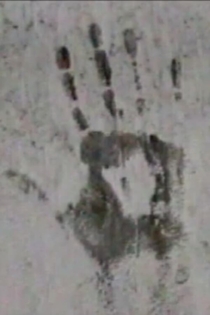
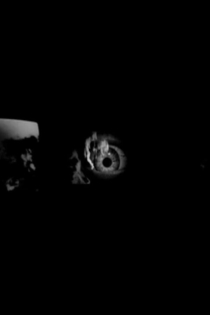
Waking Window's aka Victoria's Wake is inspired by horror shows, like the magic lantern and phantasmagoria. It consists of several variations around the origins of the moving image and the death of cinematograph as support and device for projection.
Waking Windows AKA Victoria’s Wake
Moza De Ánimas
Oriol Sánchez
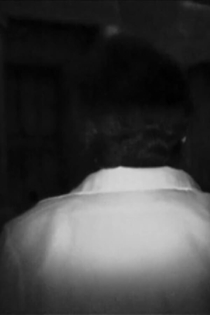
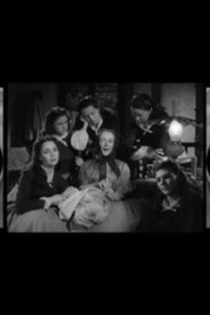
Almost like an ethnographic documentary, "Moza de Animas !, records a centennial ritual that takes place in the Salamanca town of La Alberca: the journey through the narrow streets of the town that every night a woman prays and plays the shearing for the deceased. The spectral character of his figure, sometimes just a shadow, is accentuated, and somewhat denatured, by the sound work where this archaic litany is overlaid with subtle electronic rhythms.
Moza De Ánimas