Kiyoshi Komori
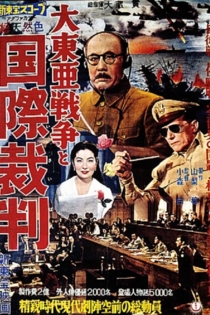
1920 (106 лет)大東亜戦争と国際裁判
Kiyoshi Komori
Kanjūrō Arashi, Minoru Takada
In 1941, overpopulated Japan faces an economic boycott and its armed forces push further to the south. And despite negotiations between Japan and the U. S. A. war is declared with the attack on Pearl Harbour. Victories follow for Japan on land and sea and her forces push forward to the borders of India. But gradually the tide turns in favour of the Allies and after the atom bombings of Hiroshima and Nagasaki, Japan is compelled to accept the Potsdam Declaration and by the order of the Emperor agrees to unconditional surrender. Under the supervision of the occupation forces the International Military Tribunal opens in Tokyo to try the Japanese war leaders. Established in the cause of justice, and to prevent future aggressive wars the trials drag on for two and a half years. And on December 23, 1948, General Tojo and six other war leaders mount the thirteen steps to the gallows at Tokyo's Sugamo prison.
The Pacific War and the International Military Tribunal
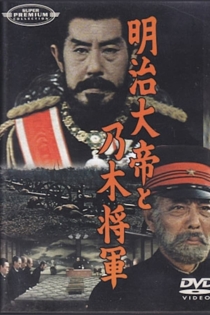
明治大帝と乃木将軍
Kiyoshi Komori
Kanjūrō Arashi, Miyuki Takakura
In January 1904, the situation between Japan and Russia had grown tense. The Emperor Meiji is deeply concerned, for Russia has started to build an invincible fortress at Port Arthur, and the relations between two countries have become strained to breaking point. General Nogi has retired to the first reserve and is now a gentleman farmer, but he is prepared for sudden mobilization. Finally, Japan declares war against Russia and Emperor Meiji appoints General Nogi as the commander of the force to attack Port Arthur. However, in spite of several all-out attacks, the fortress is strong and the casualties increase among the Japanese. Because of these reverses, there are loud cries for a change in command. However, the Emperor places his confidence in General Nogi.
Emperor Meiji and General Nogi
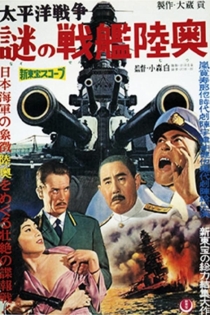
太平洋戦争 謎の戦艦陸奥
Kiyoshi Komori
Shigeru Amachi, Bunta Sugawara
During the naval battle of Midway in WWII, the battleship Mutsu was in its home port in Japan. The ship's officers and crew were frustrated at not being able to take part in the fighting. They had been held back by orders from the Naval Ministry, but there was also a plot by saboteurs, who were trying to prevent the sailing of the Mutsu. Director Komori developed a suspenseful plot by including a fictional adaptation of the Russian spy Richard Sorge, who had been captured in Japan and subsequently executed. Komori brings a fictional Russian spy to the screen by portraying him as a military attaché at the German embassy. As Germany was an ally of Japan in WWII, a secret agent being a mole in the German embassy is a perfect cover. The interaction of the saboteurs and the officers and crew of the Mutsu make an exciting story.
Enigmatic Explosion of the Battleship Mutsu