Adélia Sampaio
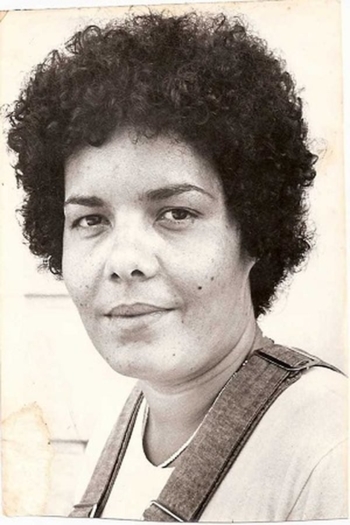
2021Sampaio was born in 1944 in Belo Horizonte; her mother was a domestic worker. Sampaio's interest in film was encouraged by her sister Eliana, after watching Sergei Eisenstein's Ivan the Terrible (Eliana later became her producer). In 1969 went to work as a telephone operator at Difilm, a Brazilian distributor linked to Cinema Novo. Sampaio began to organize the company's film club, which projected films in 16mm. She also started to work in the production of films, in various functions, such as continuist, makeup artist, camera operator, editor and producer. Her debut as a director was in 1979, with the short film Denúncia Vazia.
In 1984 she released her first feature, Amor Maldito, based on the real-life case of a trial of a lesbian woman accused of killing her partner, of which she was also a screenwriter (with José Louzeiro) and producer. Thus, she became the first black woman to direct a feature film in Brazil. In 1987 she directed the documentary Fugindo do Passado: Um Drink para Tetéia e História Banal, about the Brazilian military dictatorship. In 2018 she directed O mundo de dentro, shown at the São Paulo International Short Film Festival.
AI-5 - O Dia que Não Existiu
Paulo Markun, Adélia Sampaio
Paulo Markun, Márcio Moreira Alves
Documentary about a political episode during the Brazilian military dictatorship, which resulted in the issue of the Institutional Act #5 (AI-5), abolishing freedom of opinion in Brazil, and marking the transition to the toughest period of violation of human rights in the country. The episode was the Congress Assembly on December 12th, 1968, in which its members denied permission to punish congressman Márcio Moreira Alves, as was the Government's wish.
AI-5 - O Dia que Não Existiu





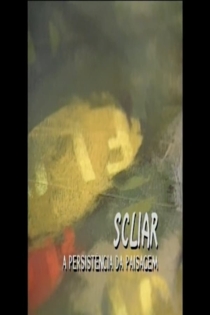
Scliar: A Persistência da Paisagem
Adélia Sampaio
Moacyr Scliar
Scliar, a painter of the world, immersed in the time of his silence. All that the artist sought to bring to the skin and heart of his painting is the inner vibration of every inhabitant of the world. The chromatic vibration does not come from the paints but from the land he harvests from each place he visits. Scliar used earth to give colour to his canvases.
Scliar: A Persistência da Paisagem