Lukas Marxt
1983 (42 года)Imperial Valley (Cultivated Run-Off)
Lukas Marxt
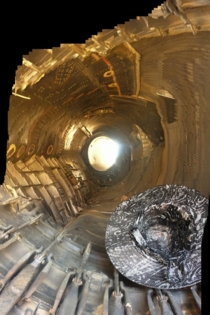
The Imperial Valley represents one of California's most important regions of industrial agriculture. The system's run-off flows through pipes, pumps and canals leading to the Salton Sea, an artificial lake that is approaching ecological as well as economic disaster. Initially appearing as nothing more than spectacular documents of agricultural monocultures, the shots become increasingly abstract. Is this an actual or artificially simulated landscape? This ambiguity is precisely the point: The Imperial Valley is becoming the "Uncanny Valley", a place that is not yet or no longer natural and thereby appears eerie. Although manmade, it is not a place for people anymore, neither ontologically nor in reality. The post-apocalypse is not a matter of the future, we are already in the thick of it. (Claudia Slanar)
Imperial Valley (Cultivated Run-Off)
Reign of Silence
Lukas Marxt
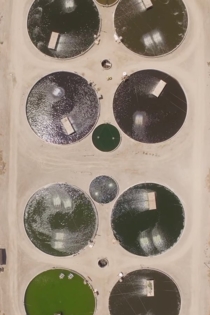
The record of a human intervention in nature: A static shot shows part of a landscape, a serene body of water in front of a mountain. A motorboat enters the picture from the right, obeying the directions sent by radio and forming a spiral in the water's surface. The boat then turns to the left and leaves the scene; solely its wake is visible for a time.
Reign of Silence
Circular Inscription
Lukas Marxt
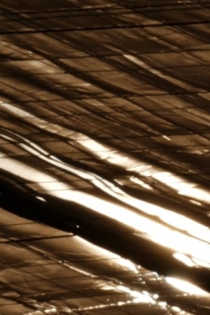
A mountain range on the horizon separates the cloudy sky from the dusty desert soil of the El Mirage Dry Lake, with the sounds of a distant roar. In the long shot, the gaze shows a detail of the Californian Mojave landscape, whose static panorama forms the referential and also material background for Circular Inscription…Circular Inscription positions itself, not only formally, as homage to the Land Art of the 1960s and 1970s, and produces in the process an ambivalent reproduction of tire tracks, which on the screen, ultimately take on the monumentality of the oversized Earth Works. Remaining behind in the landscape is the image of a temporary sign, a spiral, like Robert Smithson´s Spiral Jetty, or a circle, like the ones Michael Heizer carved in the El Mirage Dry Lake nearly a half-century before as Circular Surface. Planar Displacement Drawings. (Kathrin Wojtowicz, Translation: Lisa Rosenblatt)
Circular Inscription
Captive Horizon
Lukas Marxt
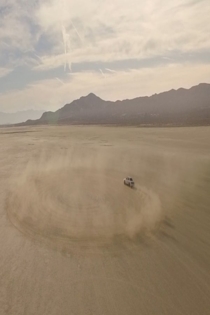
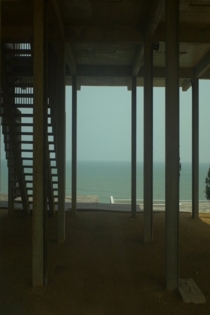
Captive Horizon operates on a delicate line between reality and illusion. Lukas Marxt´s favourite motifs – barren landscapes, seemingly untouched by humans, but at the same time suggestively apocalyptic, and subtle changes in perception that play tricks on the observer – construct a peculiar narrative filled with mysterious angles and twists. (Mirna Belina)
Captive Horizon

Victoria
Lukas Marxt
Vanja Smiljanić
The hypnotic wasteland of Southern California is infused with the free-spirited nature of Easy Rider, the alienation and uprootedness of Michelangelo Antonioni, and the deep transcendence of Werner Herzog. It speaks to us through fragments of dialogues from iconic films, and yet it remains elusive and dissolves into abstract shapes, rhythms, and compositions. The landscape as a captivating and intangible, all-encompassing and insubstantial yet full emptiness becomes the means for the transgressive experience of two temporalities – the “real” time of people and the time of natural processes. “How much further do we have to go? I don't know. Not much further. That's what you said this morning. I sometimes say it all day. Really? You say it all day? We don't have much longer. We'll be there soon.” (L. Marxt)
Victoria
Black Rain White Scars
Lukas Marxt
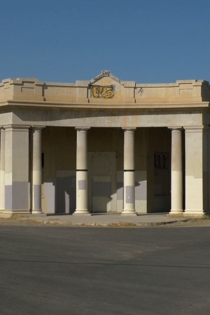
Black Rain White Scars depicts a twilight of reality. With the steady shot of a Gotham-like cityscape, Lukas Marxt guides us between vestiges of visionary architecture and narrow planted apartment buildings. As we’re searching for our relational point within it, the overwhelming murmuring of the human, car, and boat traffic, at the same time marginalises our position. We are a part of the scenery, though secluded and apart from it.
Black Rain White Scars
Shadowland
Vanja Smiljanić, Lukas Marxt
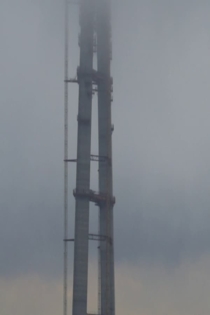
Around the solar eclipse of March 20, 2015, Marxt and Smiljanic arrange their own turned and extraneous material into a small catalog of cosmic visions: Eclipse hunters put themselves and their vision devices in position; A space-weather fairy analyzes the recent solar storms; A radar early warning station also waits for signals from above, while the thick fog blocks the view forward.
Shadowland