Lana Lin
2021Unidentified Vietnam No. 18
Lana Lin, H. Lan Thao Lam
“Unidentified Vietnam No. 18” examines the contested relationship between Vietnam and the US. Lin + Lam mine the material artifacts of the archive. Situated within the present, they study and even inhabit the past, re-enacting propagandistic gestures. Through these actions of retrieval and remembrance, the film ponders how US intervention has failed and considers the dangers of its repetition.
Unidentified Vietnam No. 18
The Cancer Journals Revisited
Lana Lin
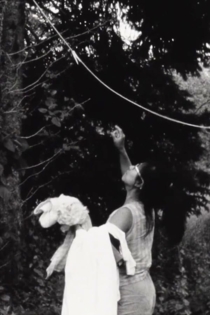
THE CANCER JOURNALS REVISITED is prompted by the question of what it means to re-visit and re-vision Black lesbian feminist poet Audre Lorde’s classic 1980 memoir of her breast cancer experience today. At the invitation of filmmaker Lana Lin, who was diagnosed with breast cancer in 2010, twenty-seven writers, artists, activists, health care advocates, and current and former patients recite Lorde’s manifesto aloud on camera, collectively dramatizing it and producing an oration for the screen. The film is both a critical commentary and a poetic reflection upon the precarious conditions of survival within the intimate and politicized public sphere of illness.
The Cancer Journals Revisited

Mizu Shobai (Water Business)
Lana Lin
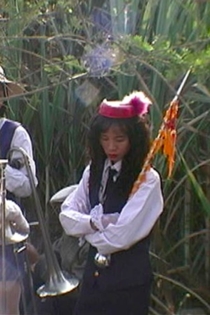
Mizu Shobai (Water Business) blends two stories, one of a geisha who is lost at sea and another of the first geisha to circle the world. The dual narratives collapse into a single female figure, a traveler through time and across cultures. Carried by the act of perception, the geisha drifts beyond the prescribed bounds of "her place" in the world. The Shogun's Seclusion Edict, effective during Japan’s period of isolation (1637-1868), states that foreign influence is punishable by death, so the geisha's passive observations become an active, fatal offense. Mizu Shobai, literally Water Business, is the Japanese term for the entertainment world. The phrase refers to liquor, sex, as well as the geisha's often maudlin lifestyle which “flows like water.”
Mizu Shobai (Water Business)
Taiwan Video Club
Lana Lin
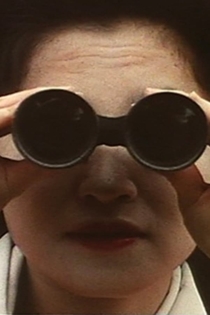
Taiwan Video Club (1999) introduces an underground world of television piracy in Taiwan. The protagonists record and trade videotapes of their favourite ‘epics’, broadcast daily on television. Focusing on their fanaticism and the materiality of the recording process, this video draws a connection between electronic and cultural forms of translation.
Taiwan Video Club
No Power to Push Up the Sky
Lana Lin
For No Power to Push Up the Sky, fifteen people translate an interview with student protest leader Chai Ling conducted in Beijing on May 28, 1989, one week before the Tiananmen Square massacre. The video positions translation as interpretive and demonstrates the complex process of locating meaning across language, culture, and politics.
No Power to Push Up the Sky