
Philip Hoffman
1955 (70 лет)By the Time We Got to Expo
Eva Kolcze, Philip Hoffman
A kinetic journey through Expo 67, revisiting Canada’s centennial through the symbols, choreographies, and built environments of the World’s Fair and its construction of (inter)nationalism. Reworking archival footage, By the Time We Got to Expo creates a vibrant collision of textures and forms in order to explore the surfaces, ideologies, and implications of the ‘meeting place’ that was Expo 67.
By the Time We Got to Expo
The Road Ended at the Beach
Philip Hoffman
Film images, stills and sound collected over six years coalesce in The Road Ended at the Beach. Hoffman interrogates both the journey, involving famed American photographer and filmmaker Robert Frank, and the process of its documentation as/in film.
The Road Ended at the Beach
Chimera
Philip Hoffman
“In 1989 I finished the film Kitchener-Berlin and put a close to a cycle of work which dealt directly with myself, and how self is expressed/constructed cinematically. At the same time I took my old super-8 camera out of the closet, and began collecting images, using the single-frame-zoom. Cubist in its visual delivery, the single-frame-zoom builds a splayed reality that brings together disparate vantage points simultaneously, and serves as the glue that blends and bonds peoples, places and spaces in Chimera.” (PH)
Chimera
Kokoro Is for Heart
Philip Hoffman
Kokoro Is for Heart features poet Gerry Shikatani and explores the relationships surrounding language, image and sound, set to the backdrop of a gravel pit. When I got the footage back from the lab I was disappointed because of the periodic flipping of the image. After screening the footage several times I realised that the malfunctioning camera rendered the filmed-nature unnatural ...and this poses questions: what is nature? What is natural? Ph
Kokoro Is for Heart
Lessons in Process
Philip Hoffman
Lessons in Process is an experimental documentary about a filmmaking workshop given by Canadian filmmaker/teacher Phil Hoffman, at the famed Internacional de Cine y Television, at San Antonio de Los Banos in Cuba. The film is a meditation on generations and legacies that touches on matters of responsibility and participation in the creation and circulation of images. Lessons in Process is at once a celebration of tradition, a self-examination, and an elegy.
Lessons in Process
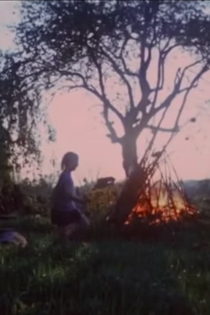
Sweep
Philip Hoffman, Sami van Ingen
Sweep is a road movie to memory, a realization of the need to review footsteps and past events which build myths. The camera gazes at the spaces in-between image and text, photography and memory, body and place. The surface texture of the film, like the land north of Lake Superior, is overdetermined by the discourse of territorialism, the cultural divisions of space and place framed and divided amid the ruins of history. An irritating buzz overlays parts of the soundtrack, signifying the hydro-electric development that has irreparably disrupted life in the north, while at the same time extending a modicum of material benefits. The filmmakers understand themselves as embodying this southern technocracy, and choose to turn the camera onto their own presence and progress of looking. Here, they work against the tendency, present since the days of Flaherty and in his more recent imitators, to objectify Aboriginal peoples within an unnameable (and thus exploitable) landscape.
Sweep
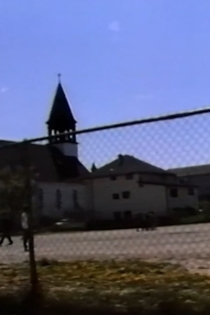
river
Philip Hoffman
"The Saugeen River was named Sauking, ‘where it all flows out,’ by the Ojibwa in the early 1800s. It runs into Lake Huron, in central Ontario. The place where I know it is twenty miles south of Owen Sound, near Williamsford, where I spent lots of time in my youth exploring. Over the past twelve years I’ve returned there to film, and collected these moments in a fifteen minute meditation called simply, river." (Philip Hoffman)
river
Ending 2
Isiah Medina, Philip Hoffman
Processed with conventional photo chemicals and the following flowers: magnolia blossoms, hyacinth, hydrangea, daffodil, rhododendron, pond algae, lilac, oregano (with blooms), comfrey (with blooms), roses, mint, goldenrod, hostas buds after flowering, and wild garlic seeds (a bowlful).
Ending 2
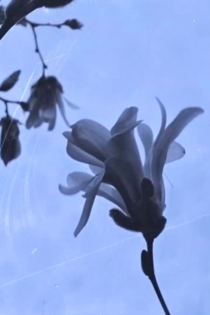
Kitchener-Berlin
Philip Hoffman
"As passing through/torn formations concerns his mother's family heritage, Kitchener-Berlin revolves around his father's family hometown. The slash and the hyphen in the titles suggest both severance from the past and connections to it, an ambivalence that is especially poignant for the descendants of the area's German settlers. The history of the area underpins the film, but refuses to bind it or restrict it from free association. Hoffman assembles a wide range of visual materials, including home movies, television news footage, and archival film, as well as his own characteristically enticing images, to build complex layers of superimpositions analogous to the impressions of memory." (Blaine Allen)
Kitchener-Berlin
Inner circle
Isiah Medina, Philip Hoffman
The clean 16mm image is processed normally in a lab. Outdated film stock from the 1980s-90s which Peter Mettler recently gave Philip Hoffman accounts for superimpositions. The tinting and toning was done via 'green' processing with flowers. The shooting and hand developing with flowers was done by Hoffman. It was scanned and then digitally edited by Isiah Medina.
Inner circle