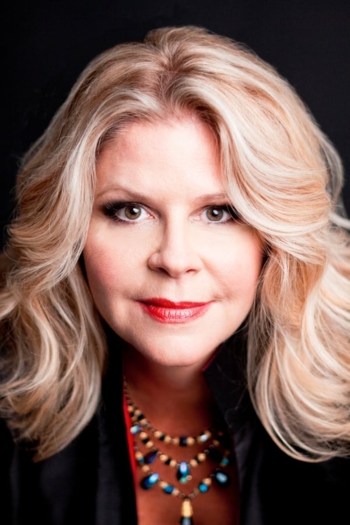
Susan Graham
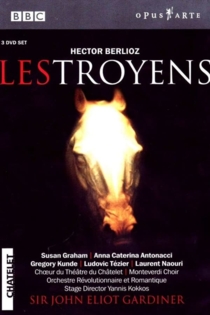
1960 (65 лет)Les Troyens
Peter Maniura
Anna Caterina Antonacci, Gregory Kunde
This epic opera follows Virgil, beginning as the Greeks appear to have ceded the field after ten years of the Trojan War. Cassandra tries to warn of the terrible fate to come, but fate is set and Troy falls. The first two acts cover this tragic end, then the flight of survivors to Carthage and events at Carthage continue in acts 3 - 5, culminating in the further voyage for Italy and Rome. This is Virgil's classic epic, in operatic form, in about a three and a half hour performance from French Opera.
Berlioz: Les Troyens
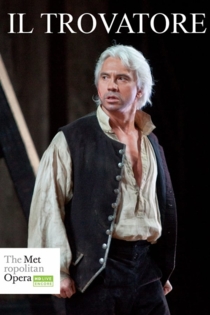
The Met — Il Trovatore
Gary Halvorson
Anna Netrebko, Yonghoon Lee
Soprano Anna Netrebko appears in her highly anticipated Met role debut as Leonora, the tortured heroine who sacrifices her own life for the love of the Gypsy troubadour. Dmitri Hvorostovsky sings Count di Luna, Yonghoon Lee is Manrico in his Met role debut as the title character, Dolora Zajick sings her signature role of the gypsy Azucena, and Štefan Kocán is Ferrando. Marco Armiliato conducts Sir David McVicar’s Goya-inspired production.
The Met — Il Trovatore
Donizetti: Don Pasquale
Otto Schenk, Gary Halvorson
Anna Netrebko, John del Carlo
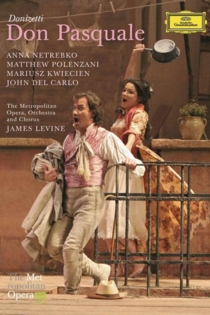
Donizetti’s timeless comedy shines in Otto Schenk’s enchanting production, conducted by James Levine and featuring a remarkable cast. The incomparable Anna Netrebko is Norina, the young widow beloved by Ernesto (a suave Matthew Polenzani), who is about to be disinherited by his miserly uncle, Don Pasquale (John Del Carlo). It takes the clever scheming of Dr. Malatesta (Mariusz Kwiecien) to set things right and to teach the old curmudgeon a lesson—fits of temper, mistaken identities, and all kinds of comic confusion included.
The Metropolitan Opera: Don Pasquale
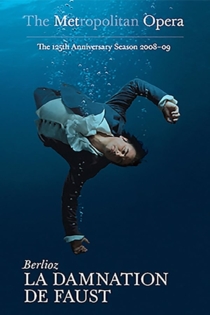
Berlioz: La Damnation de Faust
Robert Lepage, Barbara Willis Sweete
Marcello Giordani, John Relyea
Radiant mezzo-soprano Susan Graham and dashing Italian tenor Marcello Giordani are unlucky lovers in La Damnation de Faust, Hector Berlioz’s classic take on dancing with the devil.
Berlioz: La Damnation de Faust
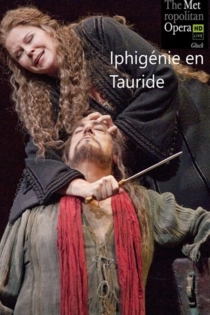
Gluck: Iphigénie en Tauride
Barbara Willis Sweete
Susan Graham, Plácido Domingo
Gluck’s gripping adaptation of the ancient Greek myth is vividly brought to life by a stellar cast in Stephen Wadsworth’s atmospheric production. Oreste is driven by the Furies to atone for killing his mother Clytemnestre. When he and his companion Pylade are shipwrecked on the island of Tauride, the king Thoas demands they be sacrificed. At the center of the drama is Iphigénie, Oreste’s long-lost sister. Forced to live among her enemies, she holds the lives of the captives in her hands—unaware that one of them is her brother. (Iphigénie en Tauride is performed in an adaptation of the 1779 Paris version edited by Gerhard Croll, by arrangement with Bärenreiter.)
The Metropolitan Opera: Iphigénie en Tauride
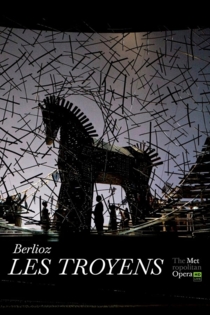
Berlioz: Les Troyens
Barbara Willis Sweete
Deborah Voigt, Dwayne Croft
Berlioz’s epic masterpiece retells the magnificent saga of the aftermath of the Trojan War and the exploits of Aeneas. Rising tenor Bryan Hymel, in his Met debut, stars as the hero charged by the gods with the founding of the city of Rome. Susan Graham is Dido, Queen of Carthage, who becomes Aeneas’s lover, and Deborah Voigt sings Cassandra, the Trojan princess whose warnings about the impending destruction of Troy go unheeded. Francesca Zambello’s atmospheric production, featuring choreography by Doug Varone, is led by Met Principal Conductor Fabio Luisi.
Berlioz: Les Troyens
The Metropolitan Opera: Lulu
Matthew Diamond
Marlis Petersen, Johan Reuter
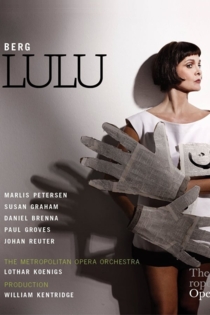
William Kentridge’s multi-layered production of Berg’s masterpiece stars charismatic soprano Marlis Petersen in the title role—the enigmatic and alluring woman who is equal parts femme fatale, innocent girl, and abused victim. The men around her, whose lives she forever alters, are Johan Reuter as newspaper publisher Dr. Schön; Daniel Brenna as his composer son, Alwa; Paul Groves as the Painter; and Franz Grundheber as Schigolch. Susan Graham sings Countess Geschwitz, and Lothar Koenigs conducts Berg’s landmark score.
The Metropolitan Opera: Lulu
Adams: Doctor Atomic
Gary Halvorson
Richard Paul Fink, Gerald Finley
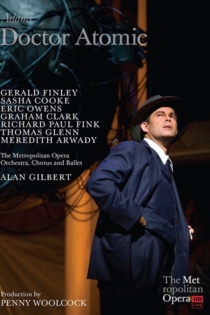
John Adams’s mesmerizing score, in the powerful production of Penny Woolcock, tells the story of one of the pivotal moments in human history—the creation of the atomic bomb. Conducted by Alan Gilbert in his Met debut, this gripping opera presents the human face of the scientists, military men, and others who were involved in the project, as they wrestled with the implications of their work. Baritone Gerald Finley gives a powerful star turn in the title role as the brilliant J. Robert Oppenheimer.
Adams: Doctor Atomic
Thomas Adès: The Exterminating Angel
Gary Halvorson, Tom Cairns
Joseph Kaiser, Amanda Echalaz
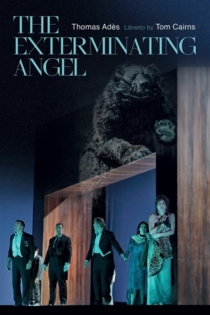
After the acclaimed Met premiere of Thomas Adès's "The Tempest" in 2012, the composer returned with another masterpiece, this time inspired by filmmaker Luis Buñuel's seminal surrealist classic "El Ángel Exterminador", during the 2017–18 season. As the opera opens, a group of elegant socialites gather for a lavish dinner party, but when it is time to leave for the night, no one is able to escape. Soon, their behavior becomes increasingly erratic and savage. The large ensemble cast tackles both the vocal and dramatic demands of Adès's opera with one riveting performance after another. Tom Cairns, who also penned the work's libretto, directs an engrossing and inventive production, using a towering wooden archway to trap the characters onstage. And Adès himself takes the podium to conduct the frenzied score, which features a host of unconventional instruments, including the eerie electronic ondes Martenot.
The Metropolitan Opera: The Exterminating Angel
The Met — Tosca
Luc Bondy, Gary Halvorson
Karita Mattila, Marcelo Álvarez
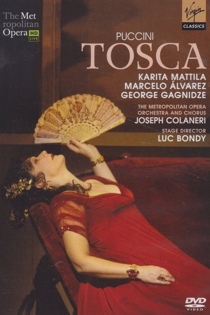
Puccini’s musical thriller of lust, murder, and politics is one of the most dramatically riveting operas in the repertoire. Luc Bondy’s production, with sets by Richard Peduzzi and costumes by Academy Award-winning designer Milena Canonero, opened the Met’s 2009–10 season. Karita Mattila stars as the beautiful and dangerously impulsive singer Floria Tosca. Marcelo Álvarez is her lover, the painter Cavaradossi, a political enemy of the powerful chief of police, Scarpia (George Gagnidze), who wants Tosca for himself.
The Met — Tosca
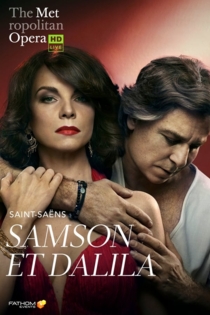
The Metropolitan Opera: Saint-Saëns's Samson et Dalila
Gary Halvorson, Darko Tresnjak
Roberto Alagna, Elina Garanca
A towering biblical epic, Saint-Saëns’s operatic take on the story of Samson and Delilah has many of the hallmarks of grand opera—show-stopping vocal displays, thrilling choruses, and an engrossing plot set against a sweeping, pseudo-historical backdrop. It’s fitting, then, that Samson et Dalila has been chosen to celebrate the opening of the Met’s season four times in the company’s history, including when Darko Tresnjak’s bold new production premiered on the first night of the 2018–19 season. A few weeks later, the opera was shown as part of the Met’s series of live cinema transmissions, featuring an exceptional cast. Tenor Roberto Alagna was the heroic Samson, who ultimately falls victim to the seductive power of Dalila—the captivating mezzo-soprano Elīna Garanča. Bass-baritone Laurent Naouri sang the sinister High Priest of Dagon, with conductor Sir Mark Elder on the podium.
The Metropolitan Opera: Saint-Saëns's Samson et Dalila
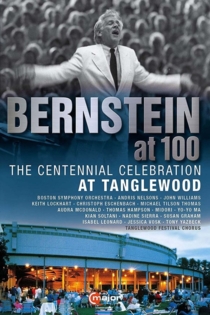
Leonard Bernstein Centennial Celebration at Tanglewood
James Darrah, David Horn
Audra McDonald, Andris Nelsons
In honor of Leonard Bernstein’s 100th birthday, Tanglewood—the famed summer home of the Boston Symphony Orchestra—dedicated its entire 2018 season to the iconic composer, conductor, performer, educator and humanitarian. The festivities culminated on Bernstein’s centennial birthday on August 25, 2018, in a special celebrity-studded gala concert. Directed for the stage by James Darrah, The Bernstein Centennial Celebration at Tanglewood illuminates the breadth of Bernstein’s incredible life and career, which inspired generations of music lovers around the globe – from his talent as a composer to his generosity in mentoring other composers and musicians, his inimitable role as a driving musical force at Tanglewood for over 50 years and more.
Leonard Bernstein Centennial Celebration at Tanglewood
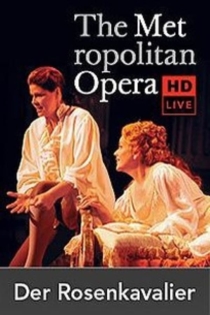
The Met — Der Rosenkavalier
Barbara Willis Sweete
Renée Fleming, Susan Graham
This production of Strauss’s most sumptuous work by director Nathaniel Merrill and designer Robert O’Hearn is almost as beloved as the opera itself. It perfectly captures the glittering never-land of rococco Vienna the way the Viennese—and the rest of the world—wish it had been, and it’s the ideal setting for an adult comedy of love and errors. Susan Graham is the aristocratic young Octavian, torn between two women: Renée Fleming as the Marschallin, the mature woman who understands that one day Octavian must leave her; and Christine Schäfer as Sophie, the young girl who unexpectedly captures his heart. Kristinn Sigmundsson is the lecherous Baron Ochs who sets the whirling plot in motion, and Edo de Waart conducts.
The Met — Der Rosenkavalier
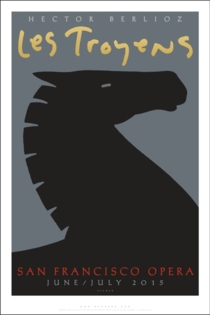
Les Troyens - San Francisco Opera
David McVicar, Frank Zamacona
Susan Graham, Bryan Hymel
Witness the fall of Troy and the rise of an even greater nation in Hector Berlioz’s monumental five-part epic The Trojans. Opera legend Susan Graham, a master of the French opera repertoire, leads the cast as the lovesick queen Dido, who welcomes the Trojan refugees to her shores—only to have her heart broken by one of their heroes.
Les Troyens - San Francisco Opera
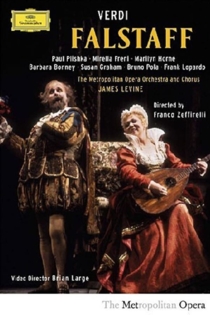
Falstaff
Brian Large, Franco Zeffirelli
Mirella Freni, Barbara Bonney
It is to composer and librettist Arrigo Boito and his constant pestering of the octogenarian Verdi that there remained within him one last great comedy fighting to get out that we owe this absolute miracle of an opera. Produced in 1893 as Verdi turned 80 there is much in this masterpiece that can be identified as a modernist neoclassical work. The use of short motifs instead of long arioso melodic lines, the spry and reduced orchestral textures and the lack of a single 'stand and deliver' dramatic declamatory aria all serve to make this more of a 20th century work than an example of 19th century late-Romanticism.
Falstaff