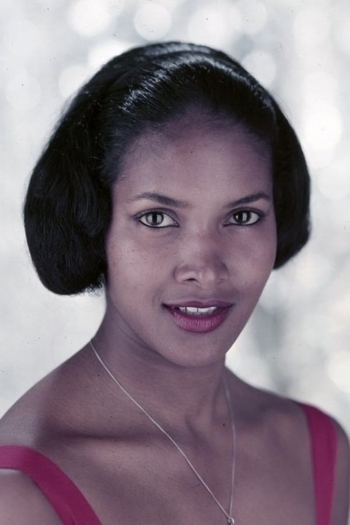
Marpessa Dawn
1934 - 2008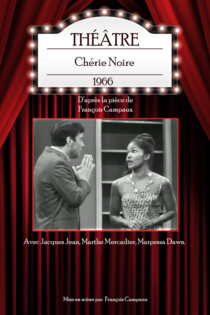

Orfeu Negro
Marcel Camus
Breno Mello, Marpessa Dawn
Young lovers Orfeu and Eurydice run through the favelas of Rio during Carnaval, on the lam from a hitman dressed like Death and Orfeu's vengeful fiancée Mira and passing between moments of fantasy and stark reality. This impressionistic retelling of the Greek legend of Orpheus and Eurydice introduced bossa nova to the world with its soundtrack by young Brazilian composers Luiz Bonfá and Antonio Carlos Jobim.
Black Orpheus

Afrique sur Seine
Mamadou Sarr, Paulin Soumanou Vieyra
Paulin Soumanou Vieyra, Mamadou Sarr
This film is widely regarded as the first film made by an African south of the Sahara. Labelled an “ethnological documentary in reverse,” it shows 1950s Paris from the cinematic perspective of a group of African immigrants. (Mubi)
Africa on the Seine


Collections privées
Shūji Terayama, Just Jaeckin
Roland Blanche, Marie-Catherine Conti
Three stories. A solitary sailor falls from his boat and washes ashore on a tropical island. While seeking rescue, he's found by a nearly naked woman who is playful and compliant. He decides to erase his signs of distress and remain on the island. What awaits? In the second, an adolescent searches for the words of a nursery rime he remembers bits of. His journey takes him into dreams, sexual awakening, and Oedipal fantasy. Third, a man of wealth in late-nineteenth century Paris hires a prostitute for the night. She's also cabaret performer and takes him to her room. He fears he's about to be robbed. What's her secret?
Private Collections

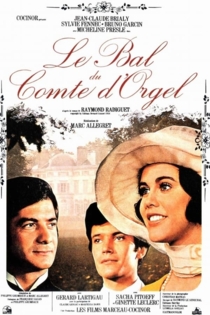
Le bal du comte d'Orgel
Marc Allégret
Jean-Claude Brialy, Sylvie Fennec
Nobles try desperately to cling to the crumbling aristocracy in the days following World War I. The Count (Jean-Claude Brialy) and his Countess Mahe (Sylvia Fennec) delight in throwing lavish costume balls. The couple develops a friendship with a young boy who delights in the parties thrown by the noble couple. Love soon blooms between the Countess and the boy as she searches for something more than a string of endless parties and social affairs. The masquerades are an attempt to freeze time and hold on to the nostalgia of a bygone era. For fear of losing her, the Count allows the Countess to continue her love affair.
Le Bal du comte d'Orgel