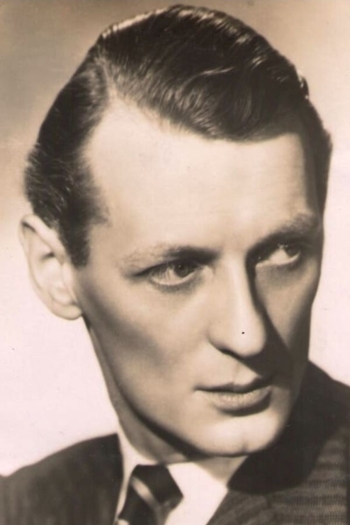
Richard Murdoch
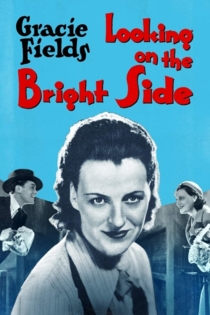
1907 - 1990Murdoch's first appearance in cinema was as an uncredited dancing extra in 1932 film Looking on the Bright Side. In 1937 he was listed among the cast of the "Television Follies", an early BBC Television programme.
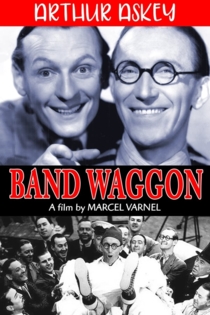
He received his big professional break in the British Broadcasting Corporation's comedy radio programme Band Waggon in 1938 as part of a double act with the then rising star Arthur Askey, acquiring the nickname "Stinker" in mocking reference to his superior formal education.
As Askey moved from radio performing into cinema at the end of the 1930s Murdoch went with him and they appeared in a number of Askey star vehicle films together, Murdoch's tall athletic physique, good looks and upper middle class English Home Counties demeanor contrasting comedically with Askey's short stature, homely appearance, Lancashire provincial accent and working class performance persona. Their working partnership broke up during World War 2 when Murdoch joined the Armed Forces, but they briefly reprised it in the late 1950s for the television series Living It Up.
Murdoch was conscripted into the Royal Air Force in 1941, serving as a junior intelligence officer with Bomber Command, before being posted to the Department of Allied Air Force and Foreign Liaison as a Flight Lieutenant. In 1943 he joined the Directorate of Administrative Plans at the Air Ministry, where he shared an office with Wing Commander Kenneth Horne, being responsible for the supply of aircraft and air equipment to Russia. He finished the war with the rank of Squadron Leader.


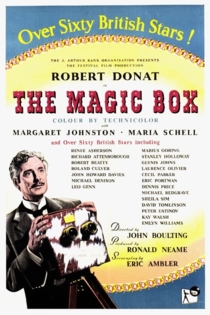
The Magic Box
John Boulting
Robert Donat, Margaret Johnston
Now old, ill, poor, and largely forgotten, William Freise-Greene was once very different. As young and handsome William Green he changed his name to include his first wife's so that it sounded more impressive for the photographic portrait work he was so good at. But he was also an inventor and his search for a way to project moving pictures became an obsession that ultimately changed the life of all those he loved.
The Magic Box
The Ghost Train
Walter Forde
Arthur Askey, Richard Murdoch
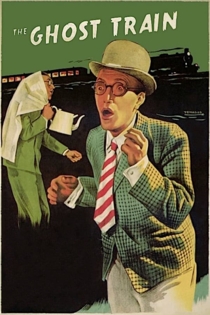
Mismatched travellers are stranded overnight at a lonely rural railway station. They soon learn of local superstition about a phantom train which is said to travel these parts at dead of night, carrying ghosts from a long-ago train wreck in the area.
The Ghost Train
I Thank You
Marcel Varnel
Arthur Askey, Richard Murdoch
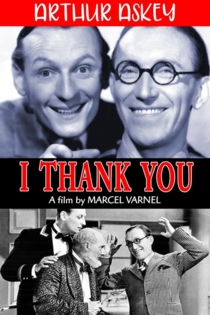
Classic comedy starring Arthur Askey. The perils, humiliations and humour of trying to run a second-rate theatrical company are further compounded when financial aid, given by the former famous music-hall star Lady Randall (Lily Morris), is withdrawn. Not to be defeated, the stars decide the show must go on and devise a plan to persuade her to reinvest
I Thank You
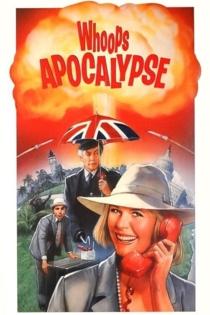
Whoops Apocalypse
Tom Bussmann
Peter Cook, Loretta Swit
When a small British owned island in the Caribbean is invaded and the world's most dangerous terrorist kidnaps a member of the Royal family, the countdown to World War 3 begins. If anyone can prevent the oncoming apocalypse it's the American President, but her closest ally the British Prime Minister appears to have gone stark raving mad.
Whoops Apocalypse
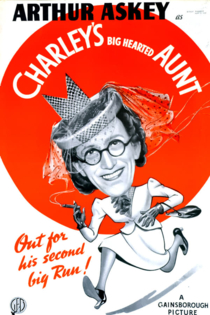
Charley's (Big-Hearted) Aunt
Walter Forde
Arthur Askey, Richard Murdoch
Charley's (Big-Hearted) Aunt is a 1940 British comedy film directed by Walter Forde starring Arthur Askey and Richard Murdoch as Oxford 'scholars'. The film is one of many to be made based on the farce Charley's Aunt. Taking inspiration from a well-known Victorian play, a modern-day prankster poses as a wealthy woman in a ploy to prevent him and his friends from being expelled from college.
Charley's (Big-Hearted) Aunt
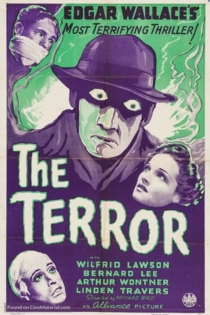
The Terror
Richard Bird
Wilfrid Lawson, Bernard Lee
For ten years, The Terror has laughed at both police and public. And for ten years, two of his erstwhile associates, Joe Conner and 'Soapy' Marks, have plotted revenge on the mastermind whose double-crossing sent them to Dartmoor prison without their share of the bullion stolen in a daring raid.
The Terror
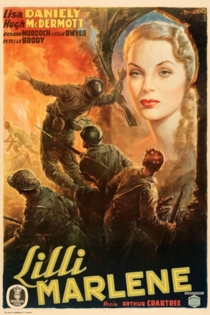
Lilli Marlene
Arthur Crabtree
Lisa Daniely, Hugh McDermott
Lilli Marlene, a French girl working as a bar maid in her uncle's café in Benghazi, Libya, turns out to be the girl that the popular German wartime song Lili Marleen had been written for before the war, so both the British and the Germans try to use her for propaganda purposes - especially as it turns out that she can sing as well. When the Germans kidnap her in Cairo and she starts appearing in radio broadcasts from Berlin, her British soldier friends think that she's joined the enemy. They couldn't be more wrong, because after the war it turns out that her songs over the radio contained secret messages to London from British agents in Berlin.
Lilli Marlene