Sami van Ingen
2021Polte
Sami van Ingen
A fractured melodrama, based on damaged frames from the last minutes of the only remaining nitrate reel of the lost feature film Silja – Fallen Asleep When Young (1937) directed by Teuvo Tulio. All screening prints and the negative of the film were destroyed in a 1959 studio fire. A sequence from the middle of the film was found at La Cinémathèque Française in Paris in 2015.
Flame

Manifest Destiny
Sami van Ingen
Chance incidents of life and in the darkroom collide, as found footage film strips take new shape under a flashlight. Poetic gestures in the source material and the manipulative body movements of the filmmaker form a new take on depicted relationships, a rite of passage and the artefacts of the process itself. As always gestures become actions, and these determine how we live our lives.
Manifest Destiny
Hammu
Sami van Ingen
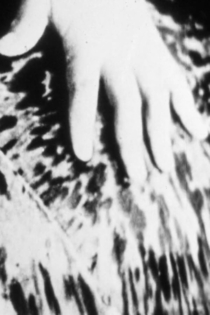
Hammu is the name of the hamster I had as a child. It seemed it was my only friend and being to identify with. One day it disappeared from the cage and was never to be seen again, that marked the end of my childhood, of unreserved trust and commitment. This work is a visualisation of the memories I have about the event, of obsession, tediousness and loss.
Hammu
Sweep
Philip Hoffman, Sami van Ingen
Sweep is a road movie to memory, a realization of the need to review footsteps and past events which build myths. The camera gazes at the spaces in-between image and text, photography and memory, body and place. The surface texture of the film, like the land north of Lake Superior, is overdetermined by the discourse of territorialism, the cultural divisions of space and place framed and divided amid the ruins of history. An irritating buzz overlays parts of the soundtrack, signifying the hydro-electric development that has irreparably disrupted life in the north, while at the same time extending a modicum of material benefits. The filmmakers understand themselves as embodying this southern technocracy, and choose to turn the camera onto their own presence and progress of looking. Here, they work against the tendency, present since the days of Flaherty and in his more recent imitators, to objectify Aboriginal peoples within an unnameable (and thus exploitable) landscape.
Sweep