Rajee Samarasinghe
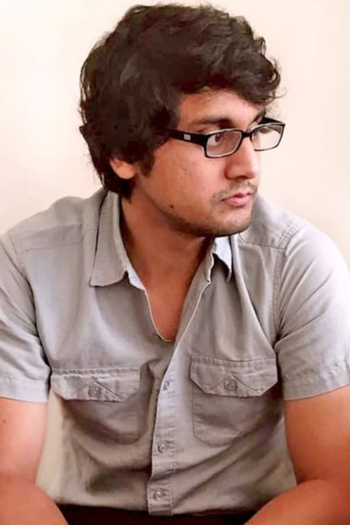
1988 (38 лет)Rajee's work has been exhibited at venues internationally including the Tiger Short Competition at the International Film Festival Rotterdam, BFI London Film Festival, Slamdance Film Festival, FIDMarseille, Internationale Kurzfilmtage Oberhausen, Ann Arbor Film Festival, San Francisco International Film Festival, CROSSROADS at SFMOMA, REDCAT, Media City Film Festival, Message to Man, Havana Film Festival, New Orleans Film Festival, Berwick Film & Media Arts Festival, Internationales Kurzfilm Festival Hamburg, Onion City Experimental Film and Video Festival, Antimatter [Media Art], Les Rencontres Internationales Paris/Berlin, & Chicago Underground Film Festival, among many others. He's received the "Film House Award for visionary filmmaking" at the Athens International Film + Video Festival, an "Audience Award" at CROSSROADS at SFMOMA, and a "Jury Award" at the Sydney Underground Film Festival.
The Eyes of Summer
Rajee Samarasinghe
Shalani Dilasha, Malka Malshani
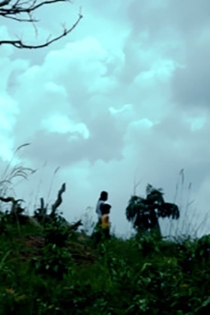
In a small and remote hamlet in Southern Sri Lanka, a little girl develops a curious friendship with a spirit who lives in an abandoned house. This film was shot in my mother's village in Southern Sri Lanka—shortly after the civil war in 2010. Collaboratively developed with members of my family there, a narrative was improvised around an investigation into my mother's interactions with spirits in the community during her childhood. Landing somewhere between horror fiction and “spectral” ethnography, the film describes a population reeling from devastations of the past, where distinctions between the living and the dead are thinning, and foreign influences loom over Sri Lanka’s commercial, economic, and media infrastructure.
The Eyes of Summer
The Spectre Watches Over Her
Rajee Samarasinghe
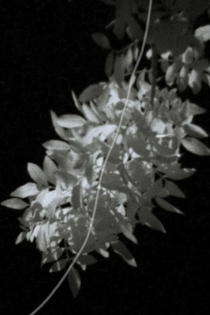
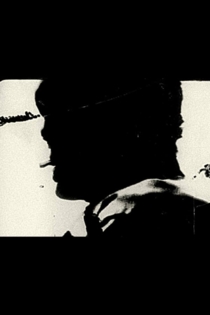
A reaction to the seminal text by Swiss anthropologist Paul Wirz, Exorcism and the Art of Healing in Ceylon, this silent, high contrast, hand-processed film considers a history of colonialism and ethnographic practices in South Asia. The filmmakers restages a Sanni Yakuma healing ritual that was performed over a 12-hour period.
The Spectre Watches Over Her
Show Me Other Places
Rajee Samarasinghe
At the center of this film is a Sri Lankan woman accessing other places in digital form, while situated in her own physical reality. Navigating through a multitude of spaces from the natural world to man-made environments as well as virtual planes, traditional relationships between the creator, the tool, and the subject are questioned, shattered and reconstructed. Reflecting on my own practice as a filmmaker working in non-fiction, the film takes a collage-like approach to examining issues around representation, verisimilitude, the ethnographic image, and the limitations of the form itself. Shot on seven different cameras (and a video synthesizer) on both film and video over the course of a decade in Sri Lanka, China, and the United States, I delve into some of my fundamental curiosities as a filmmaker.
Show Me Other Places

Misery Next Time
Rajee Samarasinghe
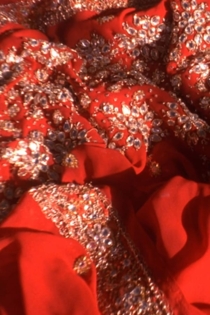
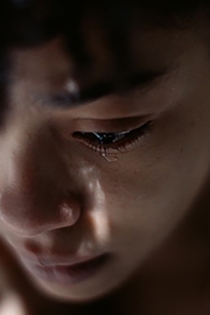
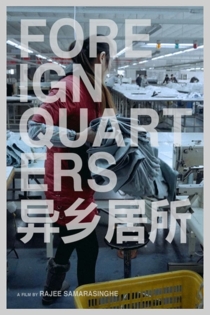
This associative stream of visuals, culled from the past, reflect on the roles of art, labor, and journalism in contemporary Sri Lanka, facing a dubious future ahead. Memory and ethnographic deconstruction cascade in an obliterated form, forging a dire and prescient assemblage.
Misery Next Time
If I Were Any Further Away I'd Be Closer to Home
Rajee Samarasinghe
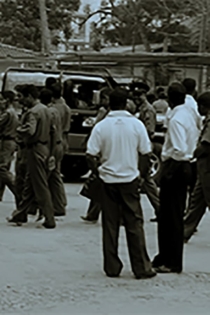
A silent poem reflecting on the place of my mother's birth and her first traces on earth. A generational portrait of South Asian "makers" becomes a perceptual voyage into memory, experience, and touch.
If I Were Any Further Away I'd Be Closer to Home
Untitled
Rajee Samarasinghe
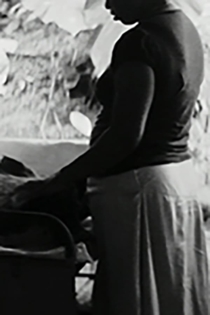
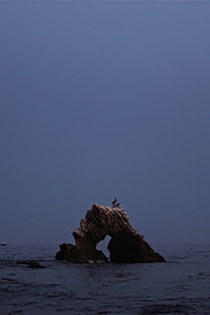
A performance film consisting of a string of five slow motion portraits of a young woman—recalling the stillness of photographs. Each portrait varies in length and gesture as her myriad expressions invite our gaze. With each action performed in dead silence, stretched to the limits of voyeuristic levels of comfort, the simple act of looking is made fragile. A curious exchange is established between spectator, creator, and subject through a careful appropriation and reframing of social media conventions and advertising iconography transposed into a cinematic space—pointing to a cycle of regressive media consumption. This piece continues a series of cinematic works finding the colonial gaze in both the ethnographic image and forms of dominant media as a means to dismantle hegemonic structures found in the culture of image consumption.
Untitled
The Exile (Pituvahalaya)
Rajee Samarasinghe
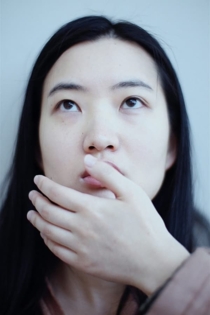
Shot improvisationally in 2010, shortly after the end of the Sri Lankan civil war, this film takes a lyrical approach to examining recent history and the process of reconstruction in the post-war era. The visions of an exile are carried through an immoral silence, to an end both dubious and bittersweet.
The Exile (Pituvahalaya)