
Juliet Berto
1947 - 1990Juliet Berto (16 January 1947 – 10 January 1990) was a French actress, director and screenwriter.
A member of the same loose group of student radicals as Anne Wiazemsky, she first appeared in Jean-Luc Godard's Two or Three Things I Know About Her, and would go on to appear in many of Godard's subsequent films, including La Chinoise, Week End, Le Gai Savoir, and Vladimir et Rosa. She later became a muse for the French New Wave director Jacques Rivette, starring in Out 1 and Celine and Julie Go Boating.
In the 1980s she also became a screenwriter and film director. Her film Cap Canaille (1983) was entered into the 33rd Berlin International Film Festival. In 1987, she was a member of the jury at the 37th Berlin International Film Festival.
She died of cancer on 10 January 1990. She was 42.

Une si simple histoire
Abdellatif Ben Ammar
Labiba Ben Ammar, Juliet Berto
A documentary filmmaker goes to work on a project about Tunisians who have worked abroad. Many have married French women, and the couples try to adjust to France after many years in Tunisia. The man decides to forego the film in order to address the personal and social concerns of the people trying to cope in their new surroundings. This feature appeared at the 1970 Cannes Film Festival.
A Simple Story

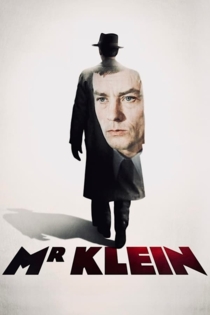
Mr. Klein
Joseph Losey
Alain Delon, Jeanne Moreau
Paris, France, 1942, during the Nazi occupation. Robert Klein, a successful art dealer who benefits from the misfortunes of those who are ruthlessly persecuted, discovers by chance that there is another Robert Klein, apparently a Jewish man; someone with whom he could be mistakenly identified, something dangerous in such harsh times.
Mr. Klein
Homeo
Étienne O'Leary
Michèle Giraud, Yves Beneyton
Homeo is a mental construction made from visual reality, just as music is made from auditive reality. I put in this film no personal intentions. All my intentions are personal. I’ve made this film thinking of what the audience would have liked to see, not something specific that I wanted to say: what the film depicts is above all reality, not fiction. Homeo is, for me, the search for an autonomous cinematographic language, which doesn't owe anything to traditional narrative, or maybe everything. Cinema is, above all, part of a way of life which will become more and more self-assured in the years and century to come. We are part of this change, and that’s why I tried in Homeo to establish a series of perpetual changes, in constant evolution or regress, which tries, above all, to focus on things.
Homeo
L'escadron Volapük
René Gilson
Juliet Berto
This somewhat talky French-language film concerns a goofy bunch of military types and involves them in encounters with a variety of late '60s radicals who spout off a bit. It is notable chiefly because it was about to be subjected to severe censorship for its political content but was saved by the incoming Culture Minister Jacques Duhamel.
L'escadron Volapük


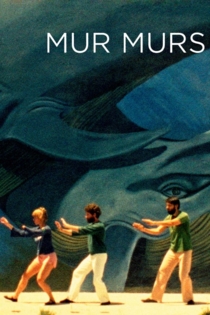
Mur murs
Agnès Varda
Juliet Berto, Judy Baca
Venturing from Venice Beach to Watts, Varda looks at the murals of LA as backdrop to and mirror of the city’s many cultures. She casts a curious eye on graffiti and photorealism, roller disco & gang violence, evangelical Christians, Hare Krishnas, artists, angels and ordinary Angelenos.
Mur Murs
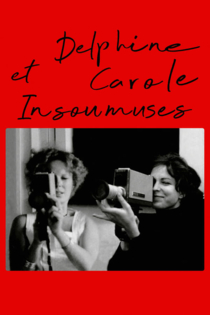
Delphine and Carole
Callisto McNulty
Delphine Seyrig, Carole Roussopoulos
In the 70s, actress Delphine Seyrig and director Carole Roussopoulos, both militant feminists, were the pioneers of video activism in France. They documented the demonstrations of French feminists and used the new technologies to counter the poor representation of women in the public media.
Delphine and Carole
Out 1: Spectre
Jacques Rivette
Juliet Berto, Jean-Pierre Léaud
Out 1: Spectre begins as nothing more than scenes from Parisian life; only as time goes by do we realize that there is a plot—perhaps playful, perhaps sinister—that implicates not just the thirteen characters, but maybe everyone, everywhere. Real life may be nothing but an enormous yarn someone somewhere is spinning...
Out 1: Spectre


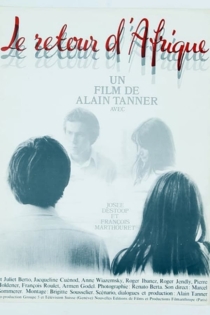
Le retour d'Afrique
Alain Tanner
Josée Destoop, François Marthouret
An ode to liberated speech and to the power of words, "those one speaks to others, those one speaks in silence", Alain Tanner's third film is inspired by a poet and a poetic text which deeply affected him as a young director.
Return from Africa
The Moving-Picture Man
Luis Armando Roche
Juliet Berto, Asdrúbal Meléndez
Happy fun times with a little crew of people driving around to backwater villages to show movies in places where the locals don't get much culture. But all good things come to an end...
The Moving-Picture Man

Sois belle et tais-toi!
Delphine Seyrig
Delphine Seyrig, Jill Clayburgh
The film is a series of interviews with various well-known film actresses, including Jenny Agutter, Maria Schneider, and Jane Fonda. The title, which is borrowed from a 1958 film with the same name by Marc Allegret, refers to the sense the actresses have of what is expected of them by the film industry.
Be Pretty and Shut Up!

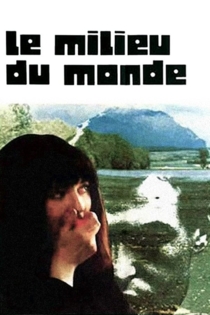
Le Milieu du monde
Alain Tanner
Olimpia Carlisi, Philippe Léotard
Paul is married, a successful engineer, and a conservative candidate in an upcoming local election. He falls in love with Adriana, a café waitress from Italy. Paul's party is very critical of foreign labour and wants to keep Switzerland to the Swiss. Where Paul falls deeper and deeper into the relationship and is ready to leave his wife, Adriana feels the social pressure growing and has to make her own decision.
The Middle of the World
Bastien, Bastienne
Michel Andrieu
Juliet Berto, Anna Prucnal
Catherine (Juliet Berto) is the temporary head of the family while her husband, whom she loathes, is away fighting in the war. Her widowed sister-in-law Suzanne (Anna Prucnal) lives with her, and after awhile it becomes apparent that Catherine loathes her as well. The children in the house are all boys -- Catherine has two sons, twelve and thirteen, and Suzanne also has a twelve-year old. While the relationship between Suzanne and Catherine is coming to a head, Catherine is having an affair with an army officer, and the boys in the family are planning a musical performance for everyone. The crescendo may be barely audible at the beginning, but it builds up to a tragedy at the end.
Bastien, Bastienne
Wheel of Ashes
Peter Emmanuel Goldman
Pierre Clémenti, Katinka Bo
A stripped-down account of a young man's existential reckoning. "As dust hides a mirror, lust hides the self," reads one of the film's Vedanta-sourced intertitles. And indeed, while the Pierre Clementi protagonist's inner life remains obscure, the Saint-Germain-des-Pres neighborhood that offers his temptations appears in harrowing detail.
Wheel of Ashes