Chen Chieh-jen
2021A field of non field
Chen Chieh-jen
Single channel video installation A Field of Non-Field conveys the concept that the relationship between technological development and capitalism has formed a new concept of technology capitalism, imposing control over technology and even the desires, perception, and thinking of individuals. This condition forms a situation of “global imprisonment, at-home exile.” What are our options of survival under circumstances such as these?
A Field of Non-Field
The Route
Chen Chieh-jen
In 1995 five hundred dock workers in Liverpool were fired for refusing to cross a picket line, sparking the Dockers' dispute of the 1990s. In protest, when the Neptune Jade – a Mersey-loaded ship – set sail from England dock workers across the globe refused to allow the ship to dock and unload its cargo – first at Oakland CA., then Vancouver, Canada and then Yokahoma and Kobe, Japan. The ship eventually sailed to Port of Kaohsiung, Taiwan where it was disbanded and sold. Neptune Jade stands as a significant event in the dock workers struggle and of their international solidarity. In The Route, Chen re-presents history by interspersing archive film footage with new footage of a picket line staged by Dockers at Port of Kaohsiung. A symbolic connection between workers in Liverpool and Taiwan, the artist's home, is created, echoing the Dockers' phrase 'The world is our picket line'.
The Route
Dysfunction No. 3
Chen Chieh-jen
Taiwan's Martial Law provisions included laws clearly suppressing assembly, demonstrations, and forming of organizations. Nonetheless, one afternoon on a holiday in 1983, five youths appeared on Ximending Street dressed in white khaki pants and wearing cotton bags over their heads. A document of dissident action during this period.
Dysfunction No. 3
Can xiang shi jie
Chen Chieh-jen
Chou Fu-tzu, Li Tien-pei
For more than two decades, internationally acclaimed artist Chen Chieh-jen has illuminated the deep impact of power on bodies and architecture. Here he explores a pair of sites built by the Japanese colonial government in the early 20th century: the Losheng Leprosy Sanatorium and the Taipei Prison. The first was on the outskirts of Taipei, the second in the heart of the city. Both were used for controlling marginal populations; both continued to operate long after the Japanese left; and both were eventually torn down for urban redevelopment. Across its four sections linking different times, places and people, Realm of Reverberations reveals cycles of construction and destruction, and the ironies of emotional attachment and historical detachment.-UCLAFilm&TV
Realm of Reverberations
閃光
Chen Chieh-jen
After the first bank robbery in Taiwan happened in 1982, the three oligopolistic TV stations repeatedly screened the surveillance video of the robber LEE Shih-ke carrying a gun and crossing the bank counter. To the director, LEE’s action symbolised the transgression of law and the reclamation of his right of name.
Flash
Factory
Chen Chieh-jen
Factory captures a group of women workers reenacting their duties in an abandoned garment factory where they had formerly been employed. The work was made after many industries were moved abroad to reduce personnel costs and workers laid off unlawfully, without severance or pension payments. Intercut with clips appropriated from propaganda ads, Factory scrutinises the expressions and gestures of the women as they work, as well as the sculptural assemblies of dusty tables, chairs and other objects lingering in the space.
Factory
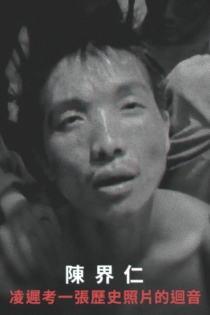
Lingchi - Echoes of a Historical Photograph
Chen Chieh-jen
Inspired by a photograph taken by a French soldier in the early 1900s of a ‘lingchi’ execution, Chen created a high-impact film that reconstructed this brutal form of punishment for criminals who had committed heinous crimes in feudal China. Lingchi – Echoes of a Historical Photograph opens with the gruesome execution of a condemned man in extreme slow motion. The crowd of witnesses eagerly await to collect blood and pieces of skin. Chen interweaves the event with images of the ruins of the Summer Palace after the second Opium War (1860), and also with remnants of abandoned factories and suffering workers. While the recurrent appearance of the haunting black wounds on the condemned man’s chest connects history with the present, it is also a provocative yet cruel metaphor for the cultural and political hegemony from imperialism to the current global context. Chen’s film opens a dialogue with viewers on the ruthless and barbaric events that happen in contemporary society.
Lingchi: Echoes of a Historical Photograph