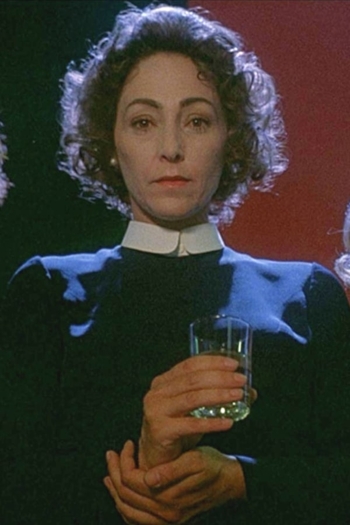
Veronica Lazăr
1938 - 2014Lazăr was born in Bucharest in 1938. She graduated from the Caragiale Academy of Theatrical Arts and Cinematography (where she also obtained a degree in psychology, which she practiced until 1994, dealing mainly in couples therapy) and subsequently played roles in Romanian theatre [notably a run of Right You Are (if you think so) in 1963-64]. She fled her home country to escape communism and eventually settled in Italy in 1965. She managed to learn the Italian language in only a few weeks and had planned to move on to the United States or Israel, but became entranced with Rome. There, she met and married Italian actor Adolfo Celi with whom she had two children, director Leonardo Celi and actress Alessandra Celi.
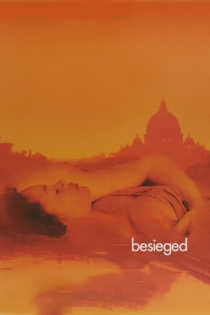
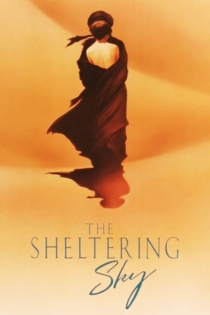
She made her screen debut as Marlon Brando's deceased wife in Bernardo Bertolucci's Last Tango in Paris (1972), and also appeared in some of the director's subsequent films, La Luna (1979), The Sheltering Sky (1990), and Besieged (1998).
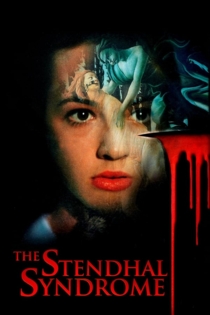
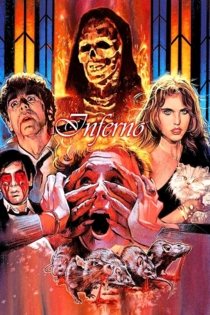
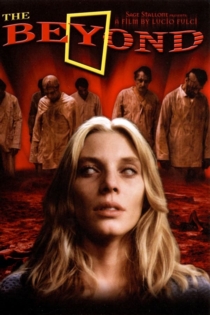
Lazăr is probably best known internationally for her role as the demonic Mater Tenebrarum in Dario Argento's Inferno (1980), as well as the ill-fated Martha in Lucio Fulci's The Beyond (1981). She later appeared in Argento's The Stendhal Syndrome (1996) in a role that was removed from the North American version (though she is still billed in the end credits). Her other films included Michelangelo Antonioni's Identification of a Woman (1982), My Sister and I (1987), Towards Evening (1990), The Prince's Manuscript (2000) and Ginostra (2002). She had an extensive career in (mostly) Italian television, where she was often the lead or one of the lead characters. Lazăr headlined the 1978 adaptation of The Elective Affinities, Giacinta (1980) and was a big part of the 1989 BBC miniseries Summer's Lease. Her last role was that of the main character Lorenzo's loving grandmother in Bertolucci's Me and You (2012).
Veronica Lazăr was a renowned woman of culture and a cultural ambassador between Italian and Romanian cinema (the latter, a position she began in 1989). She was a linguistic interpreter and was seen as a symbolic figure with a protective aura by her countrymen in both Italy and Romania. She was also president of the Itaro Art Foundation and was instrumental in its 2007 retrospective on Romanian cinema held in Rome and Pisa. She was heavily involved with the acting students at Teatro Valle and often would cook meals for them at her home and bring them to the theatre. The students there nicknamed her "Nonna Veronica."
Lazăr also coordinated the construction of a hospital in Mali over the course of a year, on orders of the Ministry of Foreign Affairs. When she returned to Italy, she brought with her African fabrics, statues, and carpets, many of which were still in her home when she died. Lazăr loved to play cards, share with her friends, and had a special affinity for the sea. At her funeral, she wanted her 18-year-old niece, a career musician already, to play the theme from Schindler's List throughout the Jewish cemetery in Prima Porta where she was laid to rest.
Description above from the Wikipedia article Veronica Lazăr, licensed under CC-BY-SA, full list of contributors on Wikipedia.

Paura: Lucio Fulci Remembered - Volume 1
Mike Baronas
Claudio Aliotti, Adelaide Aste
This documentary examines the life and legacy of controversial Italian filmmaker Lucio Fulci through interviews with his colleagues, each of whom answers the question, "What is your fondest memory of Lucio Fulci?". The responses are as varied as the people who knew the late writer-director, providing a nuanced look at the man behind such gory grindhouse classics as City of the Living Dead and The House by the Cemetery.
Paura: Lucio Fulci Remembered - Volume 1
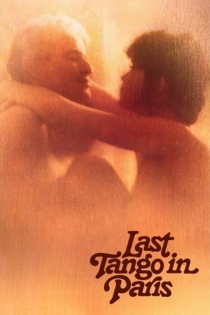
Besieged
Bernardo Bertolucci
Thandie Newton, David Thewlis
When an African dictator jails her husband, Shandurai goes into exile in Italy, studying medicine and keeping house for Mr. Kinsky, an eccentric English pianist and composer. She lives in one room of his Roman palazzo. He besieges her with flowers, gifts, and music, declaring passionately that he loves her, would go to Africa with her, would do anything for her. "What do you know of Africa?," she asks, then, in anguish, shouts, "Get my husband out of jail!" The rest of the film plays out the implications of this scene and leaves Shandurai with a choice.
Besieged
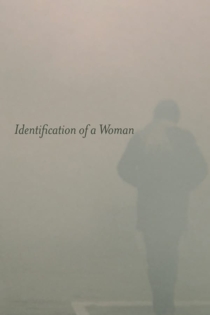
Identification of a Woman
Michelangelo Antonioni
Tomás Milián, Daniela Silverio
The movie director Niccolò has just been left by his wife. Subsequently he embarks on an obsessive relationship with a young woman who eventually leaves him and disappears while searching for her, he meets a variety of other willing girls. This gives him the idea of making a movie about women's relationships. He starts to search for a woman who can play the leading part in the movie.
Identification of a Woman
Il manoscritto del principe
Roberto Andò
Michel Bouquet, Jeanne Moreau
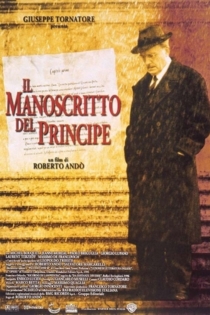
The film is a biography of Giuseppe Tomasi (Bouquet), the prince of Lampedusa, who is the author of Il gattopardo, one of the most influential Italian novel of XX century and is adapted on screen by Visconti, THE LEOPARD (1963, 8/10). Directed by Roberto Andò, a native from Palermo, stars two French cinema icons Bouquet and Moreau (as the princess Licy).
The Prince's Manuscript
Beyond the Clouds
Wim Wenders, Michelangelo Antonioni
Fanny Ardant, Chiara Caselli
Made of four short tales, linked by a story filmed by Wim Wenders. Taking place in Ferrara, Portofino, Aix en Provence and Paris, each story, which always a woman as the crux of the story, invites to an inner travel, as Antonioni says "towards the true image of that absolute and mysterious reality that nobody will ever see".
Beyond the Clouds

Verso sera
Francesca Archibugi
Marcello Mastroianni, Sandrine Bonnaire
Italy, 1977. Professor Bruschi is a retired widower who lives according to a strict routine he set for himself. An ardent old-style communist, he has always been at odds with the unconventional lifestyle led by his son and his hippieish girlfriend Stella. When their four-year-old daughter is left in his care out of the blue after the two break up, the old professor becomes a sort of father figure to the girl, growing fond of her. However he's once again challenged when Stella also arrives for a stay in his elegant villa, reclaiming custody of her daughter.
Towards Evening
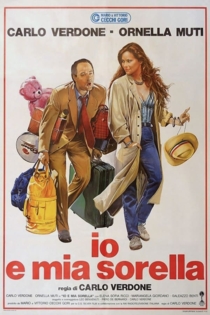
Io e mia sorella
Carlo Verdone
Carlo Verdone, Ornella Muti
Carlo is a responsible sibling who deals with his black-sheep sister Silvia in this situation comedy. When Silvia returns after many years to attend her mother's funeral, Carlo deals with the fallout caused by her many love affairs. Carlo is convinced to kidnap Silvia's child whom she left in a Hungarian children's home, but she soon abandons Carlo and the baby when she takes up with a British rock star.
My Sister and I