Jaakko Pallasvuo
2021Fruits of the Loom
Jari Kallio, Antti Jussila
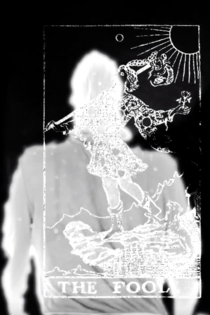
A communist and a capitalist recall their voyage into a wilderness of leisure time. A domestic cycle of breaking into houses, chasing the ghosts of parties past, and trying to conceive … but what? The waters ice over, ready to incubate. Something new is being born.
Fruits of the Loom
Bergman
Jaakko Pallasvuo
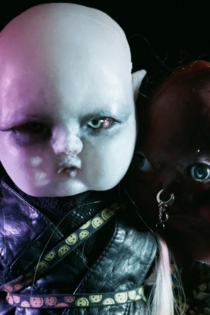
Blending the old with the new, Pallasvuo assembles a mélange of voiceover, found footage, and digital graphics and software icons into a poetic, essay-like structure that contemplates the life and career of art house cinema legend Ingmar Bergman, along with the history of cinema and the mechanics of filmmaking, social media, and various other tropes. Bergmanproduces a saccharine and sentimental tone that feels both sincere and insincere, emblematic of the emotional ambiguity of modern digital culture.
Bergman
Filter
Jaakko Pallasvuo
Mixing crude animation, 3D modeling, and faux filmic textures in a self-reflexive essay on digitally abetted nostalgia, this playful work of fair use pastiche refracts all manner of postmodern touchstones (David Foster Wallace, Talking Heads, Reality Bites) into an aesthetic interrogation of its own methodology, resulting in, to paraphrase one onscreen subject, a critique of a critique of a critique.
Filter
Reverse Engineering
Jaakko Pallasvuo
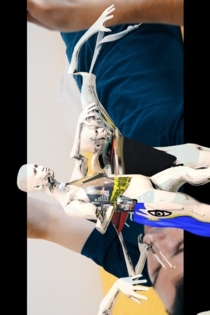
A self-parodying portrait of contemporary artistic genius, of the guises in which the notion of genius carries on even when no one wants to acknowledge their attachment to it. The video begins with a fantasy of your former art school contacting you on your deathbed, but their acknowledgement comes too late, history cannot be reversed. We see faces browsing the internet head on, shot through webcams. These portraits are layered over shots of The Artist holding them like framed paintings. One of the people portrayed reads the “stage directions” they received from The Artist, then the lines proper: internal reflections on abilities and self-image. Ideas follow from a process, but is this really "reverse engineering" as the video suggests, or the normal course of things.
Reverse Engineering

EU
Jaakko Pallasvuo
A sarcastic, fairytale-like voice narrates a story, a contemporary take on Decamerone, in which plague spreads across the EU from the east, killing all those infected within a day. Small communities of survivors begin to form. We see one huddling together on a stage. Saved by the coolness of its members, the community does its utmost to preserve it. It is the condition of their continued survival. Despite these efforts their clique gets infected. Fractions emerge, the uncool get banished, the cool stay and dance til the end. The film is part stand-alone fiction, part documentary interpretation of the work of the theatre collective Vibes.
EU
Some Men Are Islands
Jaakko Pallasvuo
Some Men Are Islands is divided into three parts. All parts deal with life events in and around the city of Turku, a town on the west coast of Finland. The first part is about a poorly attended exhibition opening. After the opening a work is burned on the parking lot behind the gallery. The second part is about being drunk and about ethics. The third part is about Utö, an island off the coast. The work is also about work, neurotically reflecting on its own form and means of production.
Some Men Are Islands
Sacre
Anni Puolakka, Jaakko Pallasvuo
A cyber goth in her thirties makes dance videos at home, seeking freedom and the truth in a society obsessed with productivity and success. Her mode of living is persistently challenged by an older brother, whose caring and love come with a strive to transform her sister. The sibling drama takes a new turn upon the goth's encounter with a dance prodigy whose brilliance seems to leave everyone else in darkness. The film draws from the thoughts of the philosopher and activist Simone Weil (1909-1943), medievalism and cyberculture amongst other influences, viewing work, art and dance as war.
Sacre
Self-Accusation
Jaakko Pallasvuo
Jari Kallio, Antti Jussila
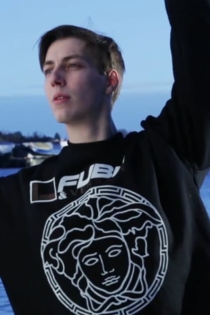
Self-Accusation is partially based on Peter Handke's 1966 play of the same title. Handke's text is dramatized in a video within the video. In the frame narrative, the maker of the video receives a violent critique. The work deals with submission, living by the rules, and dreams of beauty and freedom.
Self-Accusation

Picasso
Jaakko Pallasvuo
Life in the shadow of Picasso is tedious. White balance, overlaid images, rendering. You have to put up with his moods, his narcissism, his disregard of your needs. How do you manage to maintain yourself in the face of all that, and is it still better than being alone? Behind the power relations there is viscerality. We see a man’s torso, “Picasso’s”, smeared in melted vanilla ice-cream, taking selfies. Does power trickle down, like viscous liquid on skin? Do you think you are better off alone? Picasso reverted to a beast as he grew less understood with age, and with this secured his status. We don't know what is going on in our world but Picasso continues to exist in his tunnel vision.
Picasso
Sacr3: Eternal Return
Anni Puolakka, Jaakko Pallasvuo
Anni Puolakka
I have lost everything again. Again, I have nothing to lose. An unnamed woman breaks up with her extraterrestrial lover and runs away to Italy in search of new meaning. Seasons change while she repeats old familial conflicts, makes experimental video art and is haunted by the idea of eternal return. Will our lives recur in the same form infinitely, with no escape? Sacr3: Eternal Return is the final part in the Sacre trilogy by Anni Puolakka and Jaakko Pallasvuo.
Sacr3: Eternal Return