
Ken Starcevic
2021Asterix in Britain
Pino Van Lamsweerde
Roger Carel, Pierre Tornade
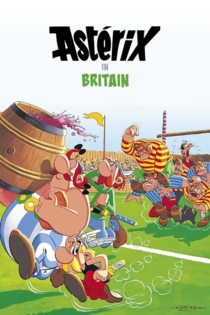
One little ancient British village still holds out against the Roman invaders. Asterix and Obelix are invited to help. They must face fog, rain, warm beer and boiled boar with mint sauce, but they soon have Governor Encyclopaedius Britannicus's Romans declining and falling. Until a wild race for a barrel of magic potion lands them in the drink.
Asterix in Britain

Malady of Love
Jacques Deray
Nastassja Kinski, Jean-Hugues Anglade
Two physicians, one old and one young, fall in love with the same woman, Juliette, a quixotic hairdresser. First, she is with Raoul, the older one; then passion for Clément, the younger doctor, takes over. Raoul fights back, playing on Clément's guilt and Juliette's lack of self-assurance; then, Clément makes his case to Juliette, abandons his fiancée, and takes her to the provinces where he sets up practice and asks her to have a baby. She panics and abruptly leaves Clément, taking up with Raoul again. When she contracts Hodgkin's disease and the treatment does no good, Raoul believes she has the malady of love. Is there a cure?
Malady of Love

Baby Division, les adolescents soldats d'Hitler
Julien Johan
Ken Starcevic
They grew up under the Nazi regime. They pledged to give their lives for Hitler. They were fanatics who would not be stopped. They were the 20,000 teenagers who made up the 12th SS Panzer Division. Unleashed in France to halt the Allied invasion, they would sow terror and destruction in their wake. Historical colorized archives and a handful of survivors tell us this story.
Hitler's Teen Killers


Superguns of WWII
Ken Starcevic
The English Channel during WWII was a strategic passageway separating two major enemies: Great Britain and Germany. Whoever controlled the Channel controlled the passage of warships and commercial vessels—basically, all weapons supplies. Particularly important was the Dover Strait, the narrowest part of the Channel, where enemy encounters were more than likely, so the entire area had to be protected by powerful bunker cannons. In 1942, the Germans quickly built sixteen giant coastal artillery batteries along the French coast. The precision and force of some of them meant they could wipe out any English vessel at sea, and even reach the British coast. Churchill, in a panic over the power of these guns, in turn ordered the building of six batteries atop the cliffs of Dover. A previously unseen page out of history tells of these superguns—whose formidable firepower made them invaluable throughout the war—standing guard on both sides of the Dover Strait.
Superguns of WWII