Wen-jie Qin
2021To The Land of Bliss
Wen-jie Qin
To the Land of Bliss is an intimate portrayal of the Chinese Pure Land Buddhist way of dying and living. In 1998, the filmmaker/anthropologist Wen-jie Qin returned to her home region in Sichuan Province in southwest China to research the post-Mao revival of Buddhism. During her fieldwork on the sacred mountain Emei, an eminent monk named Jue Chang passed away. People in the community laughed and cried at the departure of their beloved teacher. They gathered to escort his body through a rite of fire and to observe his consciousness rise to a paradise known as the Land of Bliss of Amita Buddha. The filmmaker captured some of the wonders and mystery from her search with these Chinese Pure Land Buddhists for the door to Amita Buddha, the Buddha of Infinite Light and Infinite Life.
To The Land of Bliss
Woman Being
Wen-jie Qin
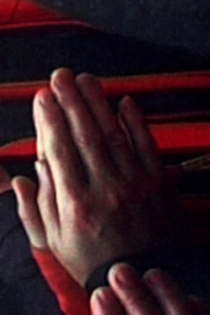
This documentary looks at women's attitudes towards beauty and sexuality in contemporary China. By focusing on women's perceptions of their bodies, the video depicts the tremendous changes that have occurred in the lives of Chinese women in the past one hundred years. Upon visiting her hometown, Chengdu, in southwest China in the summer of 1995, the filmmaker was fascinated by the rapid growth of the beauty industry in the city and the abundance of sexual images on public display. She visited various beauty salons, glamour photo studios, dance communities and "sexual hygiene" shops, and interviewed various women, and men on what they thought of love, sex and marriage. Combined with colorful new images of China, this video presents women's honest voices speaking of what they want to be. It examines the changing meaning of being a woman in today's China and poses the question: To what extent are these changes contributing to the empowerment of women?
Woman Being

We Are Not Beggars
Wen-jie Qin
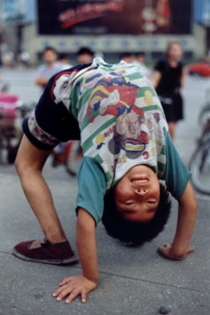
This documentary depicts the life of several child street performers in a contemporary Chinese city. These children had been wandering the country as street performers for four years and are virtual "untouchables" to most Chinese. The camera follows them in their daily rounds through the streets, performing acrobatic tricks and begging. It captures their daily struggles for survival and their dream to return home and go to school, and looks at how these children face the challenges of a harsh environment with inner strength. Through this program we have a window on a little known aspect of Chinese society today and the realities facing so many of the world's children.
We Are Not Beggars
The Sprouts of Capitalism in China
Wen-jie Qin
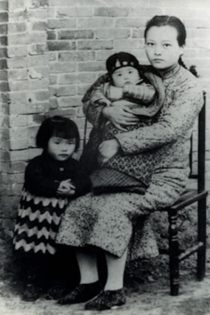
This documentary tells the fascinating story of one of China's newly rich entrepreneurs, Yang Daquan, of Pengzhou City in Sichuan. Mr. Yang came from a rich gentry family and was given away as an infant when his family disintegrated at the beginning of the socialist era. He grew up in the countryside as a poor peasant and came to the city in the late 70's as a construction worker. After years of struggle he now owns a construction material plant and an ice cream factory, and is a major investor in the local real estate market. The film searches for the drives behind his determination for economic success and links his personal story to the turbulent history of China in the past several decades.
The Sprouts of Capitalism in China
Full Circle
Wen-jie Qin
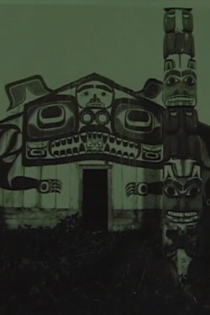
In the summer of 2001, under the Native American Graves Protection and Repatriation Act, a totem pole in the Peabody Museum at Harvard University was returned to its original owners' ancestors, a Tlingit community in Southeast Alaska. The journey of the pole began a hundred years ago when it was removed by the Harriman Expedition from the deserted village of Gash at Cape Fox. The totem pole makes its way from Cambridge, Massachusetts to Ketchikan, Alaska, where the Cape Fox community holds a ceremony to welcome home artifacts taken by the Expedition.
Full Circle