Victor Asliuk
2021My žyvem na kraji
Victor Asliuk
“We are living on the edge”, says a simple peasant woman from Dubna, a village in Hrodna region. These words sound symbolic: the village is situated on the steep bank of the Neman, and the river keeps undermining the houses and the plots making the villagers seek for new lands.
We Are Living on the Edge
Vostrau Belarus
Victor Asliuk
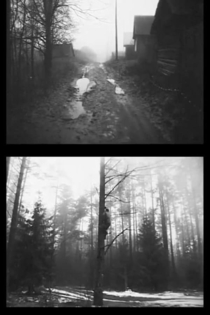
Victor Asliuk's contrast of rural and urban life in Belarus examines the tangible differences between the young in the city and the elderly in the village and between modernity and tradition, interspersing modern images with archive material depicting the countryside as it used to be.
Vostrau Belarus
Цяпло
Victor Asliuk
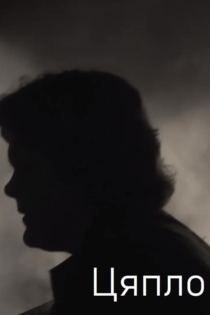
This is a strange little place, where in winter, among the snowdrifts and frozen ice waterfalls, it is very warm. Men and women half-dressed, heated. Their movements at the machines are perfect - fast, rhythmic, precise, like a dance. The relentless rumble of cars is like music. Such an impeccable harmony between people and mechanisms that they seem to be something single, whole, a continuation of each other. Only for moments does a debugged endless action interrupt: someone thinks, or wipes sweat from his forehead, or sits down to breathe. People at this factory in the village of Smilovichi near Minsk make felt boots, which are then sold around the world.
Warmth
Алмаз
Victor Asliuk
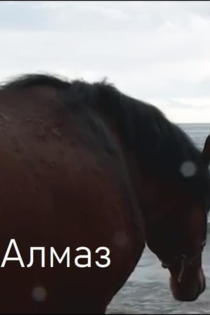
At Stalin’s and post-Stalin’s times a lot of people from Belarus (then Belarusian Soviet Socialist Republic) were resettled. On the one hand, the families of „public enemies” had to be kept somewhat farther away. On the other, underpopulated territories of the Soviet Empire needed to be cultivated. So the family of little Belarusian Alexej Kliunia was moved to an island in the midst of Ladoga Lake in Carelia. Now some decaded have passed and already old Alexej Kliunia is left alone on this island. The lonely Belarusian on the deserted Russian island among the ruins of the formerly active life has created a miniature Belarusian Republic, in which he is the only citizen. In his hut he hang the Belarusian flag over his bed and sleeps underneath. He fixed a portrait of Belarusian President Alexander Lukashenko to the mirror. Alexej Kliunia often talks to himself. Or to his only friend – horse Almaz.
Almaz
Так устроен белый свет...
Victor Asliuk
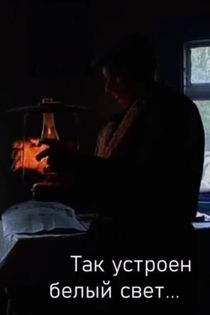
Ivan and Stepan live alone on a distant farm. They are over 60, and they have never been married. Day after day, their life is filled with work, work against the backdrop of magnificent nature. “In order to live, you need to work - this is how the white world works, this is how our lives work,” says one of the characters, expressing his understanding of the meaning of life, and at the same time the main pathos of the film.
That's the Way This White World Works...
Epitaph
Victor Asliuk
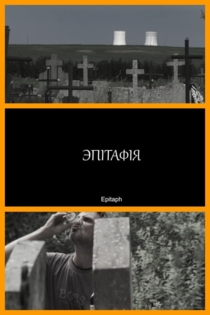
This Belarussian necropolis is a place where some people can meet with dead family members and spend time on contemplation. Few others try to look for the traces of the past there, some come just for a walk and yet another group engages into family feasting. Next to strollers and contemplators, there sometimes come cats creeping among the tombs and squirrels looking out from trees. Immersed in deadly silence, the cemetery comes to life from time to time, while the faces from tomb photographs, frozen in time, look at all this in silence.
Epitaph
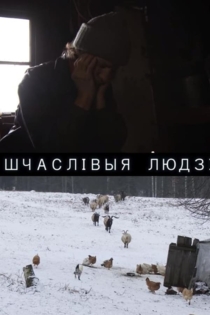
Schaslivyia liudzi
Victor Asliuk
Godforsaken places where people live detached from society are still present in the world. But Belarus, a country integrated into civilisation processes, can hardly boast of their existence. The authors tell the stories of two families residing in Rasony district, in a forest close to the border with Russia. Having gone bush they do without electricity, communication and other habiliments of civilisation. Being eager to start a new life they came back to the native country from big cities – Moscow, Saint Petersburg... But their dreams and expectations confronted Belarus's reality...
Lucky People