Machiko Ono
1981 (44 года)
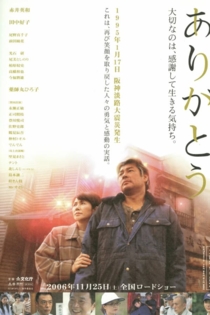
ありがとう
Kunitoshi Manda
Hidekazu Akai, Masao Imafuku
In the early morning of January 17, 1995, the Great Hanshin-Awaji Earthquake struck, and Tadao Furuichi (Hidekazu Akai), who was running a camera store in Kobe City, lost his friends, his house, and his property. Tadao is busy volunteering for the reconstruction of the town, and one day he comes across his own golf bag that survived the earthquake. Feeling a miracle, Tadao decides to challenge the professional golf test before he turns 60.
Arigatou
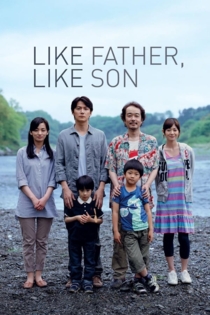
Like Father, Like Son
Hirokazu Kore-eda
Masaharu Fukuyama, Machiko Ono
Ryota Nonomiya is a successful businessman driven by money. He learns that his biological son was switched with another child after birth. He must make a life-changing decision and choose his true son or the boy he raised as his own.
Like Father, Like Son

茶の味
Katsuhito Ishii
Maya Banno, Takahiro Sato
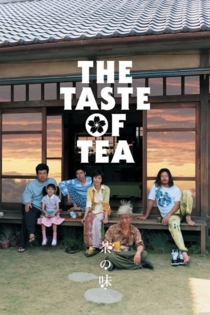
A spell of time in the life of a family in rural Tochigi prefecture. Yoshiko is not an ordinary housewife, instead working on an animated film project. Uncle Ayano, a successful music producer, is looking to get his head together after living in Tokyo. Meanwhile, Sachiko is concerned with why she seems to be followed by a giant version of herself. As the lazy days pass by, each member of the family is followed in a series of episodic vignettes.
The Taste of Tea

萌の朱雀
Naomi Kawase
Jun Kunimura, Machiko Ono
Depicts the life of a family in a remote Japanese timber village. Family head Tahara Kozo lives with his mother Sachiko, wife Yasuyo, nephew Eisuke and young daughter Michiru. Economic recession and failed development plans cause tragedy in the family.
Suzaku

きみはいい子
Mipo O
Kengo Kora, Machiko Ono
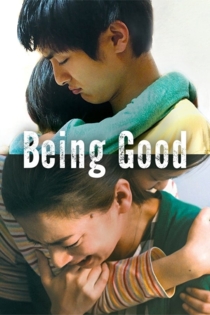
Tasuku Okano is a diligent young man who was raised by decent family. He works as a new teacher at an elementary school. Tasuko deals with his students the way his head teacher told taught him, but the situation in his classroom isn't very good. He notices that one of his students might be abused, but he tries to ignore it by reasoning that he is too busy to become involved. Tasuko though feels terrible about the situation and decides to help his abused student. Masami was raised by an abusive mother. She is now violent towards her own 3-year-old daughter Ayane. Masami can't help lashing out at her daughter since her daughter was 10-months-old. When she hangs around other mothers in the park, she tries to justify her abusive manners by thinking the other mothers treat their kids the same way.
Being Good
Crying Out Love in the Center of the World
Isao Yukisada
Takao Osawa, Kou Shibasaki
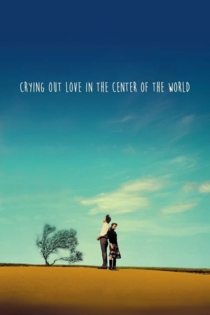
While searching for his fiancee Ritsuko, Sakutarou rediscovers through flashbacks the void deep within him caused by the events from his high school days.
Crying Out Love in the Center of the World
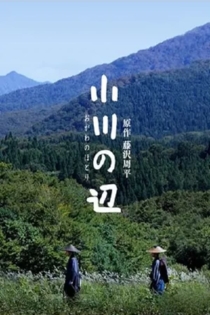
小川の辺
Tetsuo Shinohara
Noriyuki Higashiyama, Rinko Kikuchi
A samurai Sakunosuke gets an order from clan chamberlain to kill another samurai who is married with his own younger sister. As a loyal samurai he has to accept the mission even though he has inner conflicts.
At River's Edge
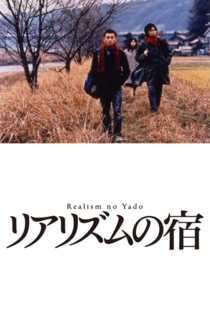
リアリズムの宿
Nobuhiro Yamashita
Keishi Nagatsuka, Hiroshi Yamamoto
Tsuboi and Kinoshita have just arrived at a desolate town. Both of them are amateur filmmakers. Tsuboi is a screenwriter and Kinoshita a director. They have come to this town because Funaki, an actor, has tempted them to come here, but he has yet to arrive. Tsuboi and Kinoshita start wandering around the town and happen to meet a young woman, Atsuko. The three of them go on a journey together and become friends. But one day, Atsuko disappears.
Ramblers

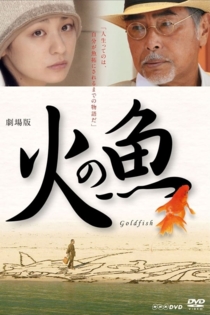
Hi no sakana
Hiroshi Kurosaki
Yoshio Harada, Machiko Ono
Hi no Sakana (火の魚, Fish of the Fire) is a Japanese novel by Murō Saisei; it was first published in 1960, and was later adapted into a single episode TV drama that was broadcast on NHK Hiroshima in 2009. The story describes the interactions between an elderly author and a young staffer from a publishing company as they collaborate on a book cover design for the author's latest novel.
Fish of the Fire
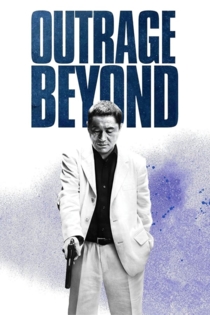
Outrage Beyond
Takeshi Kitano
Ryô Kase, Takeshi Kitano
As the police launch a full-scale crackdown on organized crime, it ignites a national yakuza struggle between the Sanno of the East and Hanabishi of the West. What started as an internal strife in Outrage has now become a nationwide war in Outrage Beyond.
Beyond Outrage