Akino Kondoh
2021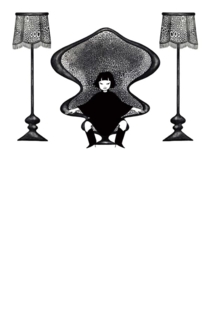
KiyaKiya
Akino Kondoh
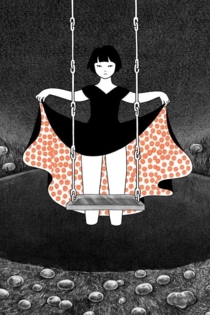
— The term "KiyaKiya" comes from the old Japanese expression "mune ga kiyakiya suru." I first encountered it in Shibusawa Tatsuhiko's book Introductory Essays on Girls, in the chapter about "childhood experiences." The expression, which describes “an enigmatic, nostalgic, disturbing feeling,” or an impression of “deja-vu”, is at the origin of my "KiyaKiya" series. — This is one of my memories. When I was a child, there was a book I always used to read when I went to the hospital. One day as I was reading it as I always did, suddenly the ending had changed. Sometime later, when I read it again, it had returned to normal. — In our everyday routine, there are moments when suddenly we feel like something is different; this unexpected change, like in my memory, feels like it has a kind of reality. This impression is at the core of “KiyaKiya” and the related painting and drawing series. —
KiyaKiya
てんとう虫のおとむらい
Akino Kondoh
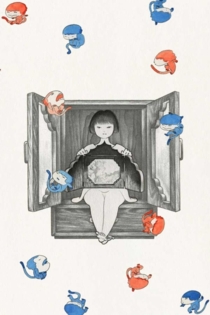
— The story begins with a girl mistakenly killing two ladybirds. From this incident, the girl's guilt overwhelms her, creating the hallucination of a button of her blouse turning into ladybirds. She begins to feel that her selves have multiplied and exist elsewhere. In an attempt to assuage the continuous wave of guilt and fear, she keeps sewing hundreds of buttons to the inside of her skirt. — I remember, as a child, reading a children’s book. There was a page that could not stop looking at again and again, though it frightened me and gave me nightmares. I have this vision. A ladybird fell from my hand to the ground, where it was immediately crushed by a car. The yellow liquid oozing from its limbs tasted so bitter. “Ladybird’s Requiem” is based on the transformation of these childhood nightmare into beautiful and nostalgic memories as an adult. —
Ladybirds' Requiem