Susan Schuppli
2021Can the Sun Lie?
Susan Schuppli
Can the sun lie? This was the question posed by the US Court in 1886 when reflecting upon the truth claims of photographic evidence. However as photographic practices became more commonplace and awareness of the ease of image manipulation in- creased, so too did doubts about their evidentiary value. soon, photographic experts began to face each other in court and a new order of certainty appeared, produced by the domain of expertise. In the Canadian Arctic the sun is setting many kilometers further west along the horizon and the stars are no longer where they should be. sunlight is behaving differently in this part of the world as the warming Arctic air causes temperature inversions and throws the setting sun off-kilter. the longstanding dispute between lay knowledge and scientific expertise is forcefully reanimated by current climate change debates, particularly with respect to indigenous storytelling traditions.
Can the Sun Lie?
Can the Sun Lie?
Susan Schuppli
Can the sun lie? asked a US court in 1886. This legal question arose when photographs or sun pictures as they were also called at the time first entered into juridical proceedings as a new form of evidence. Could chemistry and light manipulate the natural order of the things worried the court or were the realities depicted by photographs incontrovertible?
Can the Sun Lie?
Trace Evidence
Susan Schuppli
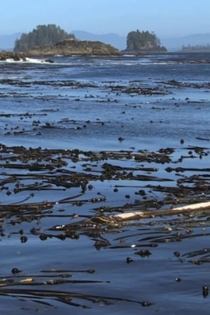
The "Trace Evidence" video trilogy explores the geological, meteorological, and hydrological appearance of nuclear evidence secreted within the molecular arrangement of matter. Its focuses upon three events: the unearthing of ancient nuclear reactors at the uranium mine site in Oklo, Gabon in 1972, the discovery of Chernobyl’s airborne contaminates at the Forsmark power plant in Sweden in April 1986 and the 7,600 kilometre five year journey of Caesium-137 from Fukushima-Daiichi through the waters of the Pacific Ocean to the west coast of Vancouver Island.
Trace Evidence