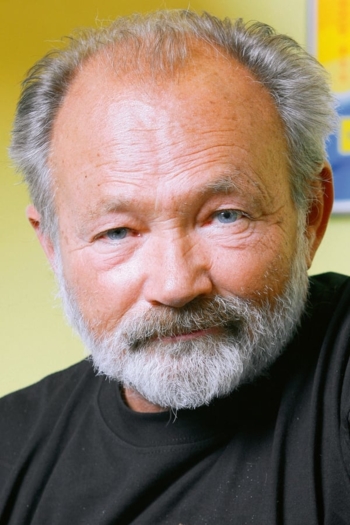
Rudolf Hrušínský
1946 (79 лет)
My Sweet Little Village
Jiří Menzel
János Bán, Marián Labuda
The movie's main storyline follows the life of Otík, a young man, in a tight-knit village community. The sweet-tempered Otík works as an assistant truck driver with Mr. Pávek, his older colleague and practical-minded neighbor. Pávek's family takes care of Otík, whose parents are dead. However, the two coworkers become at odds over Otík's inability to perform even the simplest tasks. Pávek demands that Otík be transferred to assist another driver, who happens to be a choleric and suspicious man named Turek (Turk in Czech). Rather than work with Turek, Otík decides to accept an offer of employment in Prague, but finds he does not fit in to the city life. After discovering that the transfer of Otík to Prague was a trick by a crooked politician to get a deal on Otík's large inherited house, Pávek agrees to give Otík a second chance and retrieves him from the city to resume their work together.
My Sweet Little Village


Cerni baroni
Zdeněk Sirový
Ondřej Vetchý, Pavel Landovský
Life of Czechoslovak soldiers in a military unit for the so called "politically unreliable" - the Technical auxiliary battalions, aka "the black barons". Although it might seem like a political satire and it's mostly funny, it shows the reality and the absurdity of military service under the communist regime. Based on a novel by Miloslav Svandrlik.
Cerni baroni
Slavnosti sněženek
Jiří Menzel
Rudolf Hrušínský, Jaromír Hanzlík
This movie is based on texts of Bohumil Hrabal, world-known Czech prosaic. It's a story (in a form of a mosaic of short episodes and pictures) about the sadness and happiness of inhabitants of Kersko (Kersko is a small woody area full of cottages and roods). These people are both simple and sensitive, they have their own pleasures (e.g. Leli is a collector of cheap, but inutile things) and the greatest delight of all of them is a hunting. Crude poetics of amateur hunting is screened by dreamy pictures of this area. Menzel mixes sentimental lyricism and rough (but not vulgar!) humor and the outcome is the never-ending landscape of continuous life in the proximate nearness of nature. The performances of actors are brilliant. Both Rudolf Hrusinsky as a Franz and Jaromír Hanzlik as a Leli have nonrecurring charm bottomed on a pain and inebriation. Only the music is not perfect: Jiri Sust usually assembled his film music from his older works and in this movie there is many quotations.
The Snowdrop Festival
Postřižiny
Jiří Menzel
Rudolf Hrušínský, Petr Čepek
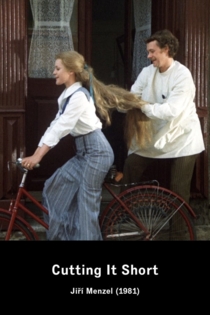
Francin, manager of a small-town brewery, has a charming wife whose abundant blonde locks are an adornment to the town. Maryska looks ethereal but loves meat and beer, while Francin is an ascetic. The strict members of the brewery board of directors come to audit the accounts, but are diverted from concentrating on Francin's detailed reports by Maryska, who has organized a pig-killing feast and is ably assisting the butcher. When she invites the old curmudgeons on the board to enjoy the fresh pork, they are too happy to agree. Francin doesn't know whether he is going to get a permanent contract. To make things worse his brother Pepin - eccentric, noisy and garrulous - turns up on an indefinite visit.
Cutting It Short
Knoflíkáři
Petr Zelenka
Pavel Zajíček, František Černý
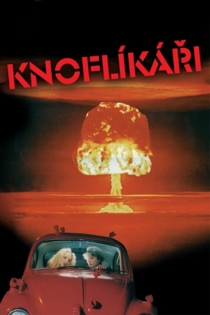
It is a film consisting of six short stories, which mostly tell in a black humorous, ironic, often bitterly bitter form about an ancient curse, human infidelity, strange deviations, an unexpected miracle and hypocritical forgiveness. They have their own pointed structure, specific atmosphere and way of processing, and yet they pass on motives to each other that communicate with each other and observe the same things from different angles.
Buttoners
I Served the King of England
Jiří Menzel
Ivan Barnev, Oldřich Kaiser
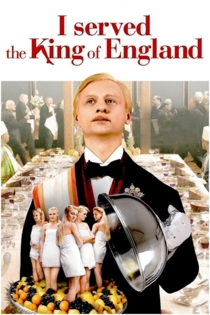
Prague, Czechoslovakia, during the inter-war period. Jan Dítě, a young and clever waiter who wants to become a millionaire, comes to the conclusion that to achieve his ambitious goal he must be diligent, listen and observe as much as he can, be always discreet and use what he learns to his own advantage; but the turbulent tides of history will continually stand in his way.
I Served the King of England
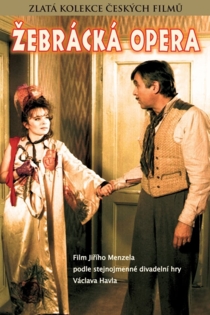
Žebrácká opera
Jiří Menzel
Josef Abrhám, Mahulena Bočanová
Unlike any other opera, the so-called Beggar's Opera is not just one composition, but a lineage of adapted compositions, beginning with the original hugely successful 1728 political satire written by Englishman John Gay. Composers and writers have penned variations on it ever since. The most famous of these was A Threepenny Opera by Bertholt Brecht and Kurt Weill. Some things these compositions share in common is their setting among the poor and criminal classes, and the roguish character Macheath. This production is based on an adaptation of Gay's original by Vaclav Havel the freedom-fighter, writer and philosopher who became the first (and only) president of the united post-communist country of Czechoslovakia, and it retains many traces of its theatrical origins. Film reviewers were not too tolerant of what they called "slavish adherence" to the noted Czech writer's stage production, but theater, philosophy and history buffs may feel otherwise.
The Beggar's Opera