
Robert Ascher
2021Blue: A Tlingit Odyssey
Robert Ascher
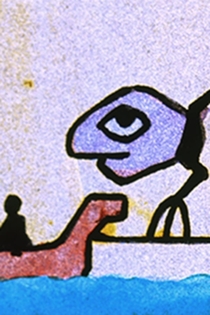
Anthropologist Robert Ascher depicts a myth of the Pacific Northwest Coast Tlingit using the purely symbolic, visual language of direct, cameraless animation. Positing an enchanting, engaging, non-Western alternative to verbal, analytical methods of documentation, he also considered this approach a noninvasive method of portraying an indigenous culture.
Blue: A Tlingit Odyssey
The Golem
Robert Ascher
Take some soil, knead it with water, and, together with a companion, chant certain combinations of the Hebrew alphabet. This formula, written down in the 3rd or 4th century, is essential for the creation of a golem -- an artificial person. For ten centuries golems thus created lived in the imaginations of their creators. After that they became corporeal presences that anyone could see. Still later golems could pose real dangers and had to be destroyed by their creators. The notion of the golem is persistent and still evolving. The Golem, an animated film, was created by drawing directly on clear film stock one frame at a time. There are over 6,000 individual drawings. The film's soundtrack is derived from the earliest manual for golem making; the brevity of the film allows concentration on the essentials of the story. Although every film is, in some sense, an interpretation, The Golem leaves ample room for viewers to find their own meaning.
The Golem
Bar Yohai
Robert Ascher
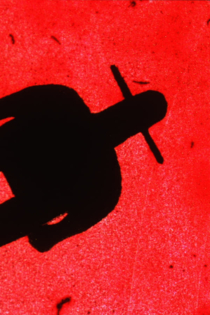
Shimon Bar Yohai was a second century visionary who, according to popular belief, wrote the Zohar, the main Kabbalah text of the Jewish mystical tradition. The film's images -- tree, mirror, candelabra and the ten dots with which each is constructed -- are Kaballah figures for how the world got started and keeps going. Once every year there is a celebration honoring Bar Yohai at his tomb in Meron, Israel. The last scene is composed from photographs taken on the roof of the tomb during the celebration. The soundtrack, a song praising Bar Yohai, was also recorded during the celebration in a town (Safed) a few miles from the tomb. Support for the film's production came from a fellowship Award in Film, New York Foundation for the Arts; funds for participation in the celebration were from a Humanities Faculty Grant, Cornell University.
Bar Yohai