David Rimmer
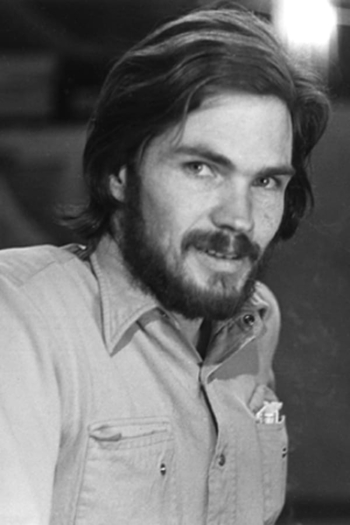
1942 (84 года)Widely considered to be a key contributor to the emergence of film as an art form, Rimmer's innovation has led to much acclaim. born in Vancouver in 1942, David Rimmer has spent most of his life in his native city with brief periods in New York (1970-72) and Europe (1973). In addition to his provocative work as an artist, he is an instructor in the film and video program at Emily Carr College of Art and Design.
Local Knowledge
David Rimmer
"David Rimmer's film is at once a somber and celebratory meditation on time and place. Its title, 'Local Knowledge', is marine terminology for what a skipper must know when navigating dangerous waters. Rimmer is an experienced sailor and the film's spiritual and geographical center is aptly named Storm Bay, where he spends his summers. But it's a troubled site. The camera, moving with tide and swell, seems to strain anxiously at its anchor and it becomes clear from here on in nothing will ever be at rest. Local Knowledge won't save anyone anymore.
Local Knowledge
Migration
David Rimmer
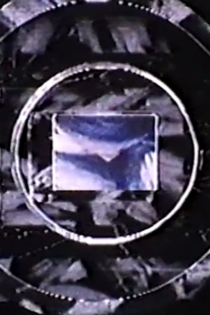
"Whereas SQUARE INCH FIELD was composed largely in the camera, Rimmer's next film, MIGRATION, made full use of rear-projection rephotography, stop-framing, and slow motion. The migration of the title is interpreted as the flight of a ghost bird through aeons of space/time, through the micro-macro universe, through a myriad of complex realities. A seagull is seen flying gracefully in slow motion against a grainy green sky; suddenly the frame stops, warps and burns, as though caught in the gate of the projector. Now begins an alternation of fast and slow sequences in which the bird flies through time-lapse clouds and fog and, in a stroboscopic crescendo, hurtles into the sun's corona. Successive movements of the film develop rhythmic, organic counterpoints in which cosmic transformations send jelly fish into the sky and ocean waves into the sun. It concludes with stop-frame slow-motion of the bird, transformed once again into flesh." - Gene Youngblood
Migration
Variations on a Cellophane Wrapper
David Rimmer
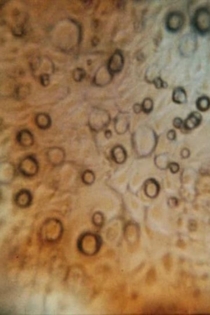
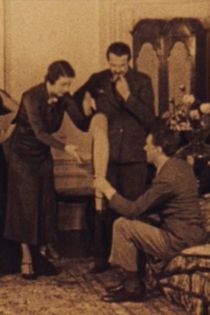
David Rimmer's avant-garde classic takes a single film fragment of a factory worker unraveling a sheet of cellophane, and alters it through a mesmerizing series of spectral apparitions and alchemical and sonic permutations.
Variations on a Cellophane Wrapper

Real Italian Pizza
David Rimmer
"Taken between September 1970 and May 1971, with the unmoving camera apparently bolted to the window ledge, this film, a ten-minute eternity, chronicles what takes place within view of the lens. The backdrop is a typical New York pizza stand, the actors are selected New Yorkers who happened to be there during the half year, the plot is the somewhat sinister aimlessness of life itself." - Donald Ritchie, Museum of Modern Art, NY.
Real Italian Pizza
Watching for the Queen
David Rimmer
Watching for the Queen continued Rimmer's investigations of minimal narrative and the anonymous/autonomous shot. Pattern recognition, saccadic eye movement and feature rings are well known phenomena in the behavioral sciences. However, in Watching for the Queen, Rimmer has succeeded in employing these mechanisms in the telling of a story, by employing mathematical ordering in an aesthetic manner.
Watching for the Queen
Canadian Pacific I
David Rimmer
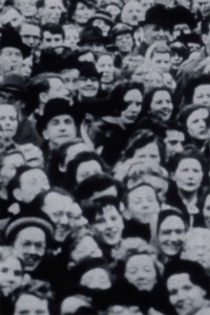
Canadian Pacific I is made up of a series of slowly dissolved shots done from the same framing over several months. The camera frames a window with a railway yard in the foreground, a bay in the space behind it, and misty mountains in the extreme distance. Trains occasionally pass by in the foreground. Huge ships move across the bay. Blue mists hover over the mountain heads.
Canadian Pacific I
Canadian Pacific II
David Rimmer
Canadian Pacific II is designed as a companion piece to Canadian Pacific I. Shot from a window two storeys higher and in the building adjacent to the artists’s studio of the previous year, one enters into a dream state… an involvement with a vocabulary of seeing and feeling by subtle transitions of the passage of time
Canadian Pacific II
Surfacing on the Thames
David Rimmer
‘A beautiful, mysterious yet satisfying optical illusion…celebrates the early passing of a steam on the Thames. Using freeze-frame techniques, elaborate dissolves, and most of the resources on the optical table, this picture is, amongst other things, a Turner come to life. Rimmer’s concern with the surface nature of the film is most evident in this work which, in spite of its filmic complexity, is incredibly simple.’ — Donald Richie
Surfacing on the Thames
Along the Road to Altamira
David Rimmer
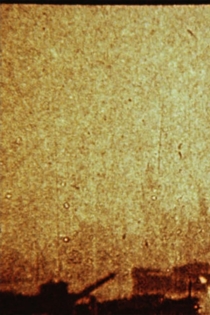
"The lateral movement of the title "Along the Road to Altamira" signals that we are about to embark on a journey through Spain. Our final destination is Altamira, where the first forms of representation by Paleolithic man still remain. These images, a narrator tells us in German, would have remained undiscovered if not for the childish curiosity and unconditioned vision of the young girl who noticed the ancient paintings of bison on the cave ceiling.
Along the Road to Altamira
Landscape
David Rimmer
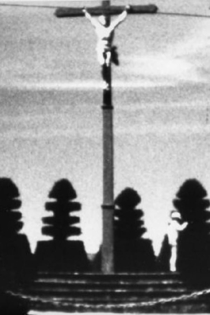
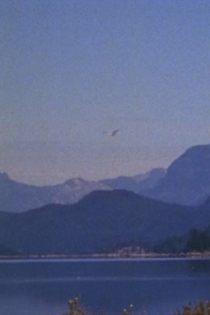
Using fixed frame timelapse, 15 hours of a day in the mountains, showing the changes in the sea and sky, is compressed into eight minutes. Designed originally to be rear-projected onto a plexiglass screen framed in a false wall by a traditional wooden picture frame.
Landscape
Narrows Inlet
David Rimmer
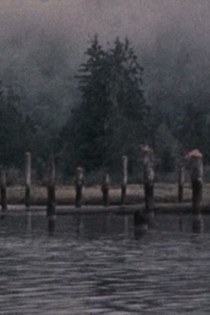
Starting with a boat swaying on its anchor at the head of an inlet, a landscape of pilings, shore, and forest is slowly revealed by time-lapse photography as the morning fog lifts. While the deep space of the landscape evolves out of the fog-enshrouded flatness of early morning, the camera skips from fixed point to fixed point - suggesting the motion of the human eye while reading.
Narrows Inlet
Seashore
David Rimmer
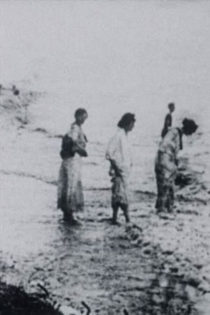
The basic image derives from a shot of women in (Edwardian era) dresses standing along the edge of the ocean. Within this eight-second loop, [Rimmer] cuts shorter ones. For example, the activity of a central group of three women is cut so that the figures repeat certain motions over and over and over again... Rimmer also chose to use the forms of surface imperfections, the scratches and dirt patterns, as bases for his loops... Although working in a disciplined style of re-structuring cinematic forms, his highly orchestrated creations have inspired great admiration both from cineastes and the more general public.
Seashore
As Seen on TV
David Rimmer
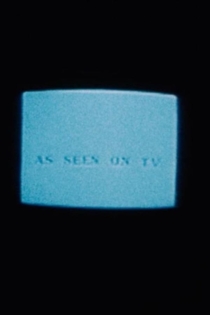
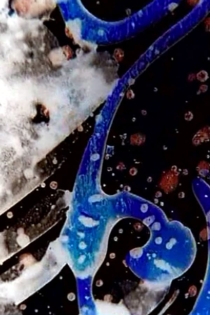
The structure of the film alternates between looped, processed stock TV imagery and a blank, static blue screen. This formal motif - a blank frame or screen onto which the artist projects imagery which expresses inner emotions and anxieties - is a motif which recurs throughout Rimmer's filmic oeuvre. As Seen on TV is a moving film which conveys a deep-seated human experience.
As Seen on TV