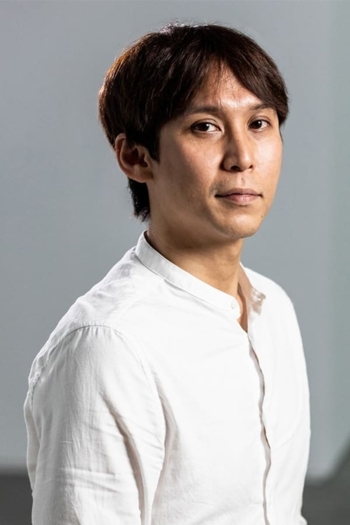
Su Hui-yu
2021未來的衝擊
Su Hui-yu
Liao Fu-chi, Hsing Feng
In 1970, American futurist Alvin Toffler's iconic work Future Shock was published. One year later, a translation by Zhiwen Publishing House hit the market in Taiwan, thus introducing the writer's theories to readers of Chinese. The premise of the book can be summed up as: “A future that comes too quickly creates more apprehension than that of a foreign land. Future society will be stricken with a plethora of choices, throw-away society, information overload, and unethical technology.”
Future Shock

超級禁忌
Su Hui-yu
Chin Shih-Chieh
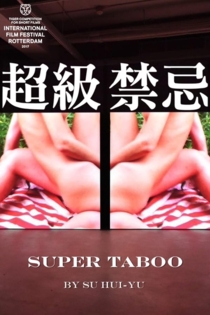
In Taiwan pornography is still a socially unacceptable taboo. Firmly and ironically, Su Hui-yu indulges in a visually powerful long shot enhanced by unexpected pop art colours. A classic hardcore esthetic is represented in a gallery of a tableaux vivants that demand their freedom, alternating movement and immobility, the denial of pleasure and the pursuit of it.
Super Taboo
唐朝綺麗男(1985,邱剛健)
Su Hui-yu
Hsu-Wei Huang, Parrot Caille
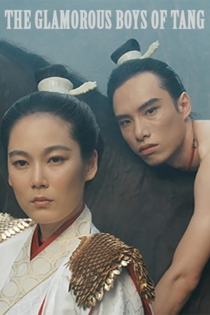
In artist Su Hui-yu’s signature style, a moody slow-motion pan captures a wild, glitter-scattered, blood-splattered orgy during the Tang dynasty. The film is an invocation of scenes from 1985 Taiwanese cult film Tang Chao Chi Li that only existed in the screenplay, unfilmed until now due to what can only be imagined as budgetary restrictions and censorship pressures during the Martial Law era. Presented without narrative context, the orgiastic murder scene plays out like an unsettling nightmare.
The Glamorous Boys of Tang
女性的復仇
Su Hui-yu
Mai Wu, Chen Ching
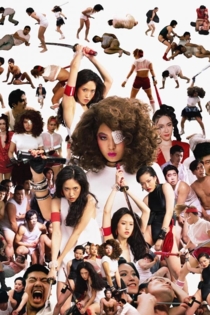
In the early 1980s, hundreds of the so-called female revenging/exploitation films were produced in Taiwan. The 2020 version was based on the old genre to recreate a fantasy of the bloody revenge. The film is one of Su Hui-Yu’s “Re-shooting” series, which re-visits historical sources in Taiwan during the old days around the 1970s-1980s while the country was under martial law governance.
The Women's Revenge
屁眼.淫書.速克達
Su Hui-yu
Kun-Da Wu, Yuan-Cing Liao
Originally designed as a multi-channel video installation, the film The Walker ingeniously deconstructed the background stories and the plays of the legendary Taiwan Walker Theatre which pretty much represents some underground culture scenes of 1990's Taipei. Based on a multi-character narrative structure, the film re-interprets the velocity, prime-time, rebellion, physical pleasure and ethical minefield referred to in these plays. With its Dream-like images, The Walker reminds us of the utopia pictured previously by the Taiwan Walker Theatre, indicating a polysemous, hybridized art world whose components range from the sublime to the ridiculous.
The Walker