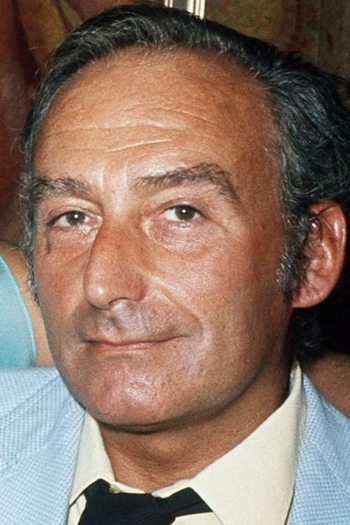
Pierre Barillet
1923 - 2019Barillet was born in Paris, France. Passionate about theatre since childhood, he wrote his first play, Les Héritiers, in 1945 after being a law student. It was followed by Les Amants de Noël, performed at the Théâtre de Poche. He also worked as a radio broadcaster, reading novels and plays with Agnès Capri. He first experienced success in 1951 with Le Don d'Adèle, which he wrote along with Jean-Pierre Gredy. The play was performed over a thousand times. Over the next several decades, Barillet would develop what he was most famous for, Boulevard theatre. Certain of his plays were adapted to Broadway, including Fleur de cactus (Cactus Flower, written by Abe Burrows) and Quarante carats (Forty Carats).
In the 1980s, Barillet appeared in television shows, including Malesherbes, avocat du roi, and Condorcet.
In the 1990s, he wrote biographies, such as Les Seigneurs du rire, about Robert de Flers, Gaston Arman de Caillavet, and Francis de Croisset. Quatre années sans relâche was about theatrical life in France during their German occupation in World War II. À la ville comme à la scène was an autobiography about the years he spent writing and performing in plays.
Barillet was an officer of the Ordre des Arts et des Lettres and a Knight of the Legion of Honor.
Barillet was married to comedian Roland Oberlin.
Source: Article "Pierre Barillet" from Wikipedia in English, licensed under CC-BY-SA 3.0.
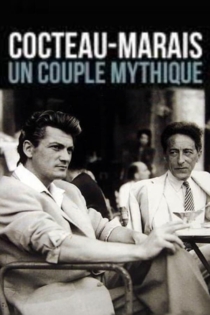
Cocteau Marais - Un couple mythique
Yves Riou, Philippe Pouchain
Pierre Barillet, Carole Weisweiller
A story of passion between Jean Cocteau, Pygmalion poet, novelist, designer, playwright and avant-garde film-maker and Jean Marais, a popular actor, "well-loved" chameleon and legend of French cinema. They shared a unique relationship which, from 1937 to 1963, combined the art of loving with the inordinate love of arts.
Cocteau Marais - Un couple mythique
The Greven Mystery
Claudia Collao
Pierre Barillet, Philippe Batel
Alfred Greven was the head a French movie studio founded with Nazi money producing propaganda and the most subversive masterpieces of French Cinema. Greven's intentional disappearance after the war and his silence until his death in 1973 maintain a certain mystery. To date, no photos or other record of him are available. Yet the 40 films produced by Continental Films remain. Who was he?
The Greven Mystery