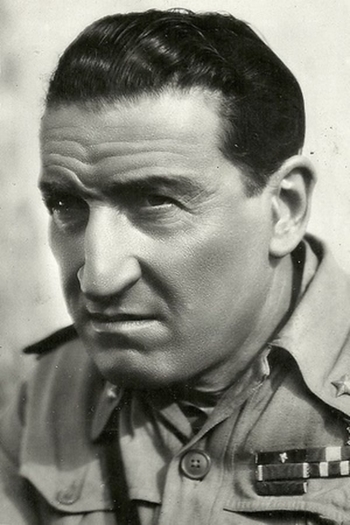
Carlo Ninchi
1896 - 1974
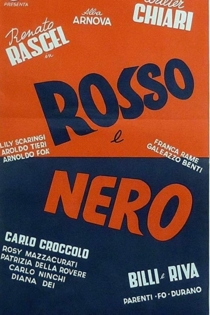
Two Women
Vittorio De Sica
Sophia Loren, Jean-Paul Belmondo
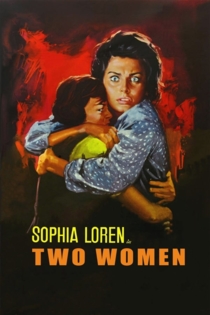
Widowed shopkeeper Cesira and her 13-year-old daughter Rosetta flee from the allied bombs in Rome during the second World War; they travel to the remote village where Cesira was born. During their journey and in the village and onward, the mother does everything she can to protect Rosetta. Meanwhile, a sensitive young intellectual, Michele, falls in love with Cesira.
Two Women
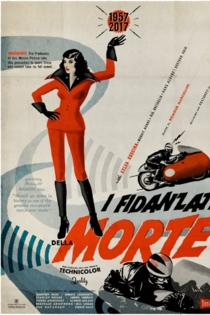
I fidanzati della morte
Romolo Marcellini
Rik Battaglia, Sylva Koscina
A tale of love, rivalry and passion set in the 50s, in the madcap world of motorcycle speed races, shot on the occasion of the main competitions of that time, such as Monza’s Moto GP and the last edition of the legendary Milano-Taranto race. With also very rare footage of the Moto Guzzi wind tunnel and factories. The film features, alongside popular actors Rik Battaglia and Sylva Koscina, many of the most important champions of those years: Geoffrey Duke, Libero Liberati, Bill Lomas, Enrico Lorenzetti, Reg Armstrong, Stanley Woods, Ken Cavanagh, Dickie Dale, Thomas Campbell, Pierre Monneret, Albino Milani, Walter Zeller, Bruno Francisci, all of them riding amazing Moto Guzzi, Gilera, Mondial and Norton bikes with the so charming and dangerous dustbin fairings that were going to be banned in 1958.
Engaged to Death
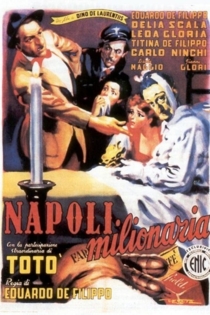
Napoli milionaria
Eduardo De Filippo
Eduardo De Filippo, Leda Gloria
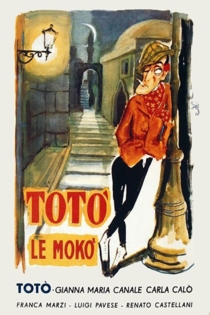
A combination of a satire on war and a comedy with war as the background. It tells of the ordinary people living on a Naples sidestreet, from 1940 to 1950 under the dominance of the Fascists, the Nazis and then the Allies occupation forces. Primary among the citizens is Gennaro Iovine (Eduard De Filippo)who has a penchant for innocently getting into trouble, and his friend Pasquale (Toto.) The latter is a rail-sweeper who becomes a professional stand-in...a corpse used to conceal contraband...serving jail time for those who don't care to spend the time to do the time...a substitute at a political rally when violence threatens the scheduled speaker
Side Street Story
La Beauté du diable
René Clair
Michel Simon, Gérard Philipe
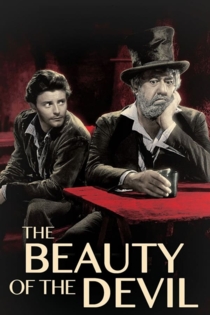
Henri Faust, retiring after 50 years as a professor in a circa-1700 French university, despairs at the ravages of old age ... whereupon Mephistopheles, agent of Lucifer, appears as a virile, handsome young man and exchanges bodies with him to induce Faust to sign a pact to exchange his soul for renewed youth, riches and power. But though the "new" Faust is attracted by the material improvements in his life, he remains wary of signing, while Mephistopheles, now posing as the aged professor whose body he inhabits, must find a way to trick him into signing the pact - and dissuade him from the love of a gypsy girl who prays for his soul - or find himself damned by his own Master...
The Beauty of the Devil
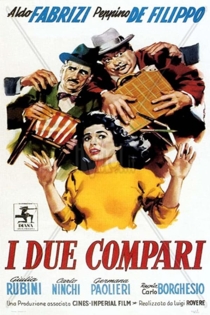
I due compari
Carlo Borghesio
Aldo Fabrizi, Peppino De Filippo
Giovanni peddles useless pens in the streets of Rome with his sidekick Francesco, but his college-student daughter thinks he is a rich industrialist. She falls in love with a rich guy and when her father tells her the trust about their financial situation she drops her fiance and refuses food. Luckily, the guy's parents give their consent to the marriage anyway.
I due compari
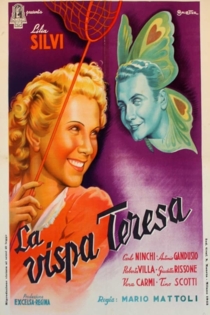
La vispa Teresa
Mario Mattoli
Vera Carmi, Roberto Villa
Alberto, son of a rich engineer, falls in love with Luisa, a ruthless manicurist who is only after his money. His parents offer him a holiday in Venice because they hope he will forget her. Alberto however leaves for Venice with Luisa, who has asked a friend of hers to take her place at the beauty parlour. Alberto's parents go there and mistake Teresa for Luisa. A series of misunderstandings ensues...
Lively Teresa
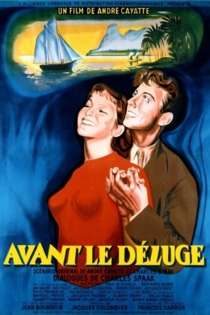
Avant le déluge
André Cayatte
Antoine Balpêtré, Paul Bisciglia
The title of this French "reality" drama, which translates to Before the Deluge, is a play on Louis XVI's famous prognostication, "Apres moi, le deluge." Set in 1950, the film concentrates on five Parisian adolescents. Certain that the next war will herald the apocalypse, the youngster make plans to run off to a desert island and set up a new society. This, however, will require money, which is why the boys decide to pull off a "necessary" robbery. Idealism collapses in the face of cold reality, as the five youths suffer from the consequences of their actions. Avant le Deluge was one of a group of films cowritten by director Andre Cayatte and Charles Spaak which endeavored to explore the touchy social issues of the day: others in the Cayatte-Spaak canon include the euthanasia-themed Justice est Faite and the capital-punishment tract Nous sommes tous des assassins.
Before the Deluge
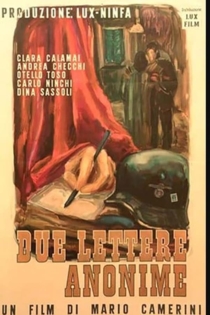
Due lettere anonime
Mario Camerini
Clara Calamai, Andrea Checchi
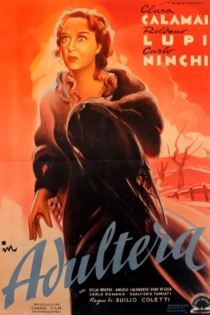
When her sweetheart Bruno joins the Italian army, Gina, bored by her lack of social life, weds Tullio. She comes to regret her decision when Tullio proves to be a Nazi collaborationist. Casting her lot with the Resistance movement, Gina is forced into a difficult decision when the safety of ex-lover Bruno is endangered by the treachery of Tullio.
Two Anonymous Letters
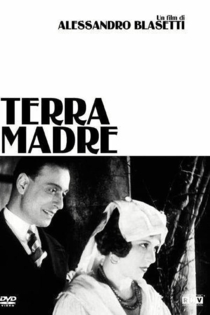
Corte d'Assise
Guido Brignone
Renzo Ricci, Marcella Albani
During a reception in a villa, wealthy banker Calandri is killed in the park with a gunshot. The gamekeeper Barra is immediately arrested, but he declares himself innocent. During the trial it turns out that the defendant had threatened the victim, guilty of courting his sister-in-law. But the deposition of a journalist present at the party soon leads to discover the existence of a dense network of equivocal relations between the victim, the guests and the servants. This judicial setting drama is allegedly the second Italian sound film after "The Song of Love", made using the RCA Photophone recording technique, and is also considered to be the first Italian detective film, a precursor to the later genre of Giallo films.
Before the Jury

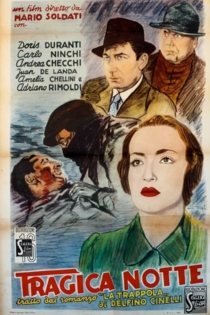
Tragica notte
Mario Soldati
Doris Duranti, Carlo Ninchi
Released from jail, Nanni punches prison guard Stefano who has denounced him. In order to take revenge, Stefano suggests the suspicion that, during his absence, his wife has had business with the Count Paolo. A few days later, at night, a deadly ambush will be prepared. Based on the novel The Trap (1928) by Toscan Delfino Cinelli.
Tragic Night